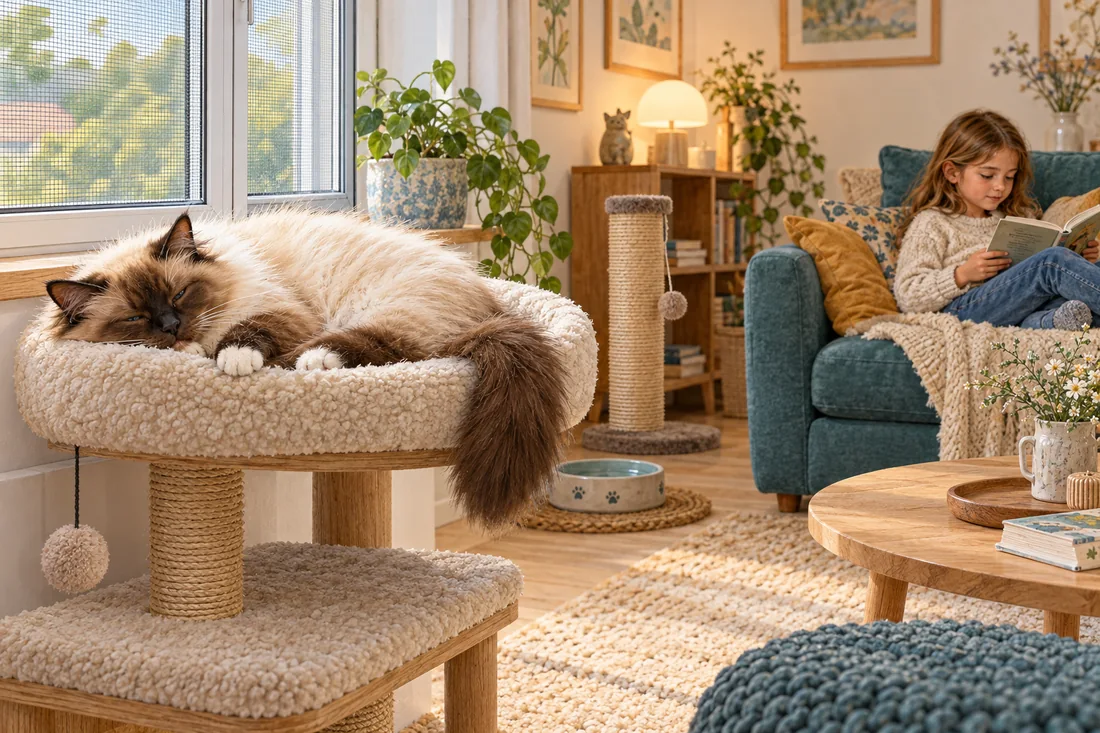

Small changes in appetite, activity, grooming, social behaviour or litter-tray habits may be the first sign that something has changed.
Birmakredsen’s health section is designed to make it easier to understand the cat as a whole. We combine veterinary knowledge with our extensive material on behaviour, welfare, genetics and responsible breeding.
+
If your cat is ill: These pages provide background information and cannot replace an examination by a veterinarian. Acute symptoms require prompt assessment.
Choose a topic
Welfare and responsible breeding now have their own comprehensive main pages, so material Birmakredsen has already published is no longer hidden in individual posts.
WelfareSecurity, environment, natural behaviour, stress, pain, social needs, kittens, cat shows and the senior cat.Read the big welfare page →
Responsible breedingHealth, screening, genetics, COI, fertility, the breeding queen, kittens’ early development and lifelong responsibility.Read the big breeding page →
Heart
HCMHeart muscle disease, symptoms and the importance of echocardiography.Read more →→
Kidneys
KidneysKidney function, early signs and the importance of blood and urine tests.Read more →→
Oral health
TeethDental pain can be hard to spot – learn the subtle signs and good routines.Read more →→
FIP
FIPDiagnosis, disease course and modern treatment.Read more →→
Breeding
Blood typesBlood type in breeding, neonatal isoerythrolysis and transfusion.Read more →→
Veterinary articles
Genetics, pain assessment, nutrition, the microbiome, disease, prevention and other professional information are collected under Veterinary articles.
The cat first – from birth to senior life
Good health and good welfare are built throughout life. A kitten has different needs from an adult breeding cat, a show cat or a senior. What they share is the need to be seen as individuals and for changes in wellbeing to be taken seriously.
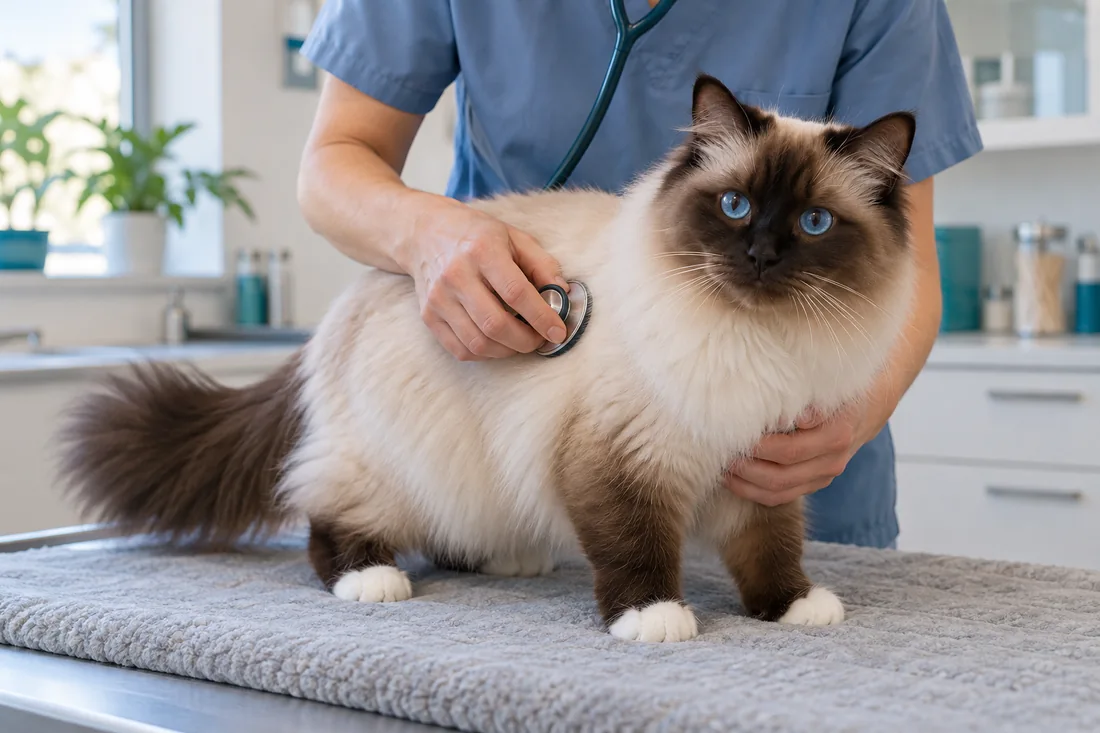
Health is more than the absence of disease
A healthy Birman is not simply a cat without a diagnosis. Health also includes normal appetite and weight, pain-free movement, a healthy mouth, calm breathing, normal grooming and litter-tray habits, and behaviour that can unfold in a safe environment. One of the best everyday tools is knowing what is normal for your own cat.
Vaccination, appropriate parasite control, dental care, weight monitoring, safe surroundings and regular health assessments are part of supporting a long feline life.
A test result or scan is important information, but it must be interpreted together with the cat, its family history, age and clinical assessment.
Cats are good at hiding pain and illness. With clear or persistent changes, the veterinarian is the right next step.
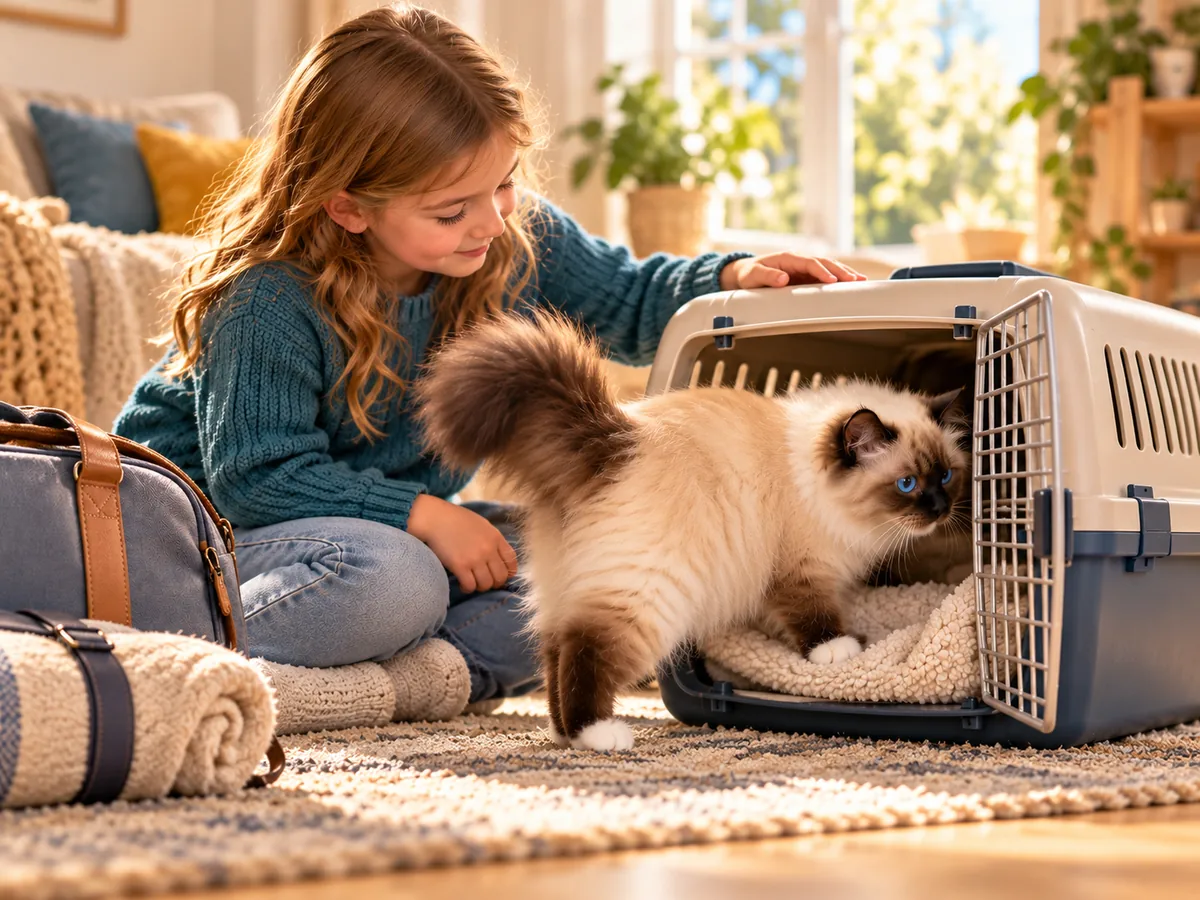
The healthy Birman through life
Needs change with age, and so do the things to watch. Think of health as a lifelong process rather than a series of isolated tests.
Growth, vaccination, microchip, nutrition, social learning, handling, carrier training, grooming and positive experiences all belong together. A kitten is ready for a new home only when both body and mind are ready.
Watch weight, teeth, movement, appetite, drinking, litter-tray habits, coat and behaviour. The change from the cat’s own normal is often what matters most.
Breeding decisions should be based on clinical health, relevant examinations, blood type, family history, pedigree, fertility, temperament and genetic diversity – not on show titles alone.
Older cats may benefit from easier access to litter trays, food, water and favourite places. Weight, teeth, kidneys, mobility and behavioural changes deserve extra attention.
♡
Birmakredsen’s position is simple
A pet kitten is neutered before leaving the breeder. Birmakredsen follows FIFe’s 14-week rule, so kittens move no earlier than 14 weeks of age.

Everyday prevention
Not every illness can be prevented, but good routines improve the chance of noticing changes early and avoiding some unnecessary risks.
Plan health checks according to the cat’s age, history and needs – and do not wait for the scheduled visit if the cat changes.
Keep vaccinations up to date according to veterinary advice and applicable rules, and consider infection prevention at shows, in breeding and around other cats.
Follow body condition over time. Weight loss, weight gain and changes in appetite can all be useful information.
Bad breath, drooling, changed chewing or reluctance to eat can be signs of pain. Dental problems are not merely cosmetic.
Notice whether the cat jumps, plays, uses stairs and reaches its usual resting places as normal.
Changed grooming, itching, hiding, irritability or unusual inactivity can be signals that something should be assessed.
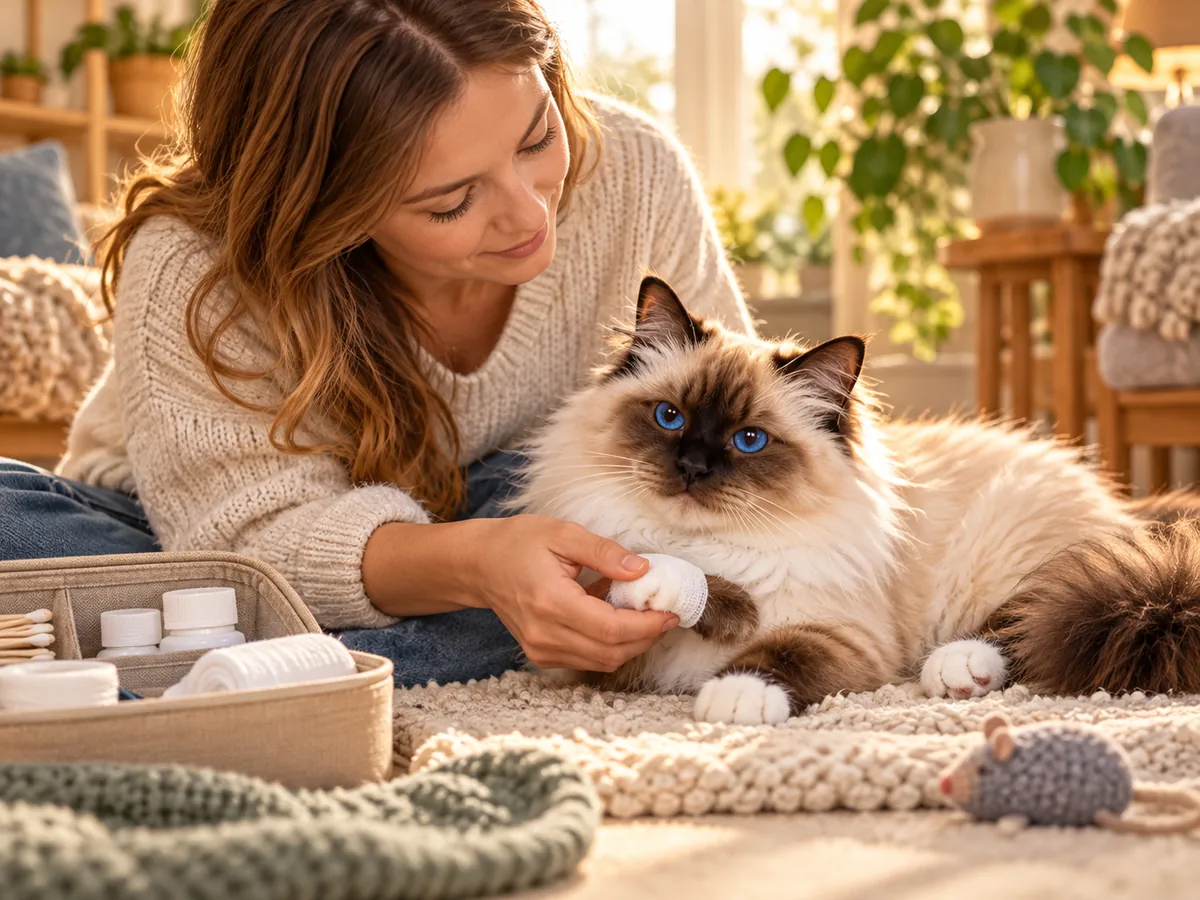
When should you contact the veterinarian?
This page can help you notice warning signs, but it cannot diagnose. If you are unsure, it is better to call the veterinarian once too often than once too little.
Seek urgent veterinary care for signs such as:
- obviously difficult or open-mouth breathing
- collapse, seizures, or sudden inability to stand or walk
- repeated unsuccessful attempts to urinate or suspected urinary blockage
- serious trauma, heavy bleeding or suspected poisoning
- severe pain or rapidly worsening general condition
Arrange an assessment for changes such as:
- changes in appetite, weight, thirst or urination
- persistent vomiting or diarrhoea
- bad breath, drooling or changed chewing
- less willingness to jump, play or be touched
- changed grooming, hiding, restlessness or unusual inactivity
Health before breeding
Responsible breeding starts before mating. HCM cannot be ruled out by one simple DNA test in the Birman, blood type may matter for a mating, and family history, fertility, teeth, kidneys, temperament and genetic diversity may all form part of the overall picture. No single test can replace a holistic assessment.
Welfare is also health work
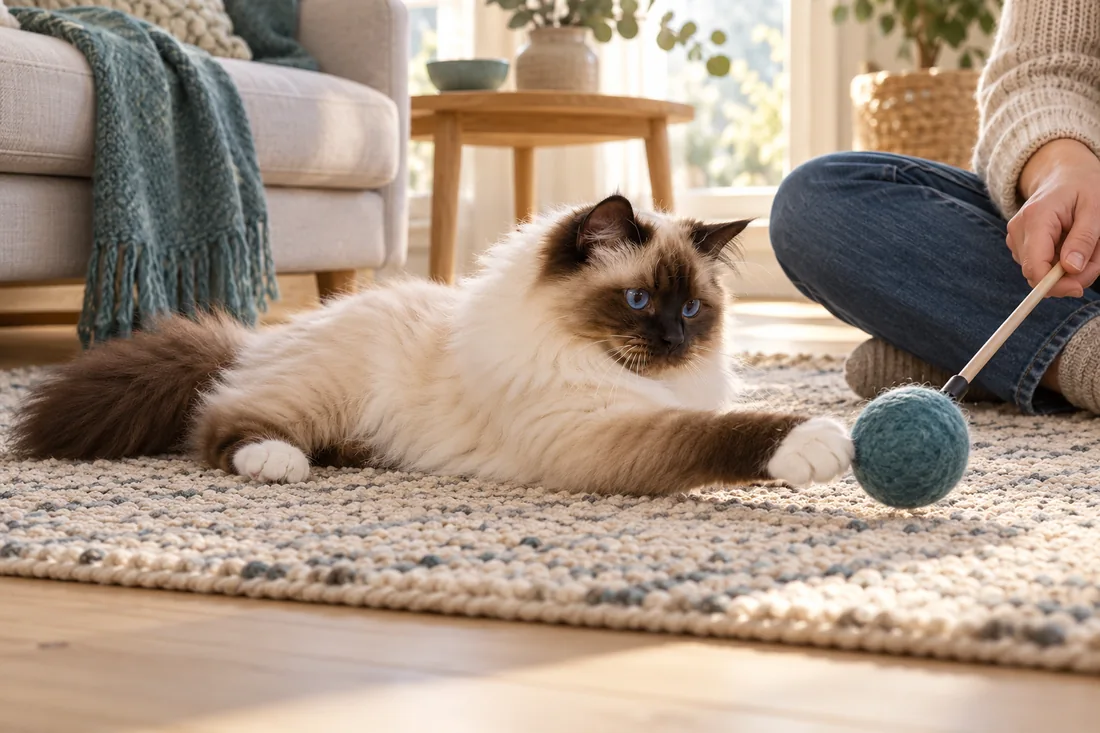
Safety, sleep, play, climbing, scratching, hiding places, clean litter trays, suitable social relationships and the ability to withdraw are not luxuries. They are part of basic feline welfare. Birmakredsen recommends a cat-secured garden, balcony or enclosure rather than unrestricted roaming.
BIMSE’S QUICK DAILY CHECK
“The human must know my normal.”
Bimse reluctantly accepts that the two-legged staff carry out quality control. Not because they are in charge – but because small changes are easier to spot when you know what the cat is normally like.
Being fussy can be personality. A new change in appetite is information.
Yes, the human may inspect the litter tray. Bimse merely demands discretion.
If the sofa has suddenly become a mountain, that is worth noticing.
More or less grooming than usual can tell us something about skin, pain, stress or wellbeing.
More hiding, irritability, restlessness or inactivity should not automatically be dismissed as “mood”.
Obviously difficult or open-mouth breathing is not a Bimse verdict. It is a veterinarian-now situation.
Bimse’s conclusion: Know the cat, write down changes if useful – and let the veterinarian be the veterinarian. The human can remain the can-opener with observation duties.
Editorial principle: The Birmakredsen updates the pages when solid new knowledge or new rules change the basis. We distinguish between official rules, veterinary knowledge and the Birmakredsen's own dissemination.
Last updated: 3 October 2026
Read more about health
Health information is general information and does not replace individual examination and advice from a veterinarian. In case of acute symptoms, a veterinarian should be contacted immediately.
Health and well-being
Find knowledge about prevention, diseases and when your cat should be examined.
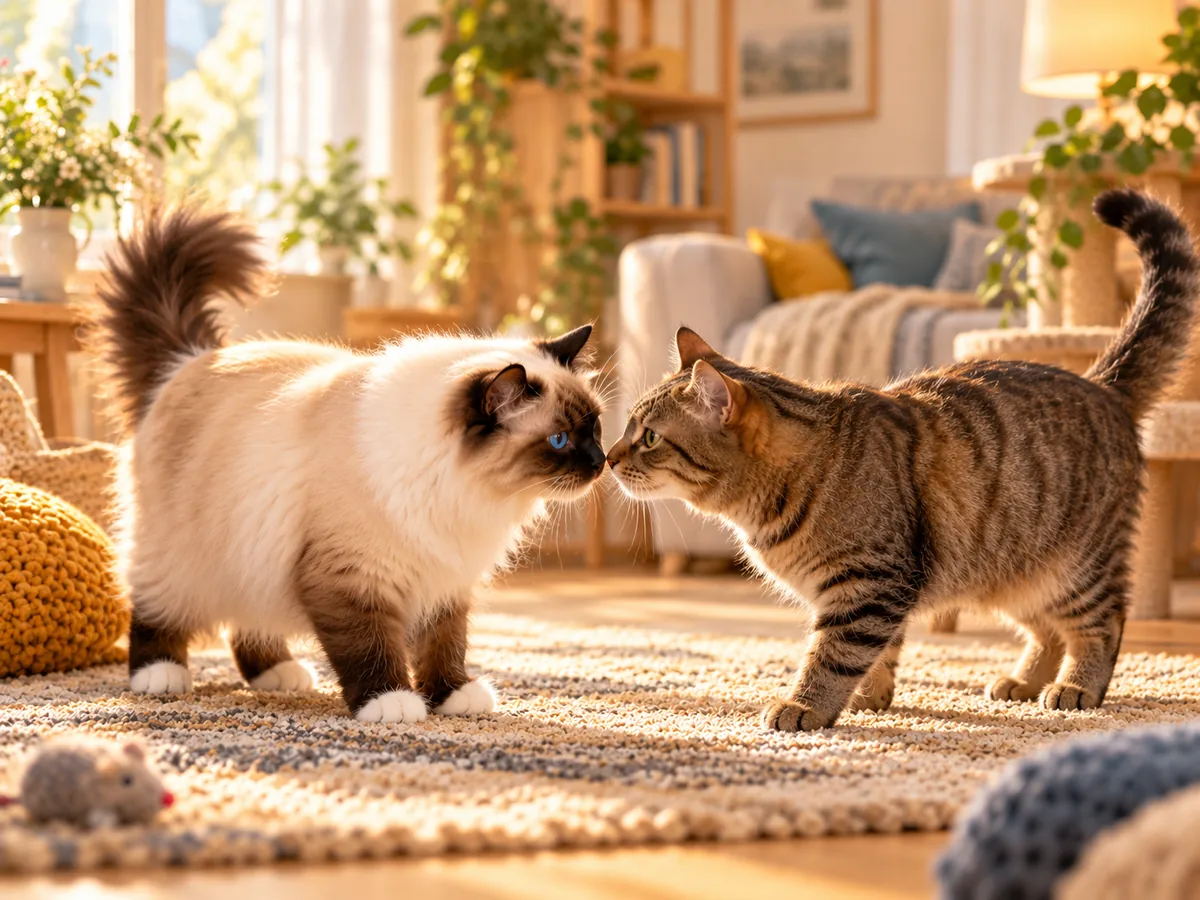
HealthKnowledge about prevention, health and care for Sacred Birman – throughout life.Open the guide →