Seal
SBI n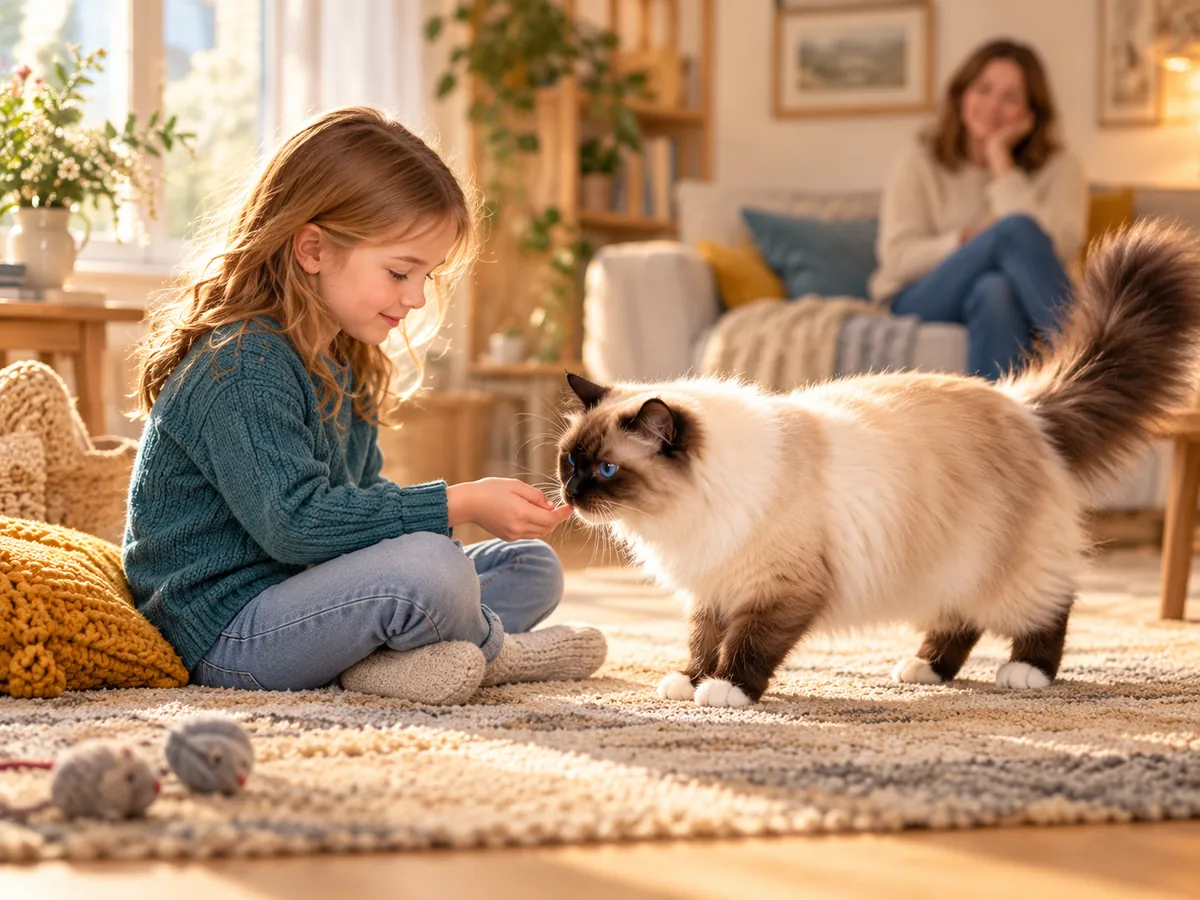
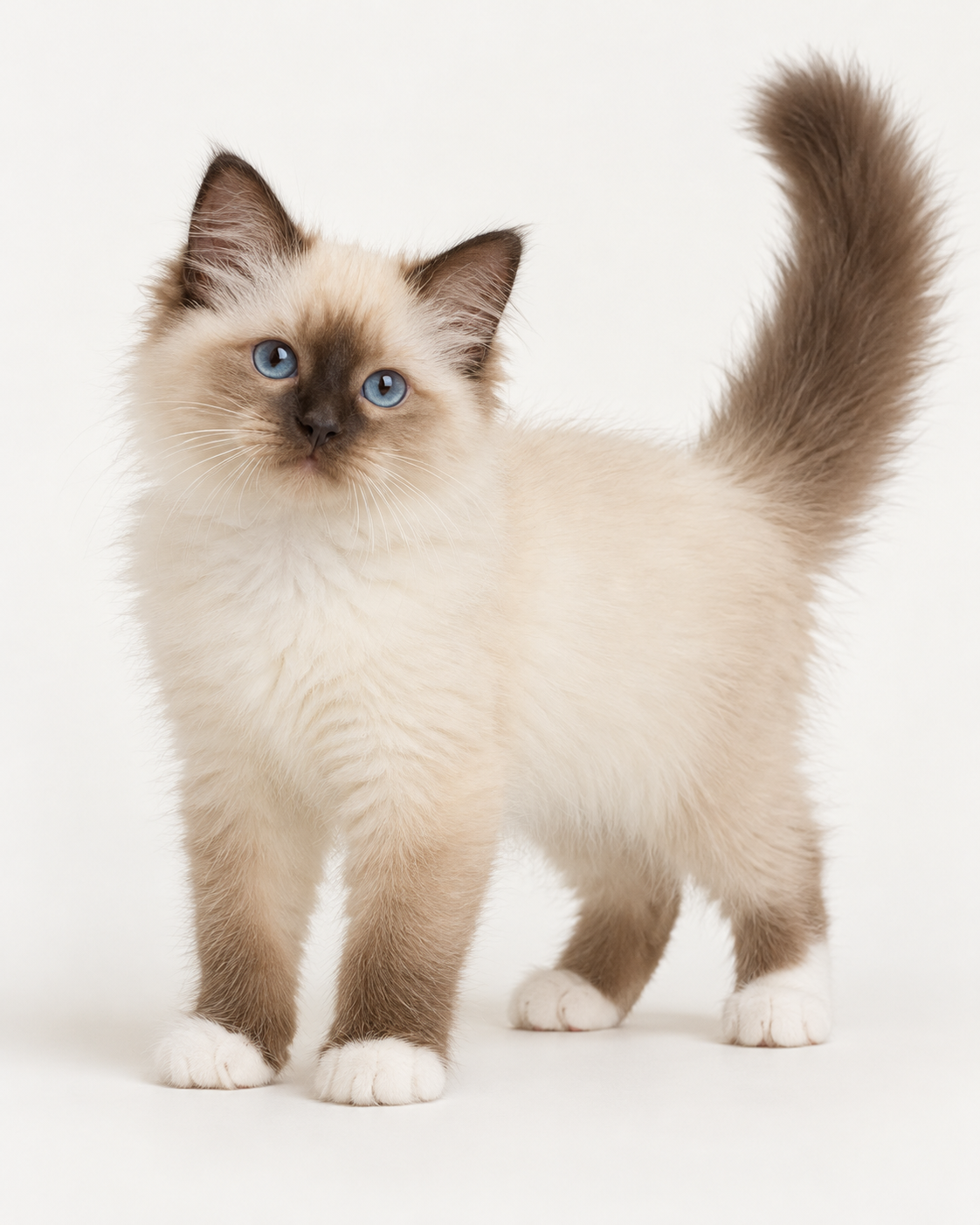
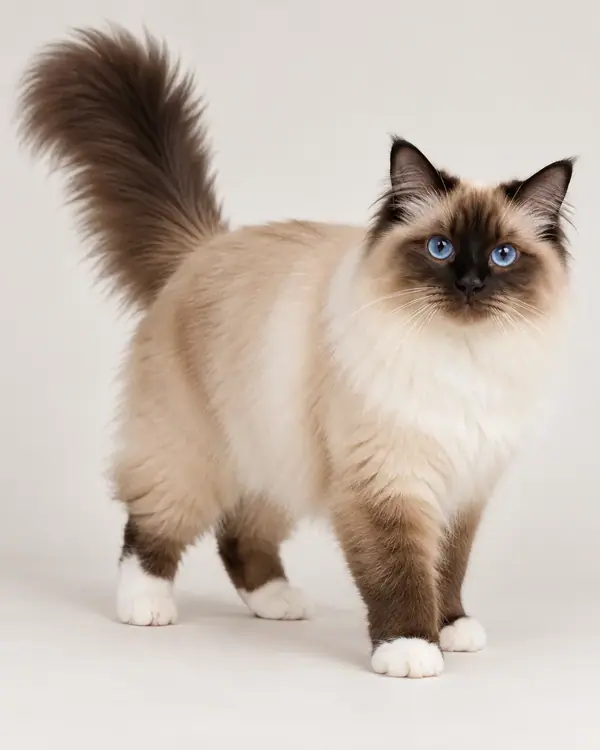
The darkest classic point color: warm to very dark brown.
Brun, blå, chokolade, lilla, rød og creme – plus tortie og tabby. Her kan du se, hvordan EMS-koderne hænger sammen med det, øjet faktisk ser.
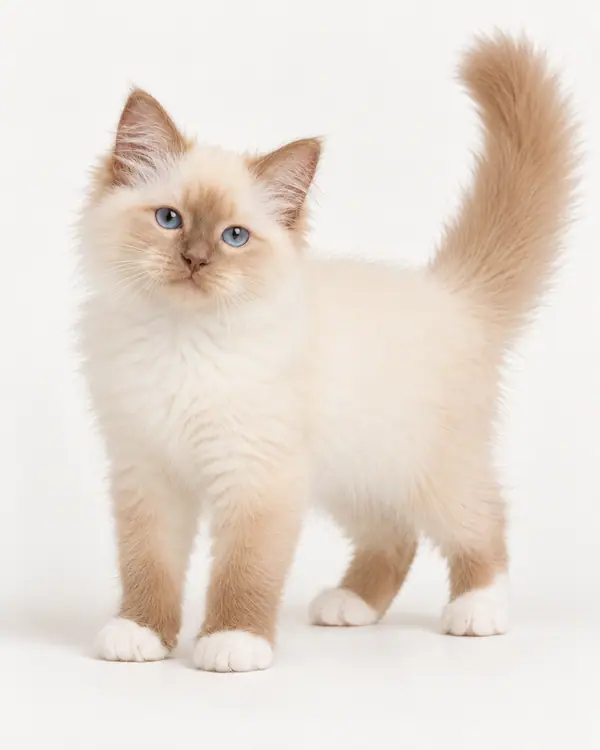
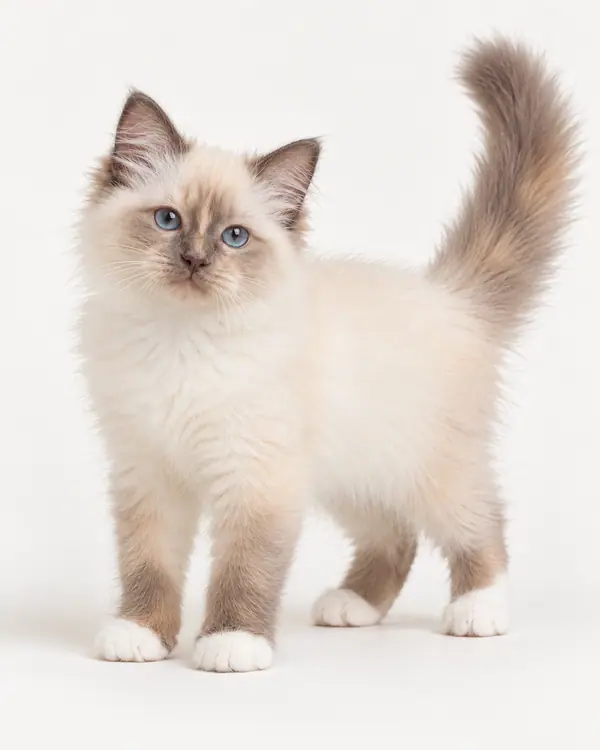
A Birman is a Siamese mask: the face, ears, legs, tail and genital area are darker than the body. The chin is part of the mask and should therefore be point-colored – not stand out white like a bib.
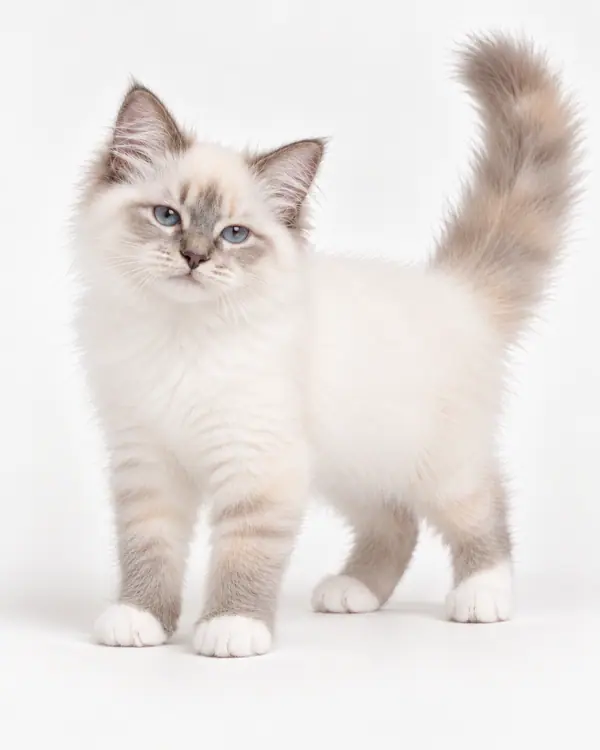
Compare adult cat and kitten in each mask color. The images are AI-generated illustrations, not photographs of color-coded cats. Kittens are typically very light while the color is developing.
SBI nThe darkest classic point color: warm to very dark brown.
SBI a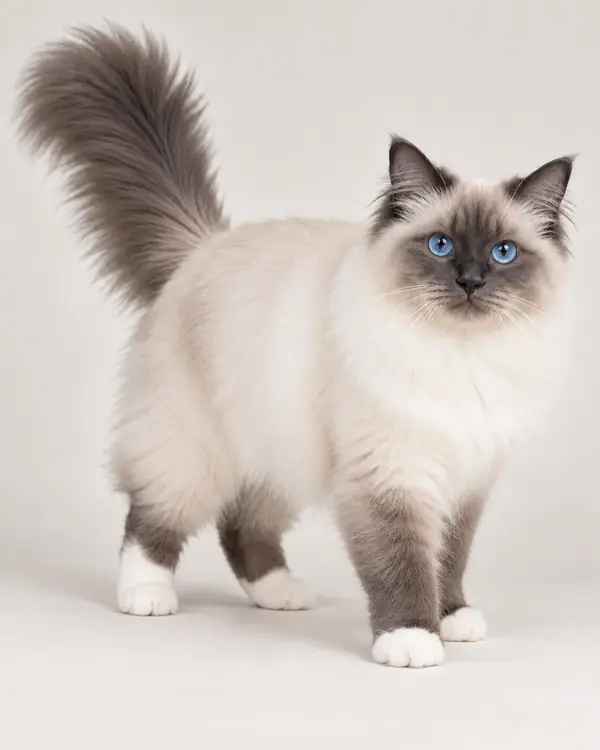
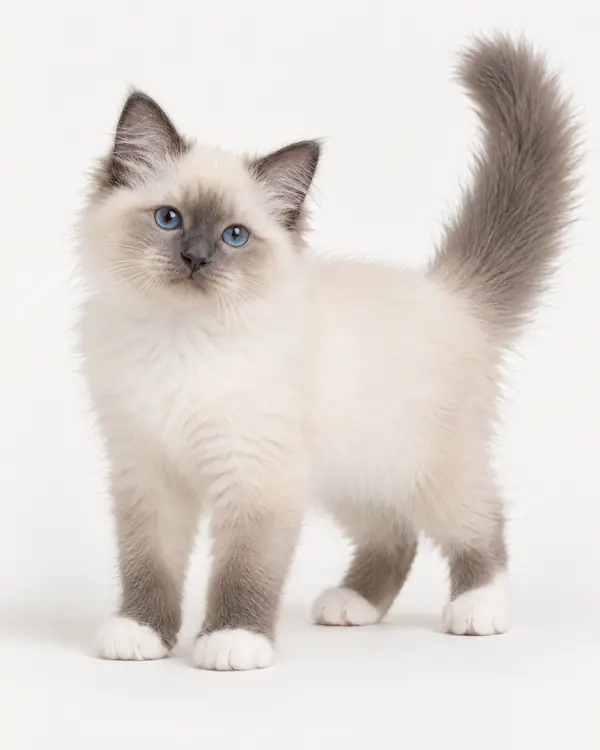
The diluted version of seal with a cooler blue-gray tone.
SBI b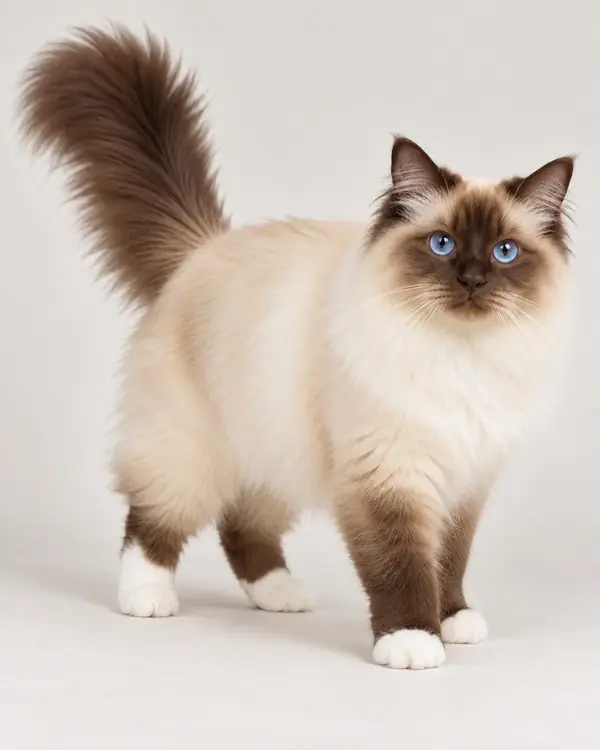
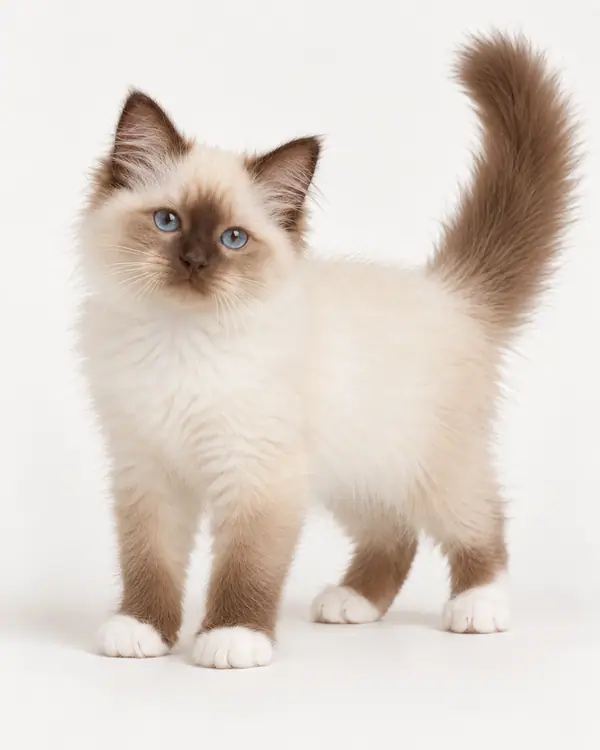
Lighter and warmer brown than seal, often with a softer expression.
SBI c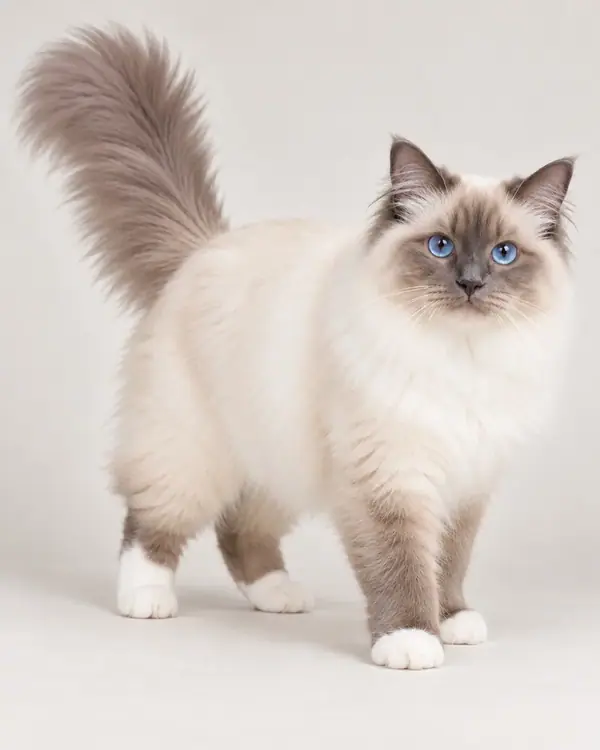
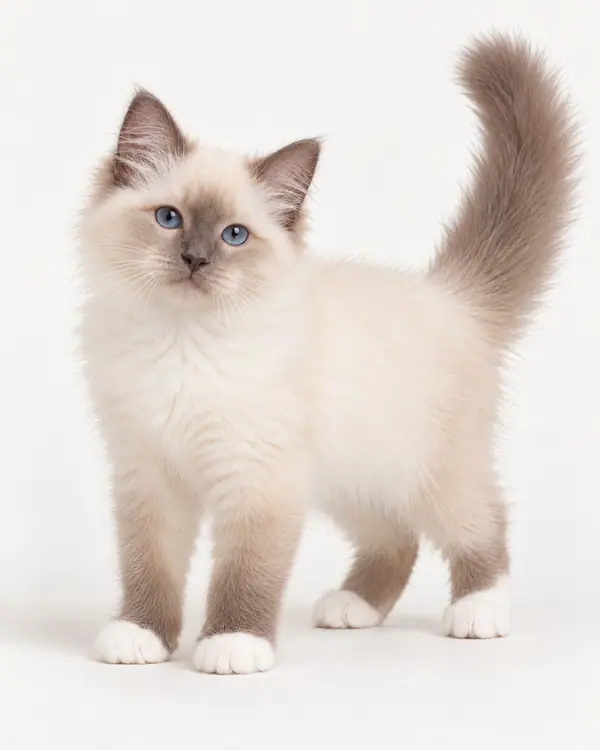
Diluted chocolate – light, cool and discreet in tone.
SBI d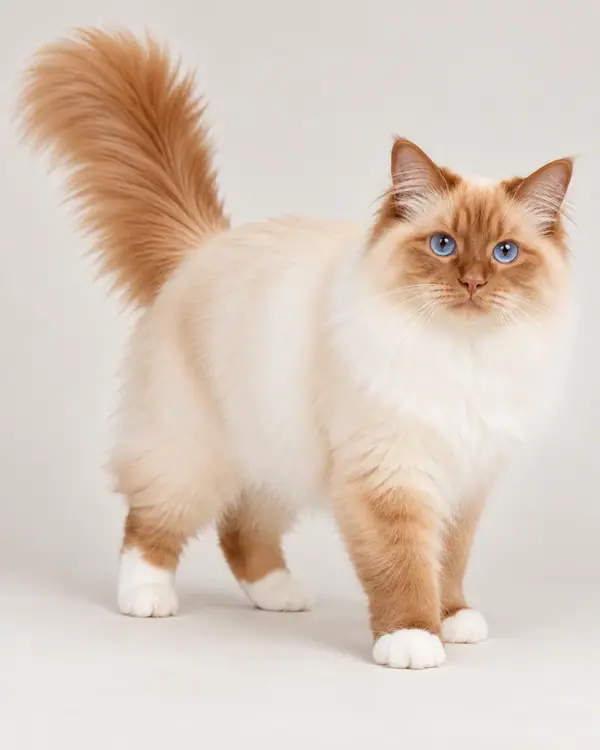
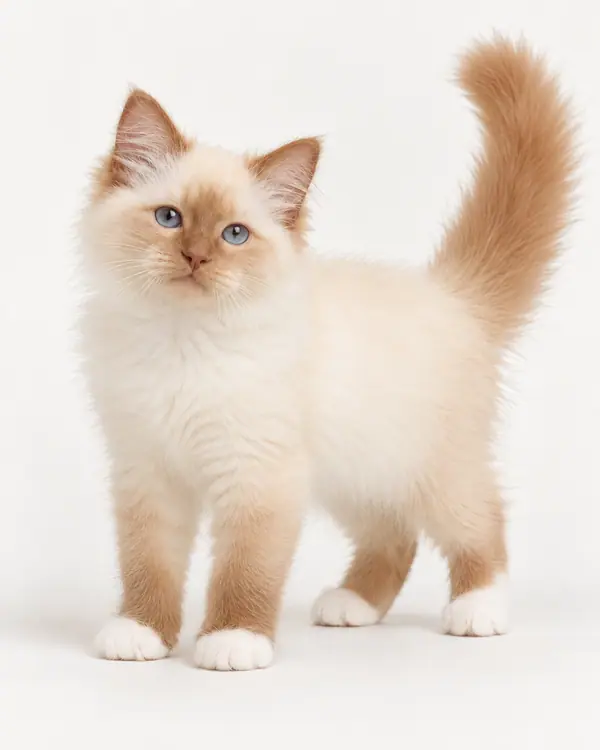
Red/orange point color, often with a distinctly warm expression.
SBI e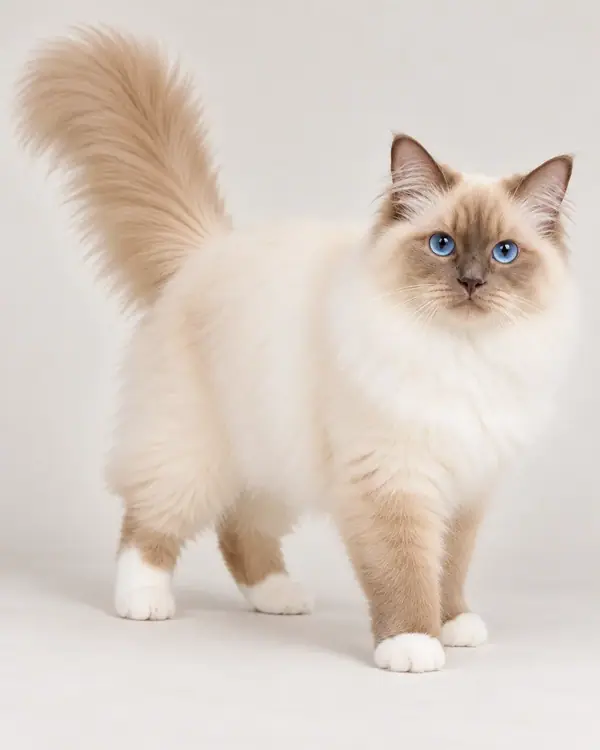
Diluted red – softer and lighter in color.
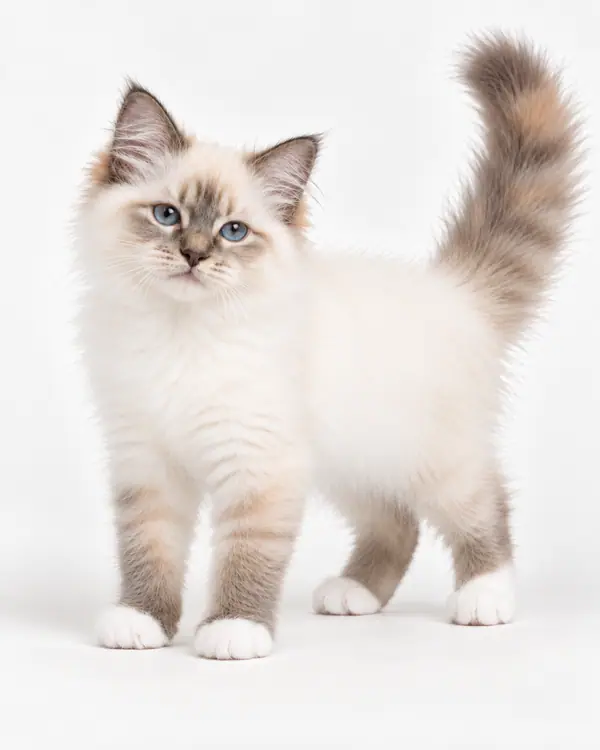
Tabby gives stripes in the mask and rings/patterns in points. The EMS code gets 21 by the color code, e.g. SBI n 21.
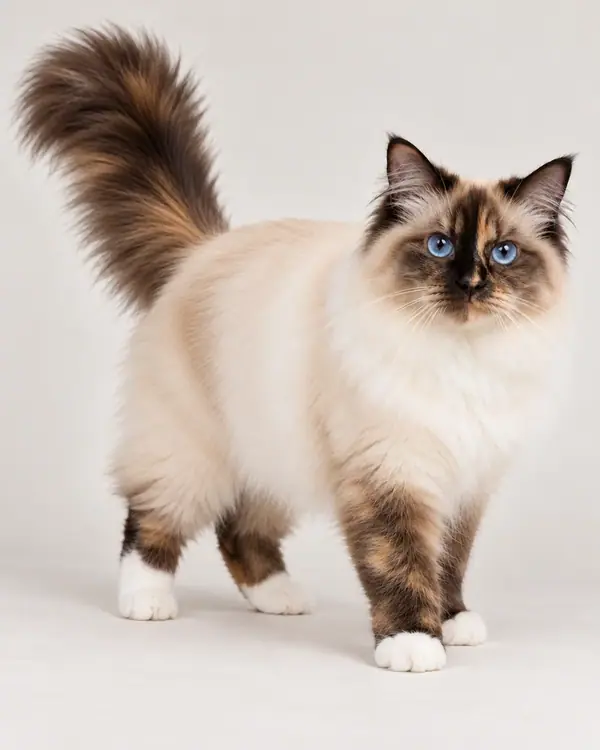
Tortie mixes the base color with red or cream. In Burma, f, g, h, and j are used for seal, blue, chocolate, and lilac tortie, respectively.
The tabby pattern is particularly visible on the face, legs and tail. In kittens, the pattern is often only faintly visible.
SBI n 21
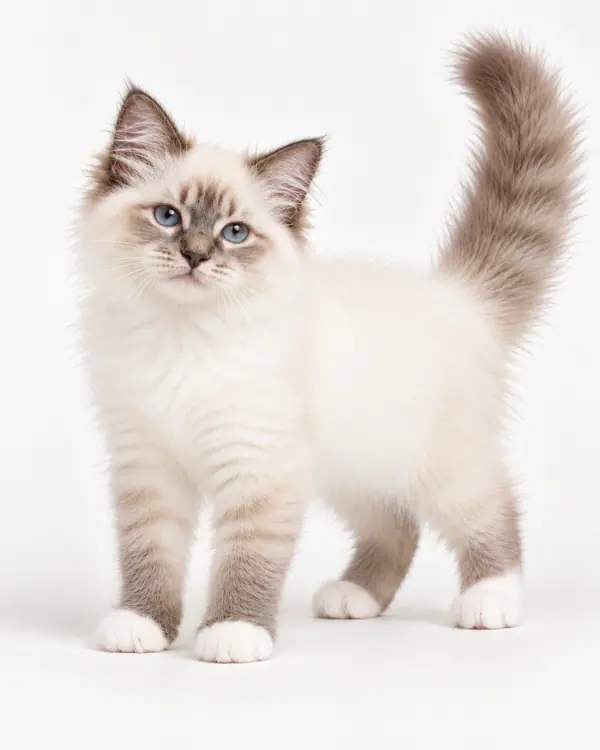
SBI a 21
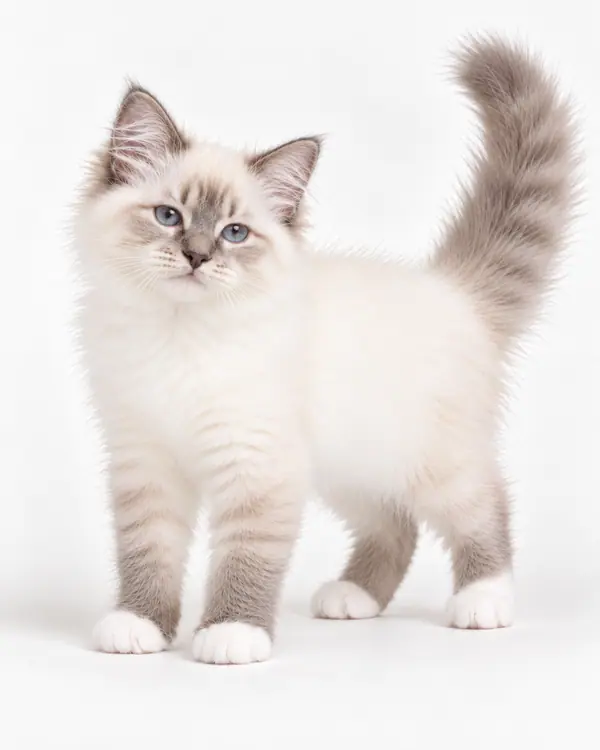
SBI b 21
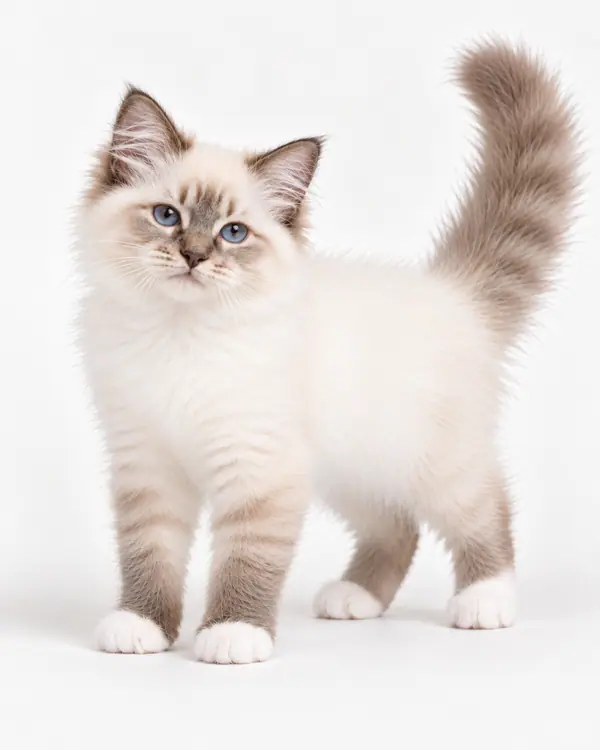
SBI c 21
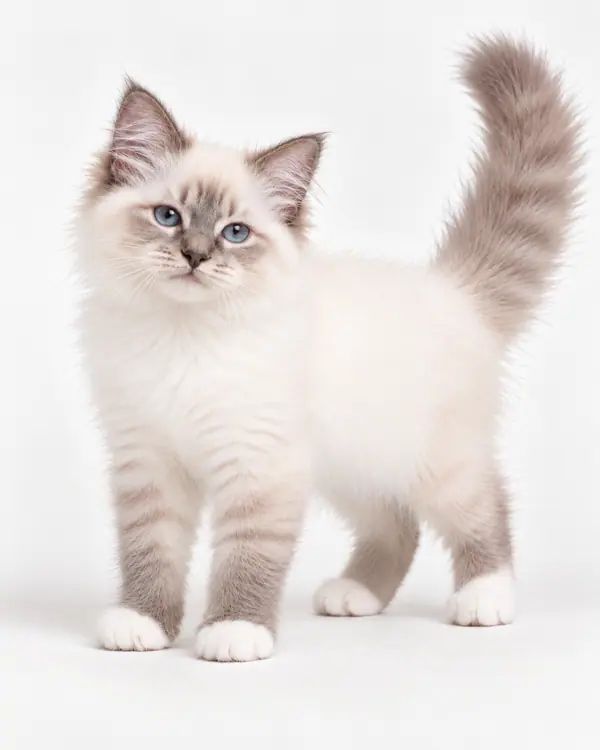
SBI d 21
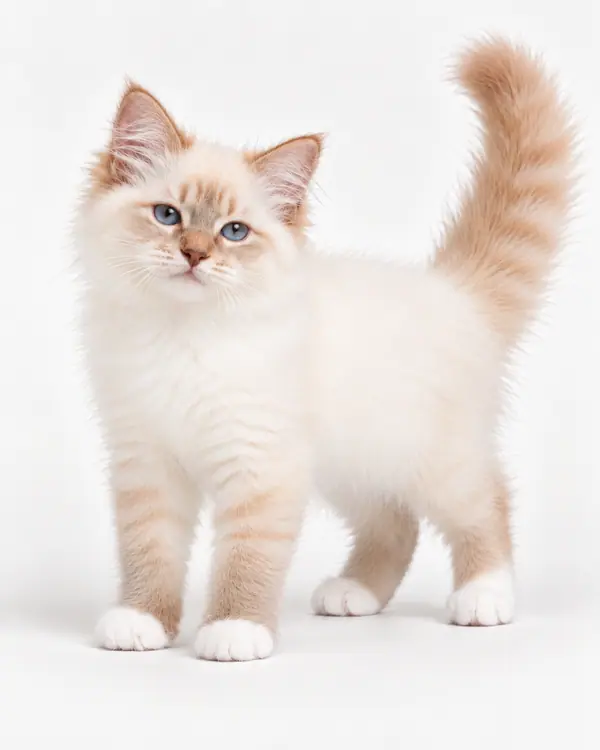
SBI e 21
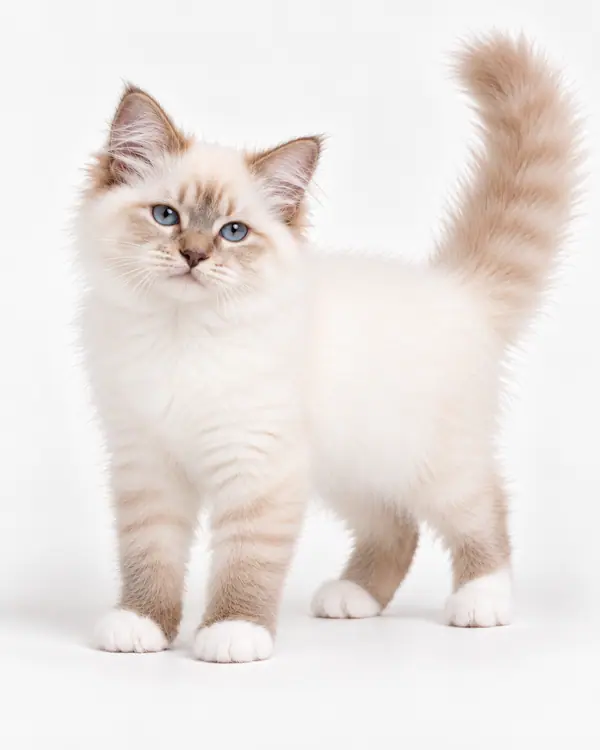
In torties, both the base color and red or cream-colored areas are visible in the mask. The distribution varies from cat to cat.
SBI f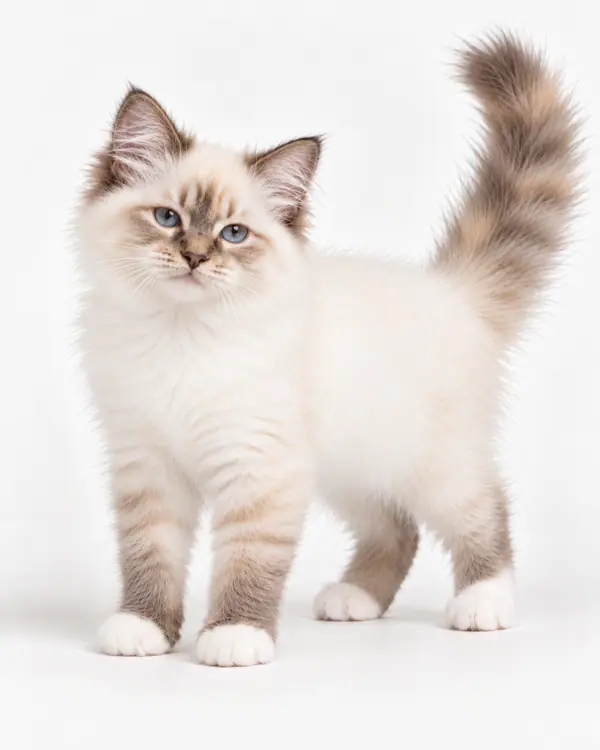
SBI g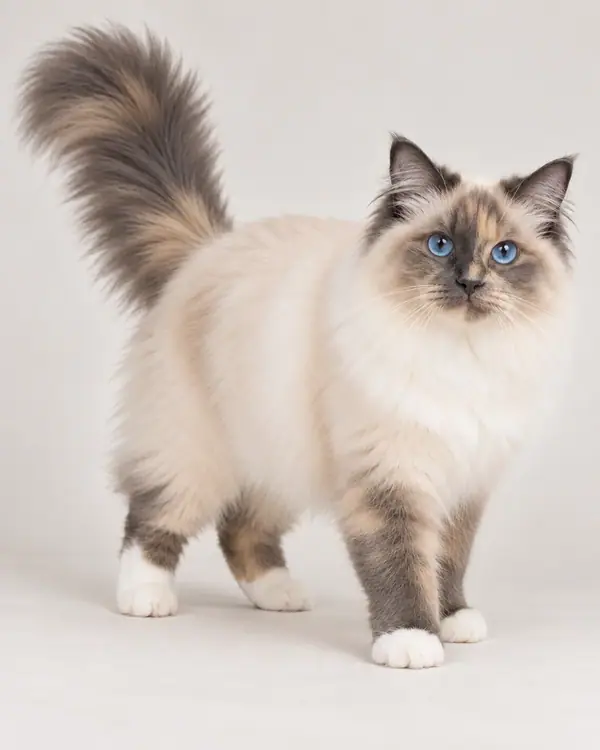
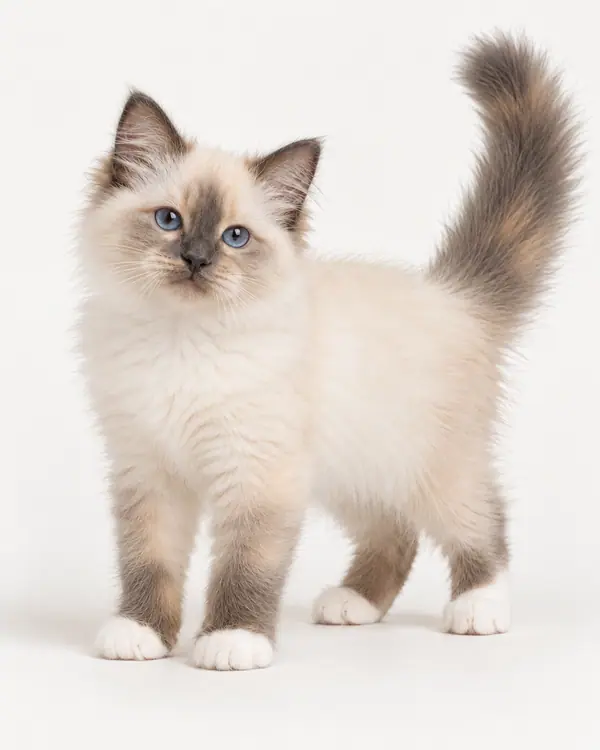
SBI h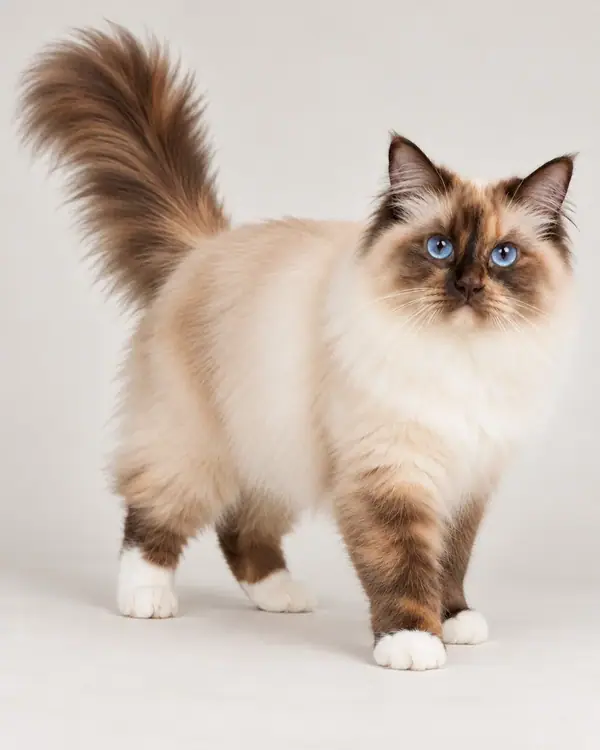
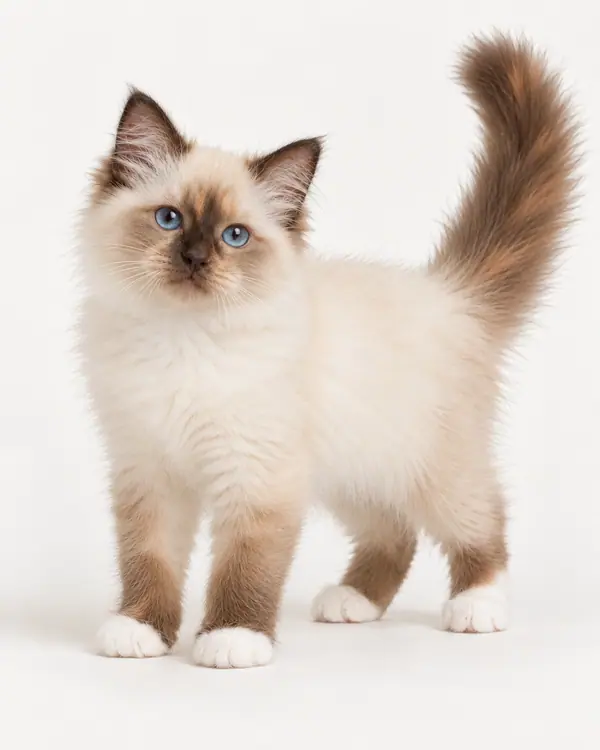
SBI j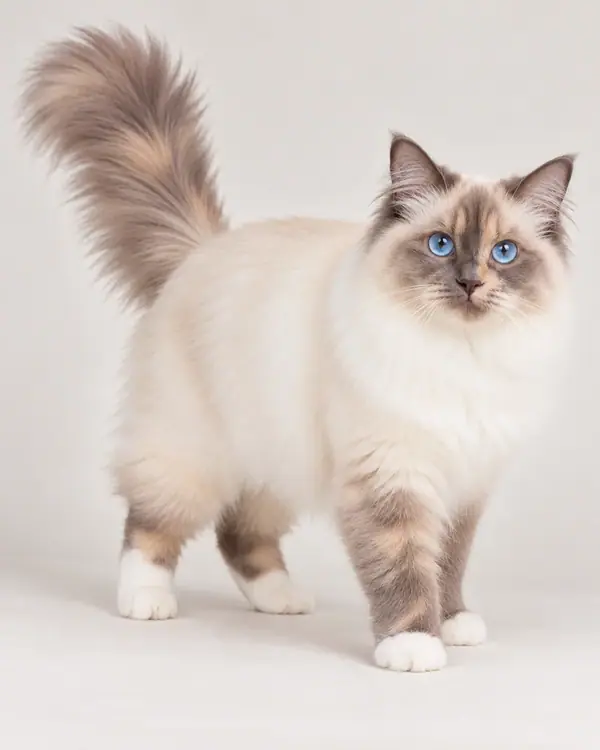
The two patterns can be combined. For example, you get seal tortie tabby point: SBI f 21. This is why one cat can have both stripes and tortie areas in the mask.
SBI f 21
SBI g 21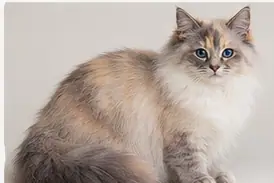
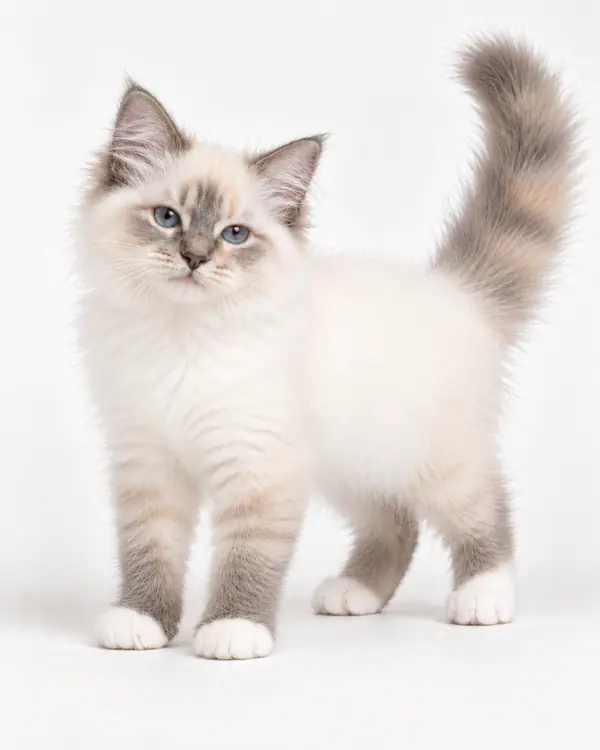
SBI h 21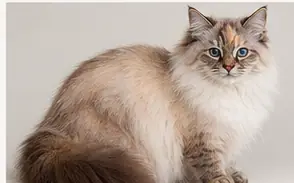
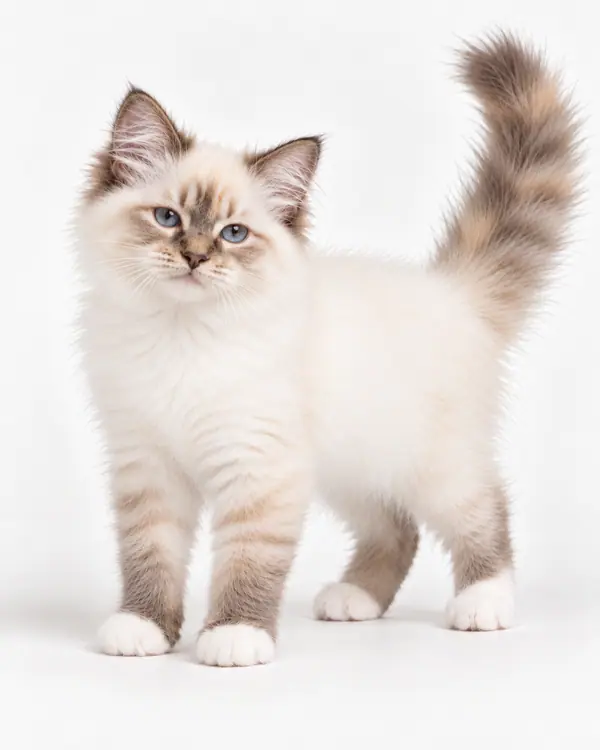
SBI j 21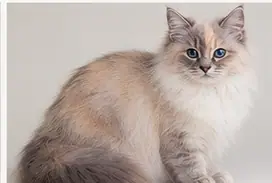
The FIFe official 2026 list also includes smoke and silver tabby varieties. They are not included in the Birmakredsen's picture guide here, so the visual overview focuses on the classic point, tabby and tortie varieties.
A newborn Birman is almost white. The color develops on the cooler parts of the body, and an adult cat can be much darker than it was when young. Therefore, you cannot judge the finished body color from an early kitten photo.
The illustrations show the principles of color development. Individual cats can vary considerably.