

Head & profile
The head should have strong bone structure, a slightly rounded forehead, full cheeks, a firm chin and a medium-length nose without a real stop, but with a slight indentation.
Hvad kigger dommeren egentlig efter? Her er FIFe-standarden for Hellig Birma oversat til et overblik, man kan bruge uden at være dommer.
The standard describes the desired entirety of the breed: head, eyes, body, coat, color, tail and the characteristic white gloves. A show standard is not a ranking of how nice a cat is to live with.
The head should have strong bone structure, a slightly rounded forehead, full cheeks, a firm chin and a medium-length nose without a real stop, but with a slight indentation.

The eyes are medium-sized, slightly oval and deep blue. The ears are relatively small with rounded tips and well spaced.
The body is slightly elongated. Males should appear more massive than females. The legs are short and strong, and the paws are round.
The tail is medium-length and forms a plume. The coat is long to semi-long, silky and with a little undercoat.

It is useful to see the scoring scale because it shows that the Holy Birman is judged as a whole – not just on the white paws.

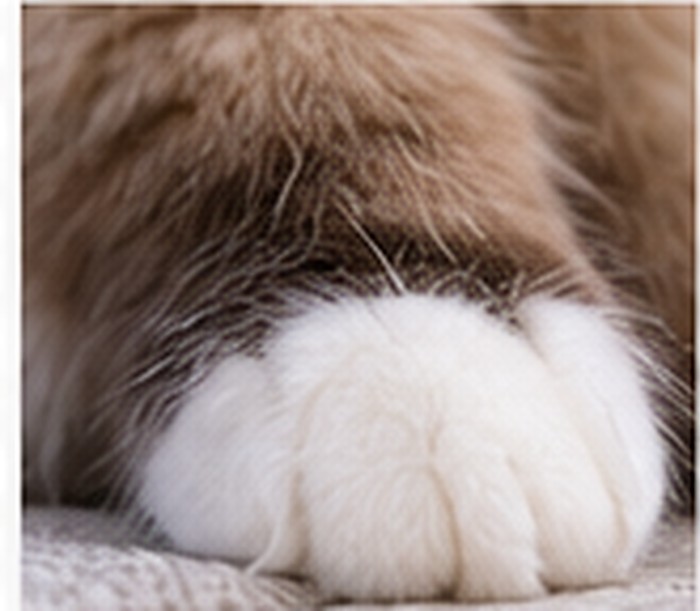
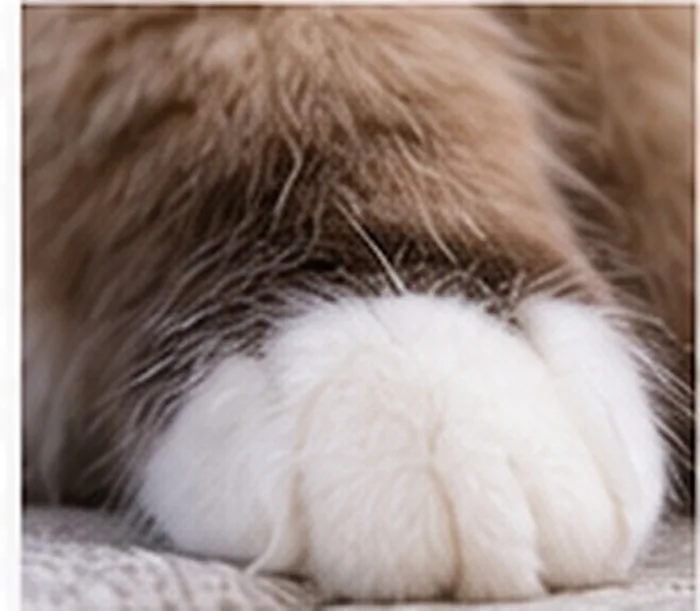
All four feet should be pure white. On the hind feet, the white continues up into a point – the so-called wedges or spurs. The ideal is inverted Vs that reach about halfway to three-quarters of the way up the hock. Uniformity and symmetry count.

White that runs up the side or back of the leg from the glove – what is called a “runner”.
Missing webbing/spurs on the hind feet.
White spots in the colored areas – or colored spots where there should be white.
This page is an explanation. At shows the official FIFe standard is always the decisive text.
Hanne-Sofie Sneum's insightful review of the breed standard deserves to be read again – today more than ever. We present her professional main points with clear updates to the current FIFe standard.
Original author: Hanne-Sofie Sneum, FIFe all-round judge. Editorial processing and contemporary notes: The Birmakredsen.
Read Hanne-Sofie's review and the new standard notes →