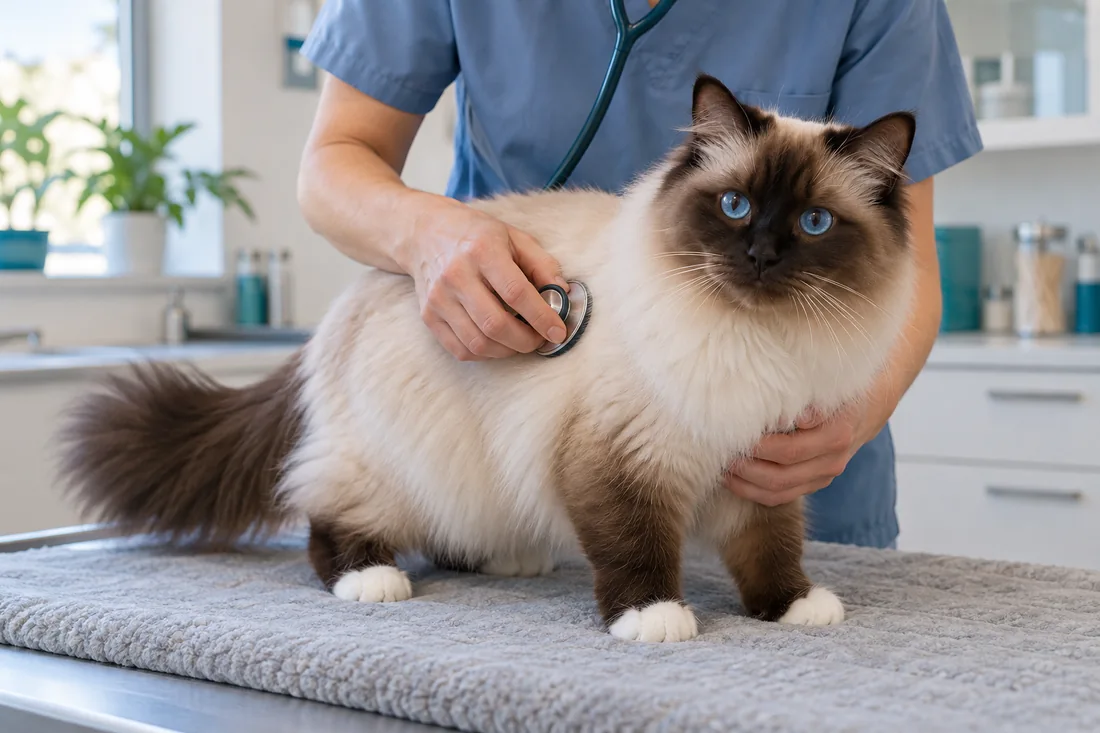
Hypertrophic cardiomyopathy (HCM) means that the heart muscle becomes thickened. This can affect the heart’s ability to relax and fill normally and, in some cases, lead to heart failure or blood clots.
Why the disease can be difficult to detect
Many cats with early HCM appear completely normal. A heart murmur may raise suspicion, but the absence of a murmur does not rule out disease. The most important examination of the heart’s structure is echocardiography – an ultrasound scan of the heart – performed by a veterinarian with relevant experience.
Signs that require attention

Rapid or labored breathing at rest.
Sudden drop in energy or stamina.
Fainting or acute weakness requires prompt assessment.
Sudden pain and paralysis in the hind legs is acute.
HCM and breeding

HCM can have hereditary components, but there is no single DNA test that can clear a Sacred Birman of HCM. Phenotypic screening by echocardiography and open recording of results therefore remain important when trying to reduce risk in breeding.