“We have no members – we are a community.”
Close-up of Holy Birman's white gloves
hvidt
symmetri
særpræg
Gloves & gauntlets

Gloves & gauntlets

The white paws are the Birman’s signature. Learn the difference between gloves, gauntlets and symmetry, and the faults that may matter at a show.

All four feet must be white. On the front paws the white is called gloves; on the hind paws the white continues up the back into a point, commonly called a gauntlet.
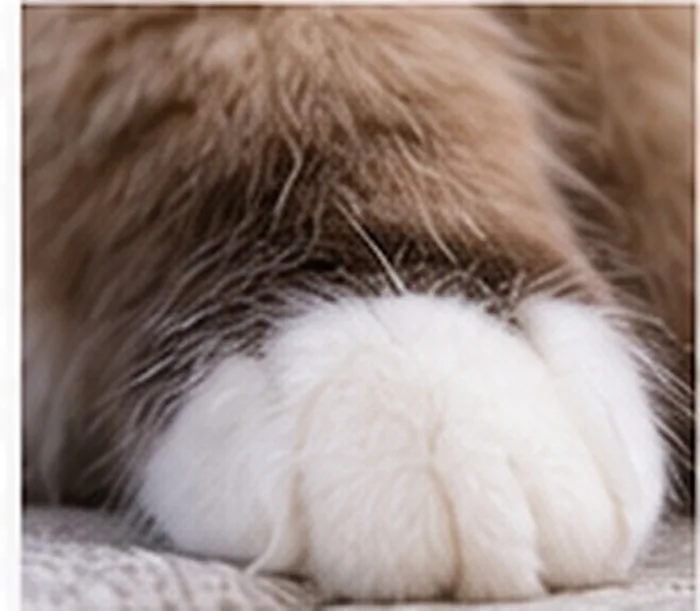
Close-up of Holy Birman's white gloves
The Birman’s white signatureGloves and gauntlets are among the breed’s most recognisable features – and at the same time among the hardest to breed consistently.
♛

Front paws

Close-up of Holy Birman's white gloves
AI-illustration

The gloves should be pure white and ideally stop around the transition between toes and metacarpus. They should neither climb high up the leg nor be so low that toes lose their white.

Hind paws
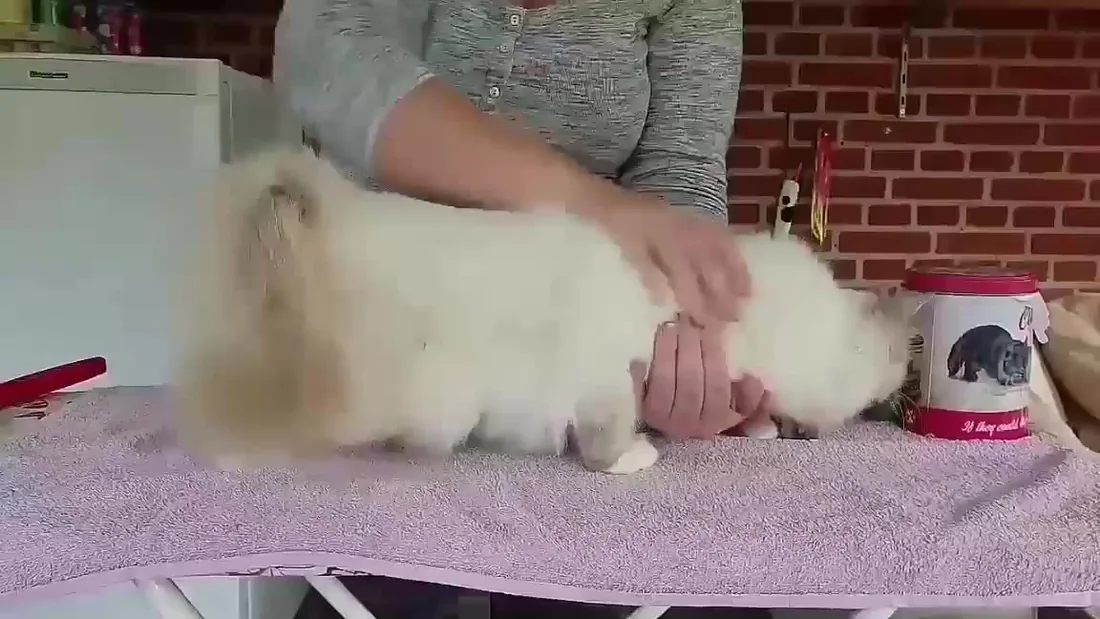
Still image from the Birmankredsen video about fur care
Still image from the fur care video

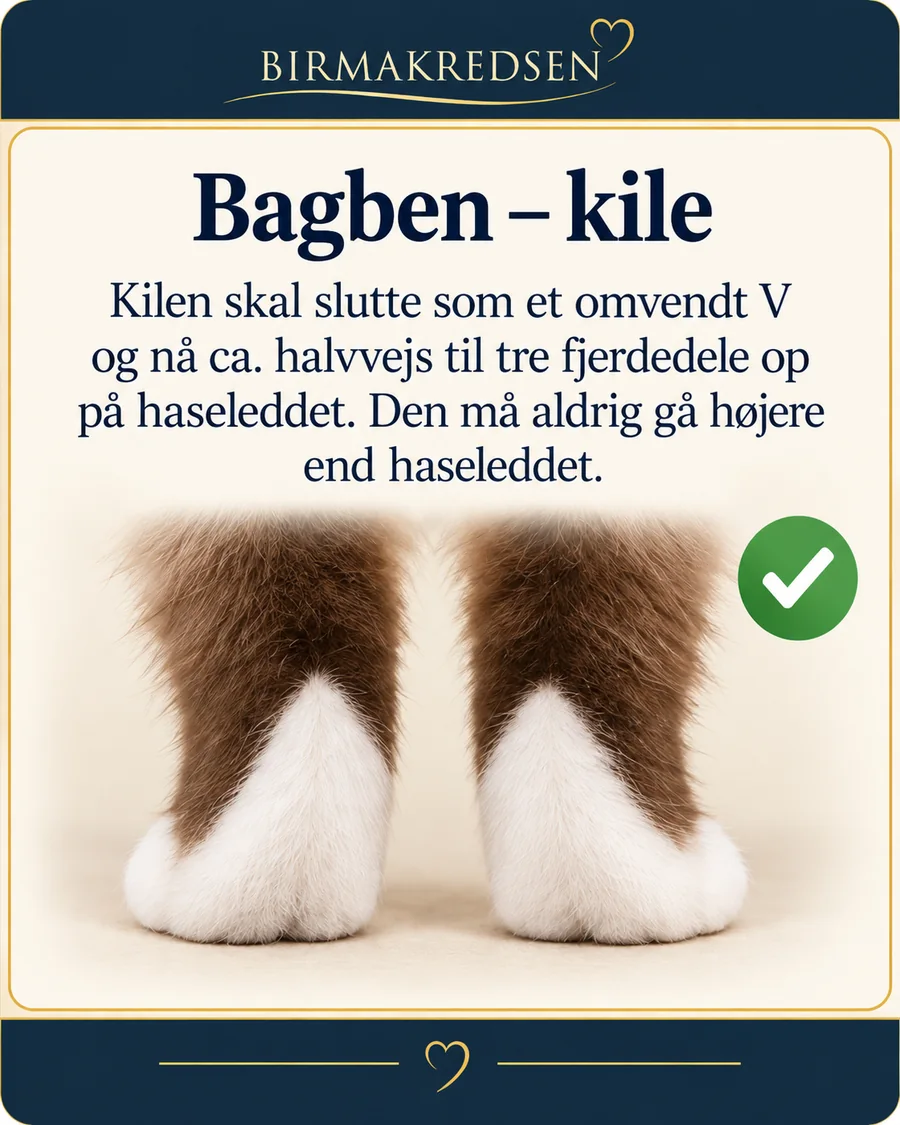
Slightly longer gloves are accepted on the hind paws. At the back, the white should form a point. FIFe describes the ideal gauntlet as an inverted V extending roughly halfway to three quarters of the way towards the hock. It must not extend beyond the hock.

Symmetry

The standard places emphasis on the two front gloves matching each other, the two hind gloves matching each other, and ideally on the overall appearance of all four paws being harmonious. Perfect symmetry is difficult and rare – that is part of the breed’s distinctive character.

See the difference in the signs

Each type of sign now has its own graphic, so you can see the details clearly – even on mobile. Tap an image to open it full size.

Idealet

Correct signs

Examples of the expression the standard aims for.
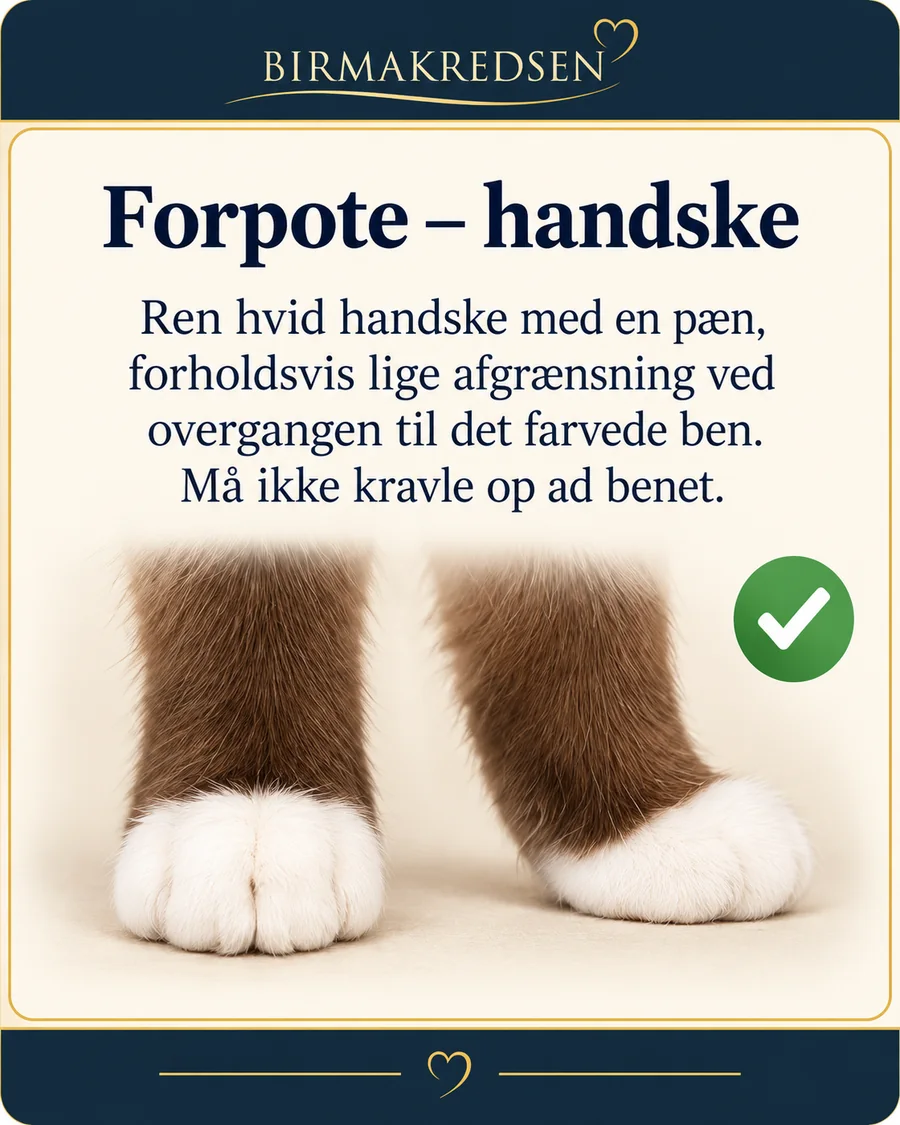
Correct white glove on the Holy Birman's front paw.
Foreleg – glovePure white glove with a calm demarcation to the colored leg.
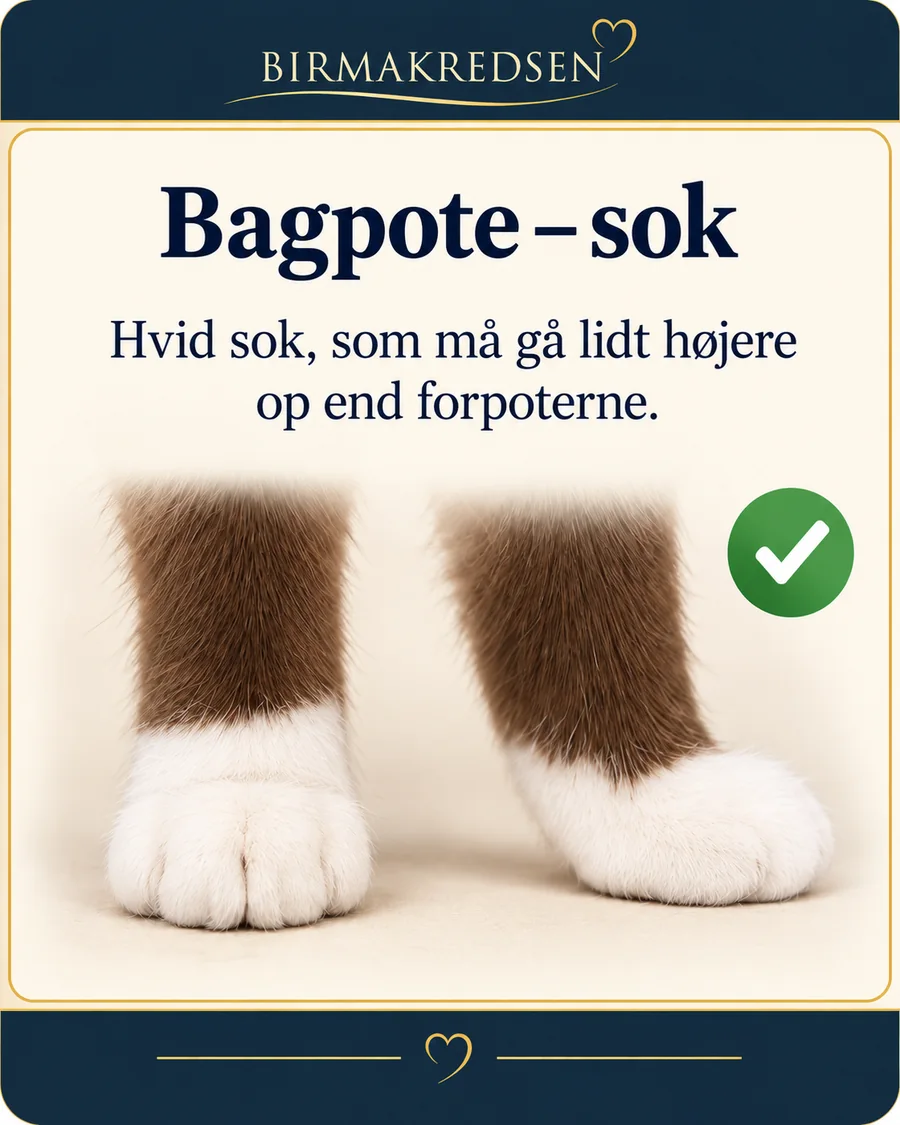
Correct white sock on the Holy Birman's hind paw.
Hind paw – sockThe white sock must go up a little higher than on the front paws.
Correct wedge on the back of the Holy Birman's hind legs.
Hind leg – wedgeThe white forms the characteristic wedge on the back of the leg.
Typical deviations

How the signs can differ

Here are the errors and deviations typically discussed when evaluating gloves, socks and wedges.
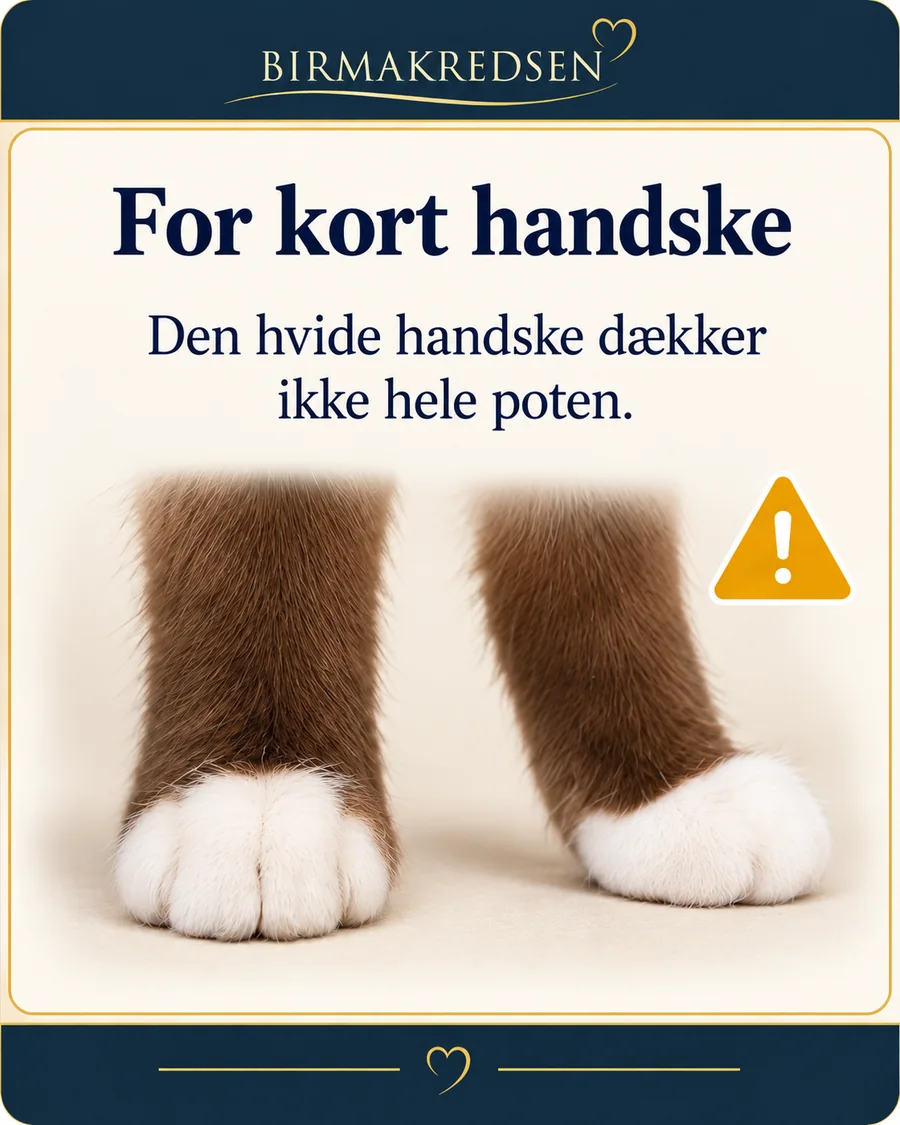
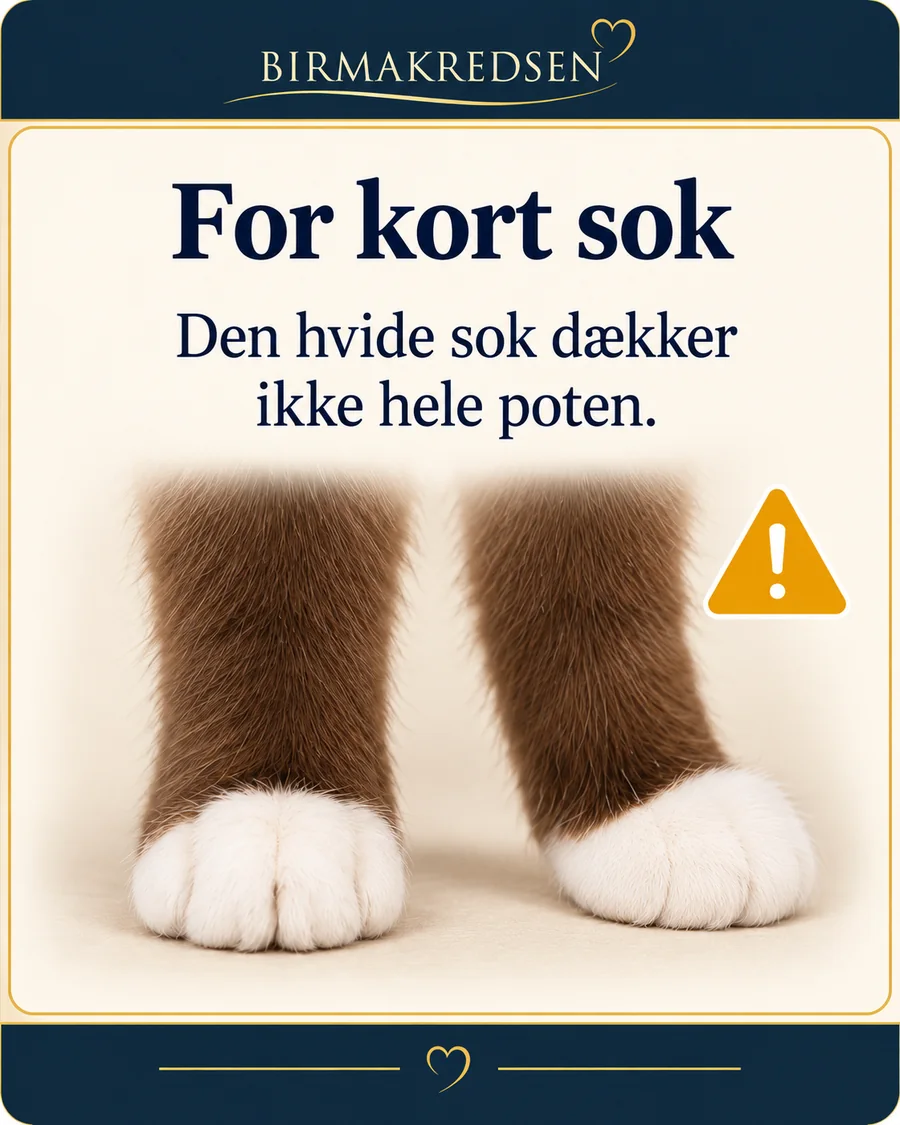
Example of a glove that is too short on a Sacred Birman.
Glove too shortThe white doesn't reach far enough above the paw.
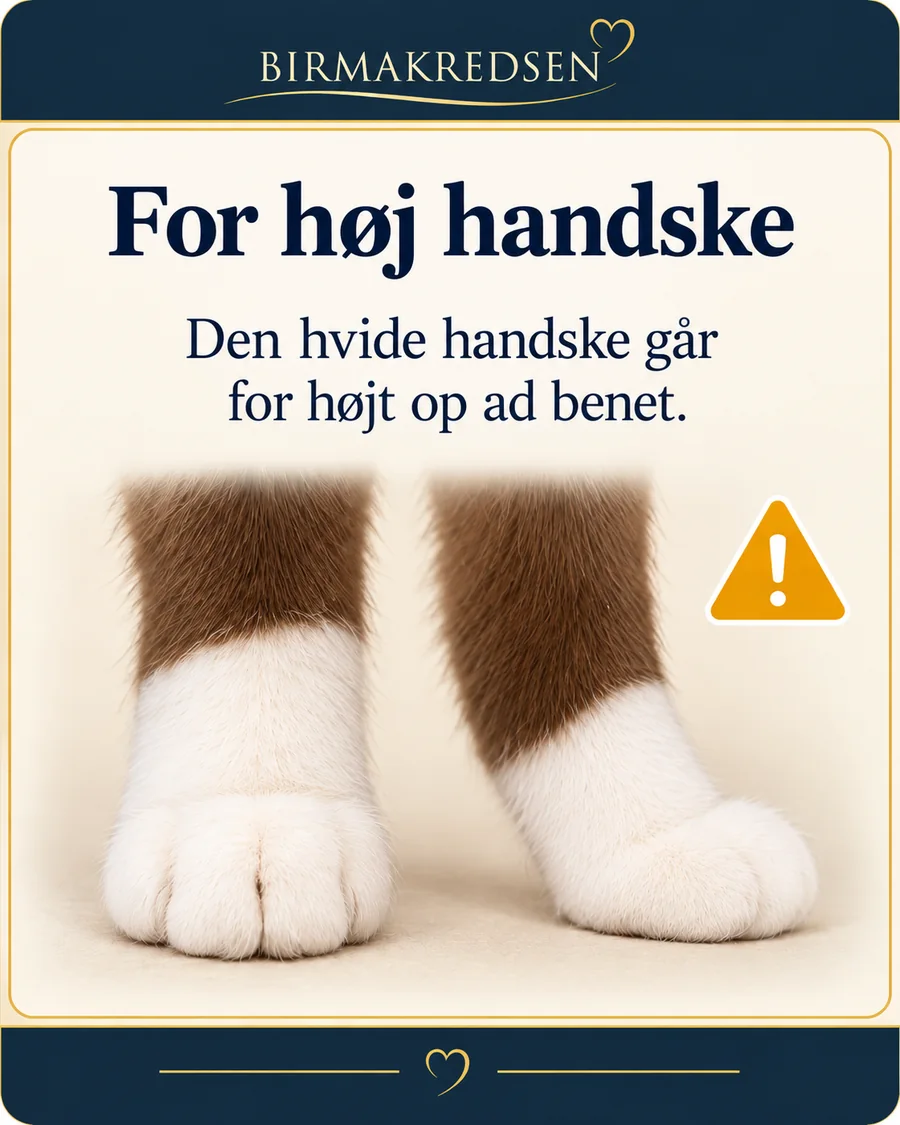
Example of a glove that is too high on a Sacred Birman.
Glove too highThe white goes too high up the front leg.
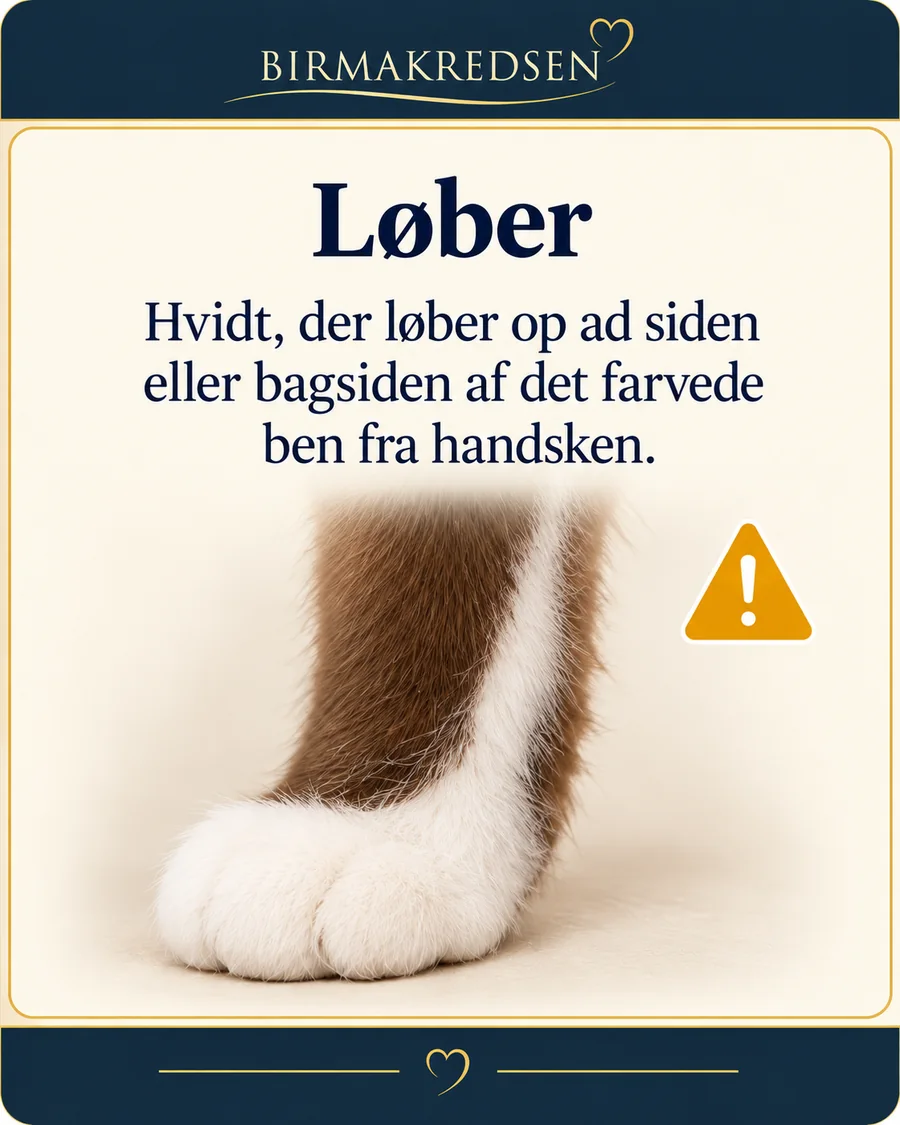
Example of a runner where white runs up along the legs of Sacred Birman.
LøberWhite continues up the side or back of the colored leg.
Example of a too short sock on a Holy Birman's hind paw.
Too short sockThe white on the hind paw is too low or insufficient.
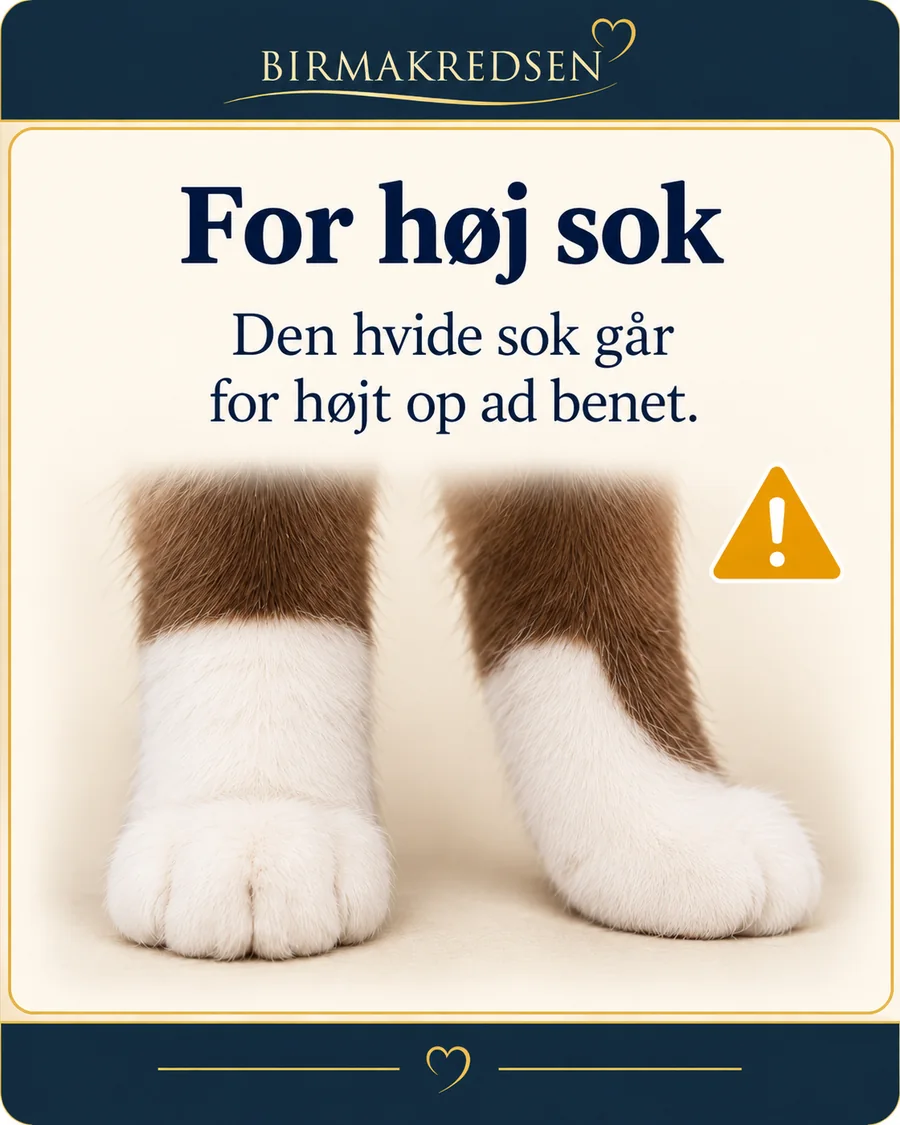
Example of a too high sock on the Holy Birman's hind paw.
Too high a sockThe white goes too high up the hind leg.
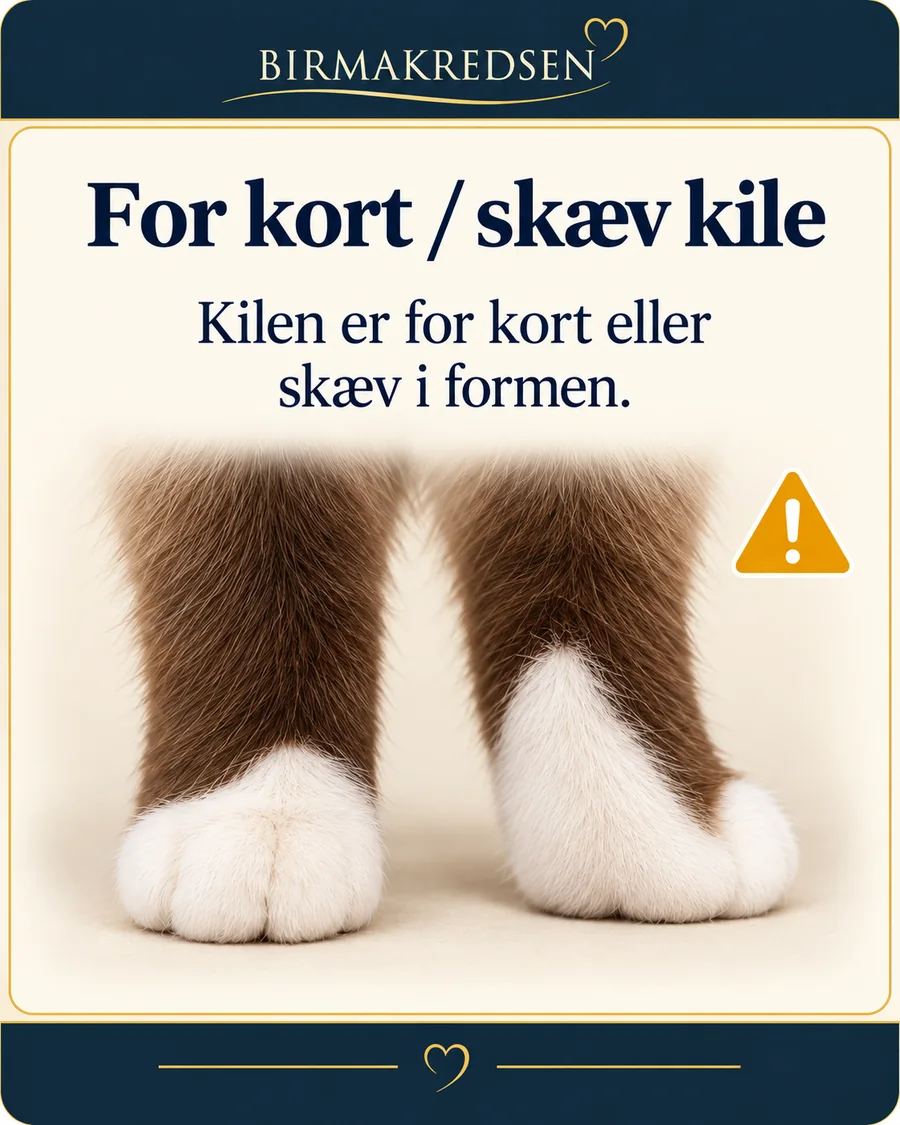
Example of a short or crooked wedge on the Holy Birman's hind leg.
Too short or crooked wedgeThe wedge lacks length, balance, or the desired shape.

The illustrations show the ideal of the standard and typical deviations. The individual cat must always be assessed as a whole.

At shows: “Runners” – white running up the side or back of the leg – as well as missing welts on the hind feet are among the faults that can exclude certification according to the FIFe standard.

Can perfect gloves be bred for?

Illustration of Sacred Birman with blue eyes and white paws
AI-illustration

The white markings in the Birman are complex. In practice, breeders can work with lines and overall appearance, but markings may vary considerably even within the same litter. Health, temperament and genetic diversity should therefore never be subordinated to the pursuit of perfect paws.

Sources: FIFe Sacred Birman (SBI), 01.01.2026; The Birmakredsen's previous breed description about gloves and wedges.