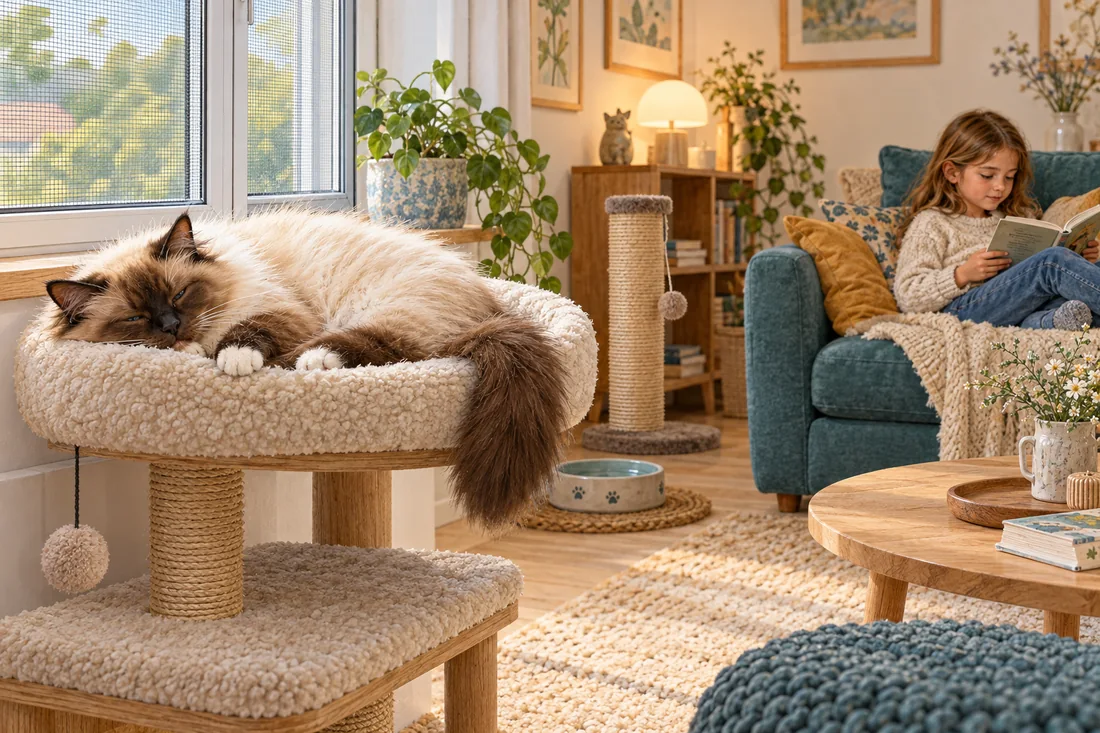
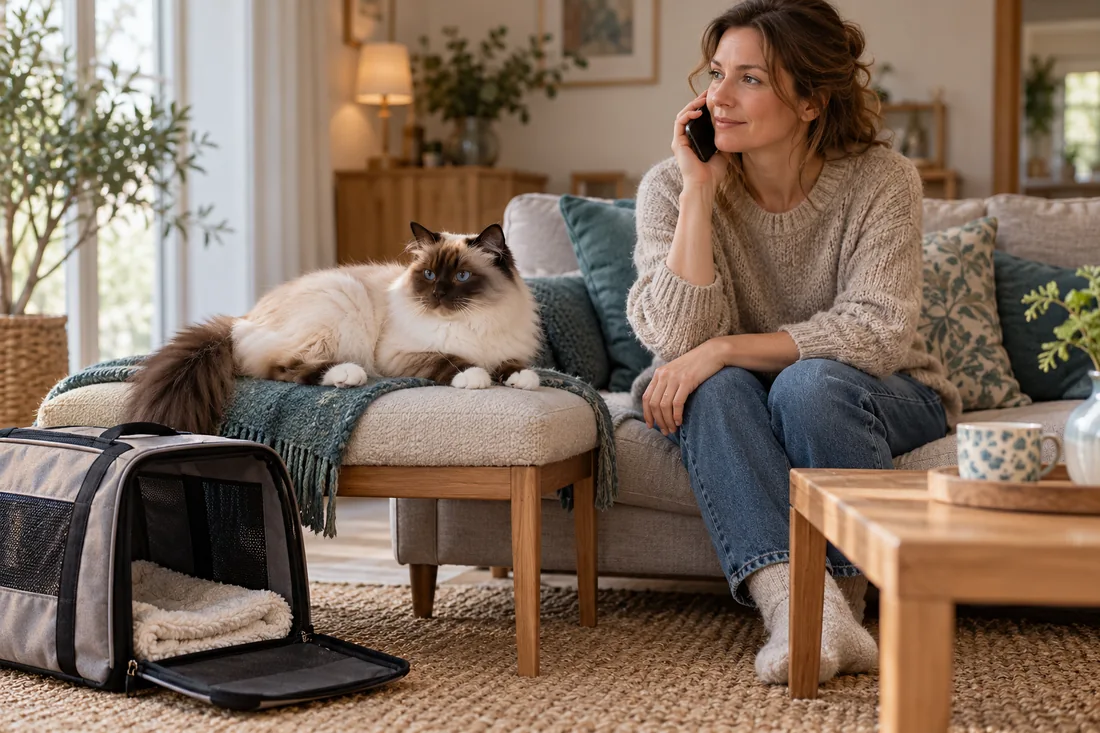
Good welfare is more than the absence of disease. It is the cat’s opportunity to feel secure, have control, express natural behaviour and live a life that works physically, mentally and socially.
Welfare is created in everyday life. It is shaped by the environment, relationships, health, our expectations of the cat and the small choices we make every day. A cat can be well nourished and still have poor welfare. It can also have a chronic disease and still enjoy a good quality of life if its needs are understood and supported.
Welfare is the sum of many small choicesSecurity, space, resources, play, rest, freedom from pain, social relationships and the ability to opt in or out are all connected.
A Sacred Birman should not only look like a Birman – it must function as a cat
Breed type and welfare cannot be separated. When we select breeding cats, judge cats at shows or discuss how the breed develops, the question cannot only be whether a trait is beautiful or fashionable. We must also ask whether the body moves freely, whether the cat breathes without effort, eats and grooms normally and can live an active life without its anatomy working against it.
Function before fashionA breed trait must never be pushed so far that appearance becomes more important than normal function.
The whole cat mattersNose, jaws, eyes, chest, back, legs and weight should be assessed as parts of the same cat.
Watch the cat moveGood anatomy is not visible only in a photograph. The cat should walk, run, jump, groom and rest without difficulty.
Important focus · nose and airwaysAI illustration
It is not only about nose length – but also its “height”, placement and the nostrils
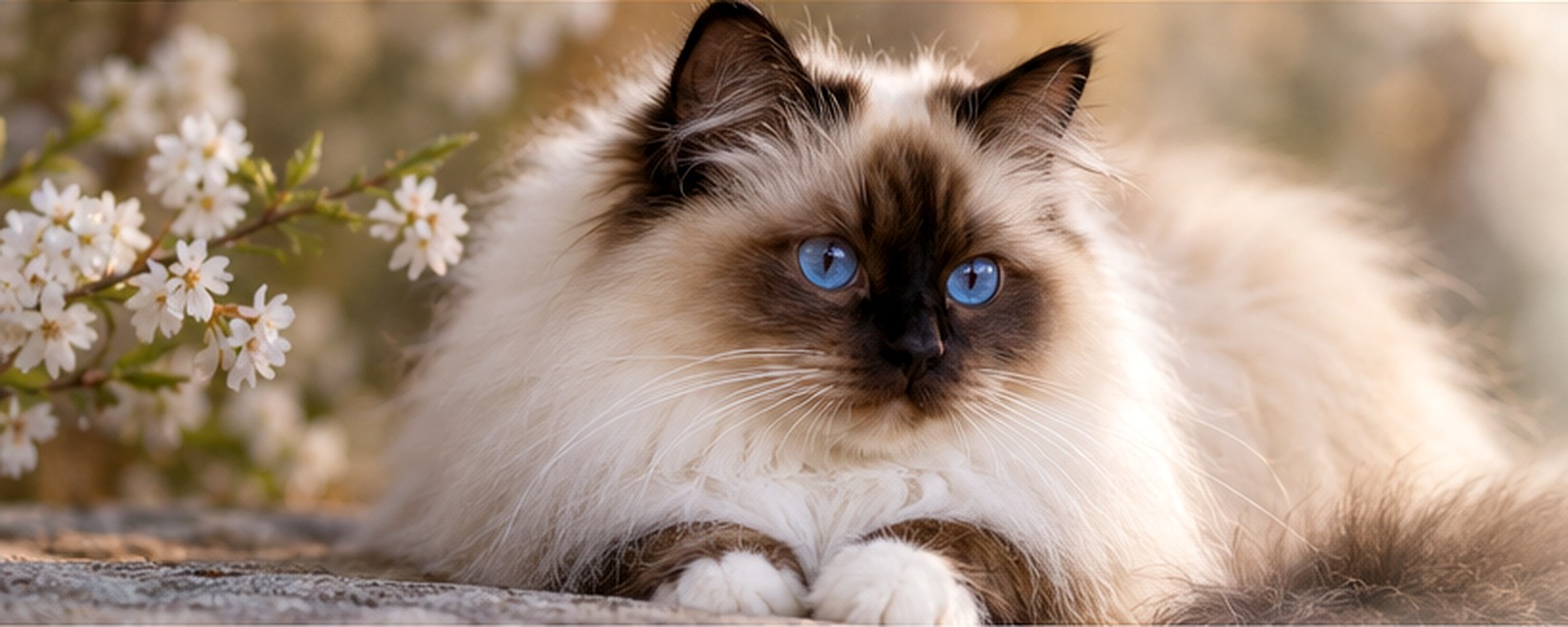
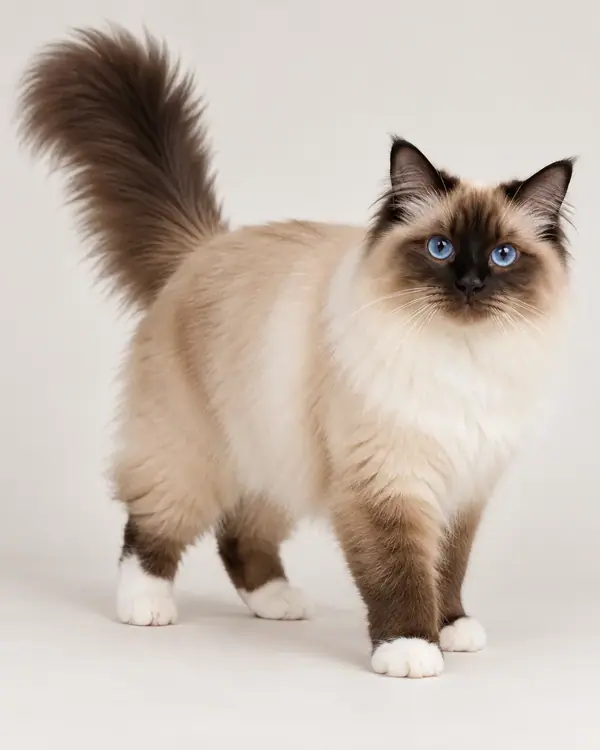
The FIFe Sacred Birman standard describes the nose as medium in length, without a stop, but with a slight indentation. This matters because the Birman head should not be developed towards an extremely short or compressed muzzle.
Why do we talk about the nose’s “height”?“Height” is not a separate measurement in the FIFe standard. But a nose can look reasonably long while still being drawn high up between the eyes. That changes the proportions of the whole head. Nose length, bridge and position must therefore be assessed together with the eyes, muzzle, chin, nose leather and nostrils – not as one isolated measurement.
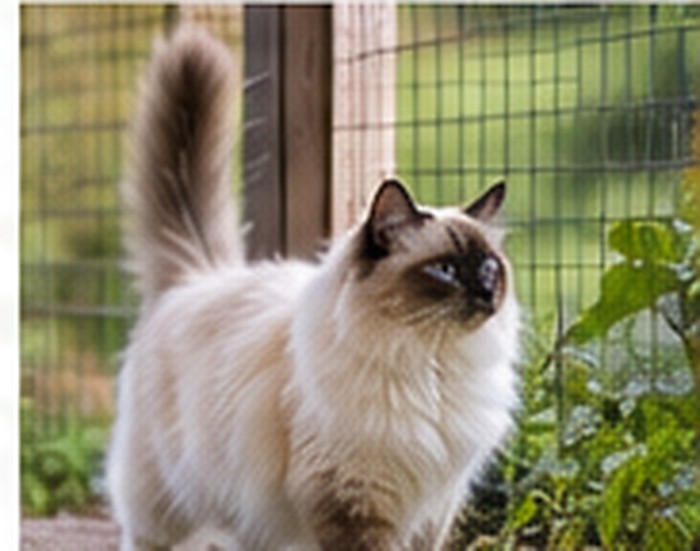
The placement of the nostrils matters just as muchIt is not enough that there are simply “two holes”. The nostrils must be well formed and genuinely open so air can pass freely. We also consider whether the nostrils sit low and openly on the nose leather rather than being pulled upwards or pinched together. Narrow openings, compressed nasal wings or an orientation that reduces the free opening must be taken seriously – even in a cat whose nose initially appears long enough.
From the frontAre both nostrils clearly open and symmetrical without narrowing?
From the sideIs the nose medium in length with the slight indentation – without a pronounced stop or extreme shortening?
Look at the whole headDo nose, forehead, eyes, muzzle and chin fit together without exaggeration?
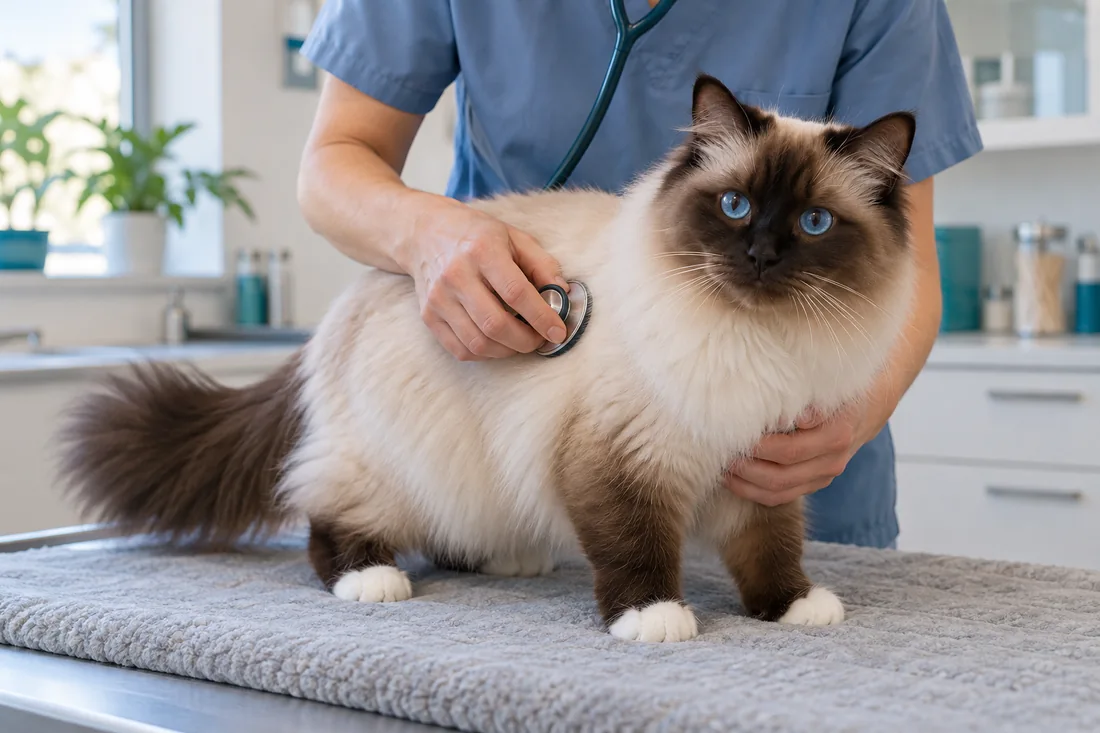
Listen to the catNormal breathing should be effortless. Persistent noise or difficulty is a functional problem – not a breed type.
FIFe strengthens the requirements from 1 January 2027FIFe adds that the nose leather must be fully formed and large enough to accommodate properly formed nostrils and unrestricted airflow. At the same time, loud and difficult breathing becomes a disqualifying fault. For Birmakredsen the point is simple: we should not wait for a disqualification before taking function seriously.
↗
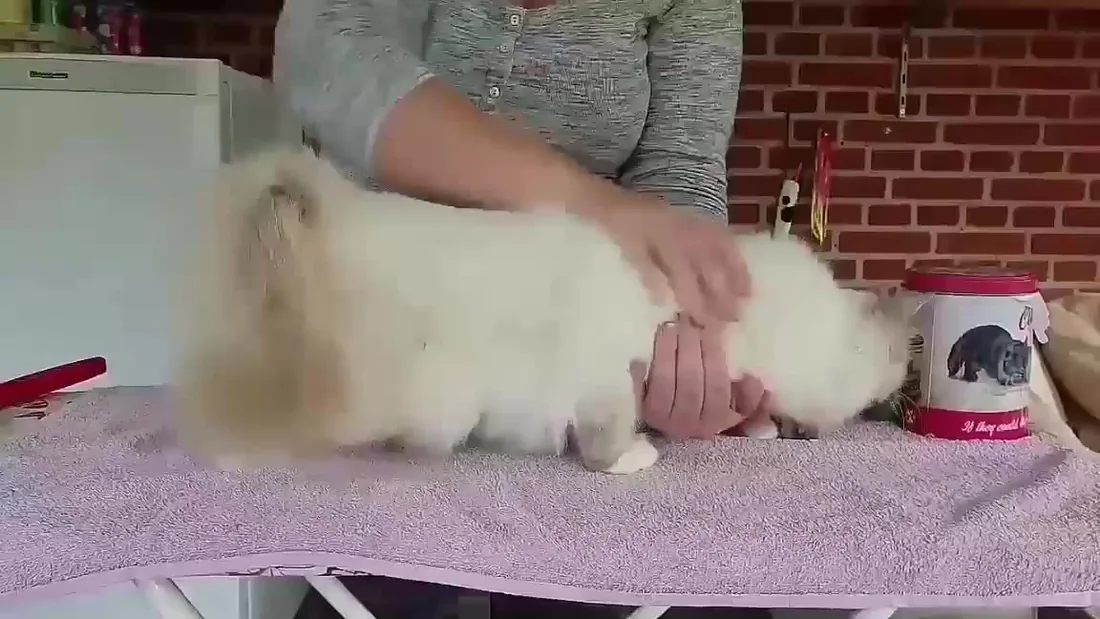
Still image from the grooming video
Body and movement
The Sacred Birman is a medium-sized, solid cat – not a heavy cat that should carry unnecessary mass. Movement should be free and confident. Excess weight, stiffness, reluctance to jump or a changed gait should be treated as welfare signals, not as “that is just how it is”.
◉
AI illustration
Head, jaws, teeth and eyes
A harmonious head also means room for normal jaws, a functional bite, healthy teeth and eyes without persistent irritation. An extreme expression is never a goal in itself. Function and comfort must accompany breed type.
≈
AI illustration
Coat quality before coat quantity
More coat is not automatically more Birman. The coat should fit the breed and remain healthy without the cat constantly struggling with mats, heat or reduced self-grooming. We want quality, balance and a cat that can function in its coat.
♡
AI illustration
Physical health is visible in daily life
Unrestricted breathing, normal body structure, effortless movement, a healthy mouth, clear eyes, a clean coat and appropriate weight are not decoration around the breed standard. They are the foundation of a long, active and dignified feline life.
Explanatory graphic
Welfare starts with the breeding goal
Responsible breeding is not only about avoiding known diseases. It is also about selecting against exaggerations, preserving genetic variation and assessing the living cat – not only the pedigree, titles or a single photograph.
Choose unrestricted breathing and open nostrils over a shorter or more extreme face.
Choose balance, movement and function over extremes of size, coat quantity or head type.
Look for repeated patterns in lines – health, fertility, temperament and longevity are breeding data too.
A standard describes an ideal; it must never be used as an excuse to overlook signs of reduced function.
UNRESTRICTED BREATHING
FREE MOVEMENT
NORMAL FUNCTION
BALANCED BREED TYPE
What does good cat welfare mean?
AI illustration
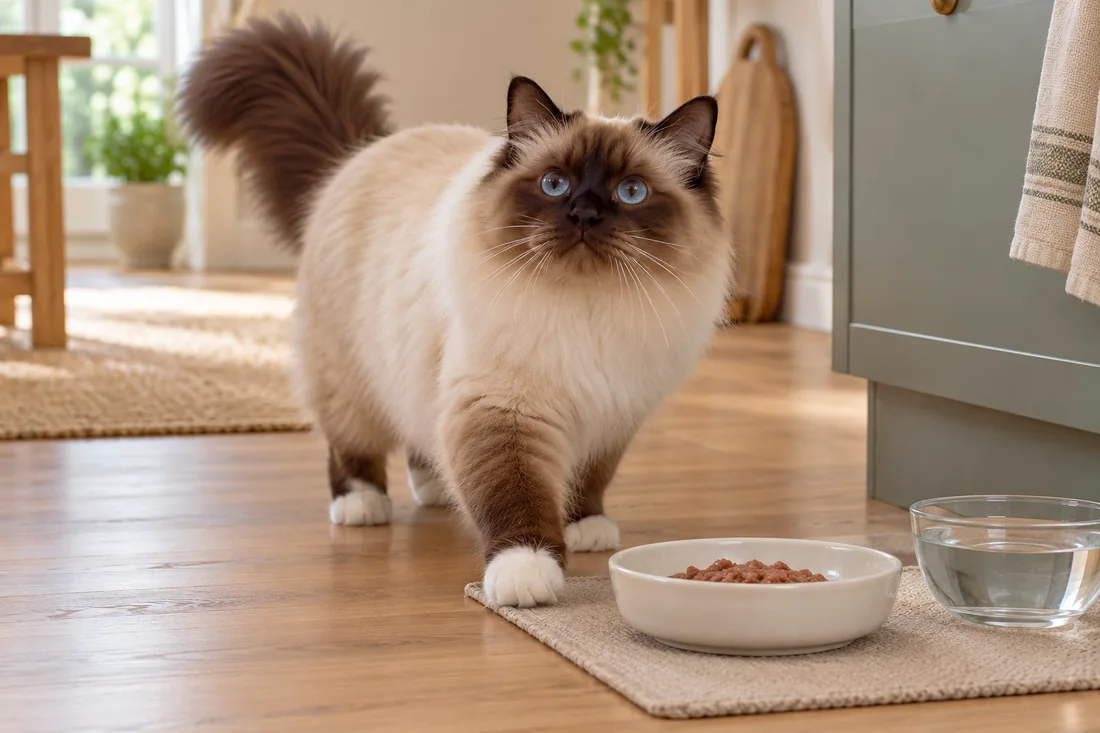
Welfare concerns both the body and the cat’s experience of its life. Food and water are not enough. The cat must also be able to rest undisturbed, feel safe, access necessary resources, move and climb, play and “hunt”, scratch, explore and withdraw from situations it does not want.
SecurityA safe, predictable environment with opportunities to hide and observe.
Choice and controlAs far as possible, the cat should be able to choose contact, resting place, distance and activity.
ResourcesFood, water, litter trays, scratching opportunities, resting places and elevated locations should be available without unnecessary competition.
Natural behaviourPlay, hunting-like activity, climbing, scratching, exploration and grooming are needs – not decoration.
Health and freedom from painDisease and pain should be detected and treated as early as possible.
Positive relationshipsSocial contact should suit the individual cat. More contact is not always better.
The environment shapes behaviour
AI illustration
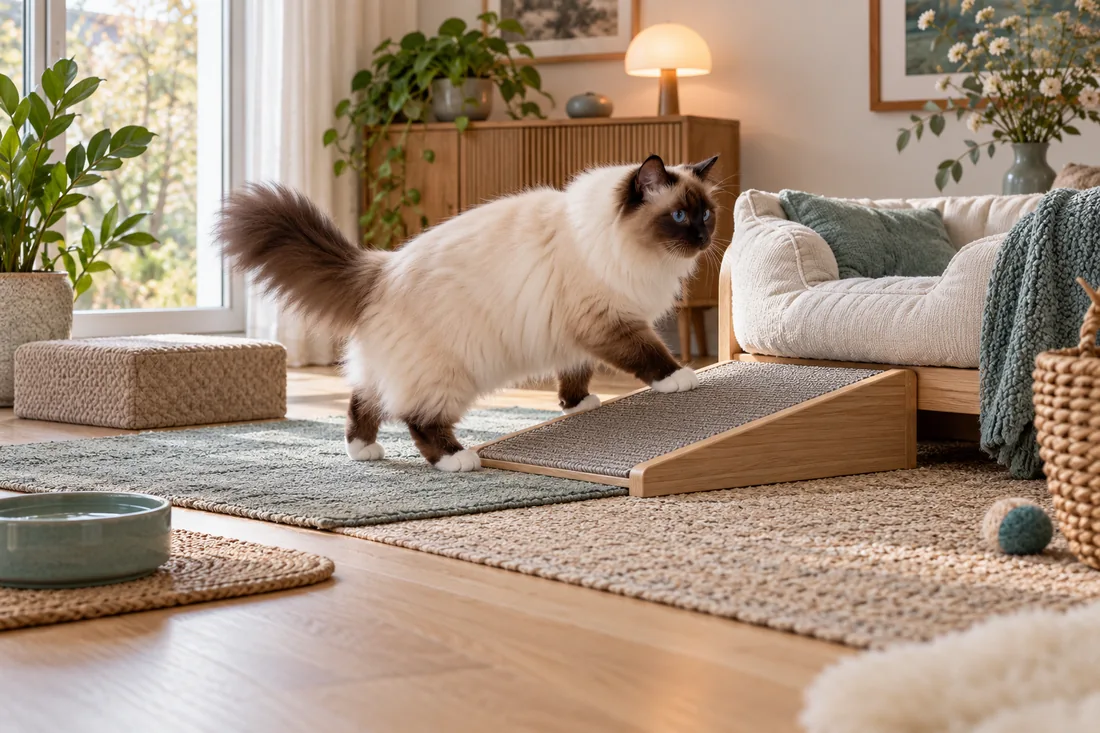
A cat-friendly home is not necessarily a large home. It is a home in which the space makes sense to the cat. Vertical areas can make a small home feel larger from a cat’s perspective, while hiding places and multiple resting zones can reduce stress. In multi-cat homes, the distribution of resources becomes particularly important.
Hiding places and heightBoxes, dens, shelves and cat trees provide both security and an overview.
Litter boxesLocation, size, cleanliness and access matter. Changes in litter-tray behaviour should be taken seriously.
Food and waterMultiple stations and distance between resources can reduce competition. Food-seeking can be used as enrichment.
ScratchingScratching is normal communication, stretching and claw care. Provide good, stable alternatives.
RestCats sleep a lot and need places where they are not constantly disturbed.
Safe outdoor accessA cat-secured garden, balcony or enclosure can provide scents, sunshine, wind and stimulation without the same risks as free roaming.
Natural behaviour is part of welfare
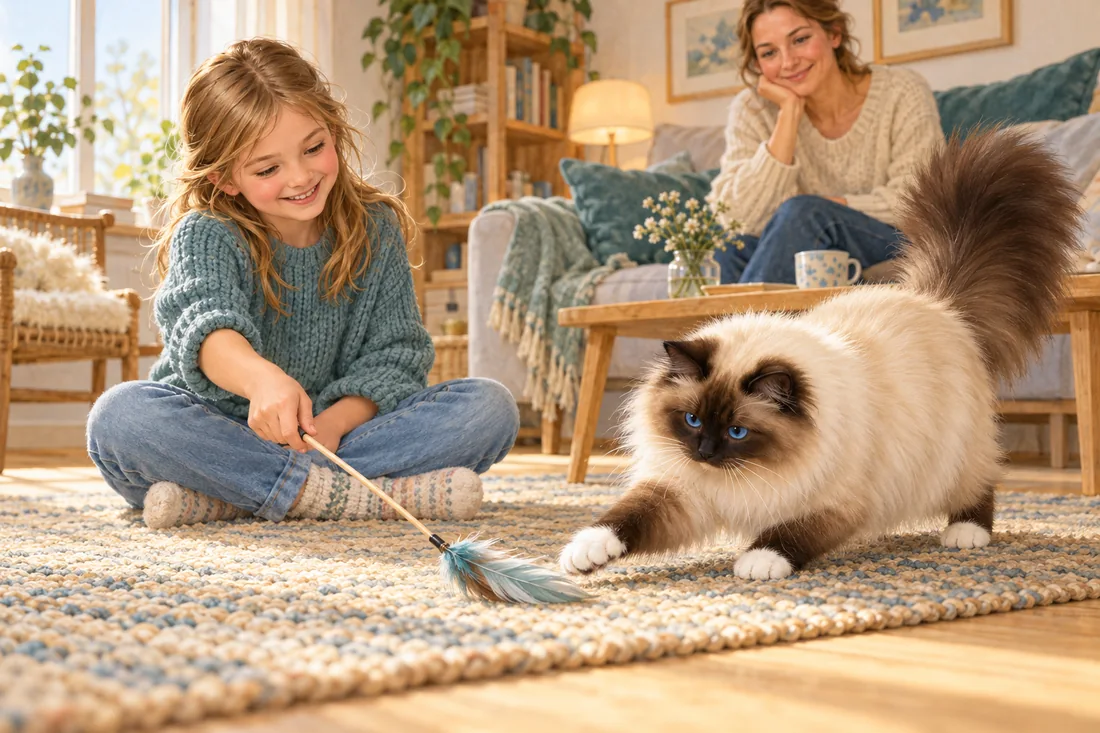
Behaviour that humans find inconvenient can be completely normal for a cat. Scratching, zoomies, climbing, hunting play, vocalisation and the need for hiding places are examples. Before trying to stop a behaviour, ask which need the cat is trying to fulfil.
“The environment should not only be safe – it should also be stimulating, predictable and cat-friendly.”
Meaningful play
Play is not only exercise. It provides opportunities to stalk, catch, solve problems and use the body. Short hunting-style play sessions, variation in toys and the chance to “catch” something can be more satisfying than constant high activity.
Food is more than satiety
Food-seeking and small challenges around feeding can engage both body and brain. Puzzle feeding, small portions spread through the day or hiding individual food items can provide mental stimulation when appropriate for the cat’s health and feeding plan.
Social needs – and the right to distance
AI illustration
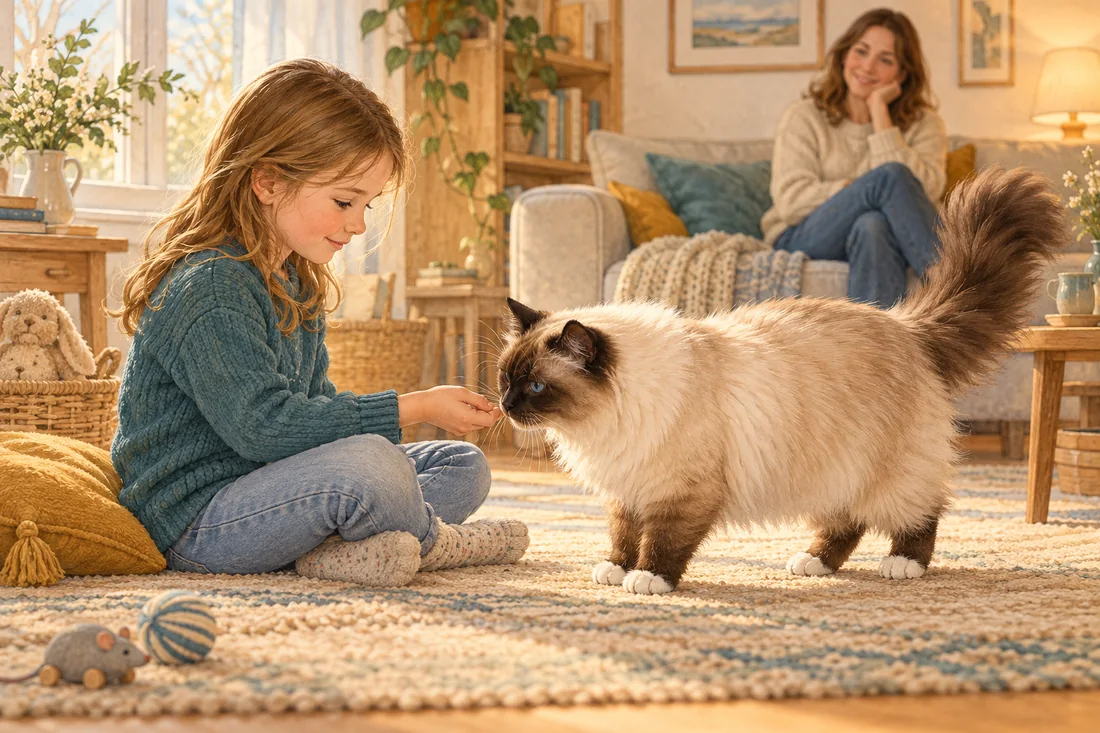
The Sacred Birman is often described as social and people-oriented, but a breed is not a single personality. Some cats want a great deal of contact, while others need more breaks. Living as a single cat or with several cats can both work well if the individual cat’s needs are met.
New cats should be introduced gradually. Friendships cannot be forced. The goal is not the fastest possible introduction, but to allow both cats to build security and trust at their own pace. Some cats become close friends; others live peacefully side by side – both can be good welfare.
Stress is information
AI illustration
Stress can be triggered by change, lack of control, competition for resources, excessive handling, frustration, pain or disease. Signs vary greatly: a cat may hide more, eat differently, overgroom, toilet outside the litter tray, vocalise more, become irritable or simply become quieter and less active.
ChangesMoving home, visitors, renovation, new animals or changed routines.
CompetitionOther cats may block access to food, water, litter trays, resting places or people without any open fighting.
Lack of controlIf the cat cannot withdraw, ordinary situations can become stressful.
PainPain can create stress – and chronic stress can make welfare and disease harder to manage.
Cats often hide pain
Pain in cats does not always appear as loud crying. Small changes may be more important: the cat jumps less, sleeps in different places, becomes less tolerant of touch, grooms less or more, changes appetite or litter-tray habits, or simply seems “a little different”. The best way to detect changes is to know your cat’s normal behaviour.
Seek emergency veterinary care including open-mouth breathing or obvious respiratory distress, collapse, sudden inability to stand or walk, signs of severe pain, or a markedly affected general condition.
Grooming also tells us something
Normal grooming is healthy behaviour, but changes can be a signal. Excessive licking may be linked to itching, pain, stress or disease; reduced grooming may occur with pain, obesity or reduced mobility. Treat the change as information – not merely a cosmetic issue.
Welfare begins before birth
AI illustration
A kitten’s good start begins with a healthy, secure mother. During the first weeks, kittens learn far more than we can see: social communication, bite inhibition, play, curiosity and how to handle new experiences. Socialisation should be gradual and positive. The goal is security – not maximum exposure.
Under current FIFe rules, kittens may not leave for a new home before 14 weeks and must meet the relevant vaccination and identification requirements. This is a minimum age; individual maturity and wellbeing still need to be assessed.
Welfare at cat shows
Explanatory graphic
A show cat should not merely be able to “put up with” being at a show. Transport, unfamiliar sounds, handling by judges, waiting and crowds can be demanding. The cat should have a calm, clean and safe cage environment, the ability to hide or screen itself visually, access to water and a litter tray, and time to rest.
If the cat shows persistent severe fear, panic, aggression or obvious distress, welfare is more important than a certificate. Not every excellent family cat is a good show cat – and that is completely fine.
As the cat gets older
AI illustration
Senior welfare is often about adaptation. Lower entrances to litter trays, steps to favourite places, warm resting areas, non-slip surfaces and easier access to food and water can make a major difference. Old age should not automatically be used to explain changed behaviour; pain, dental problems, kidney disease and other conditions become more common with age and deserve assessment.
Small routines, big effect
AI illustration
Observe your cat every dayAppetite, activity, coat, movement, breathing and litter-tray habits tell you a lot.
Allow breaksRespect it when the cat walks away. Contact is best when it is voluntary.
Keep the body activePlay and movement should be adapted to age, physical condition and temperament.
Create predictabilityRoutines provide security, especially during periods of change.
Offer choicesMultiple resting places, elevated spots and hiding places make it easier for the cat to regulate itself.
Respond to changesBehaviour is communication. Persistent changes should be investigated rather than punished.
Birmakredsen’s welfare principle
AI illustration
Good cat welfare is built on understanding the cat’s natural behaviour. We should not shape the cat to fit every one of our wishes; we should create conditions in which the cat can be a cat while living safely with us.
SECURITY SUPPORTS WELLBEINGKnowledge makes it easier to see what the cat is telling us – and to act before small problems become big ones.