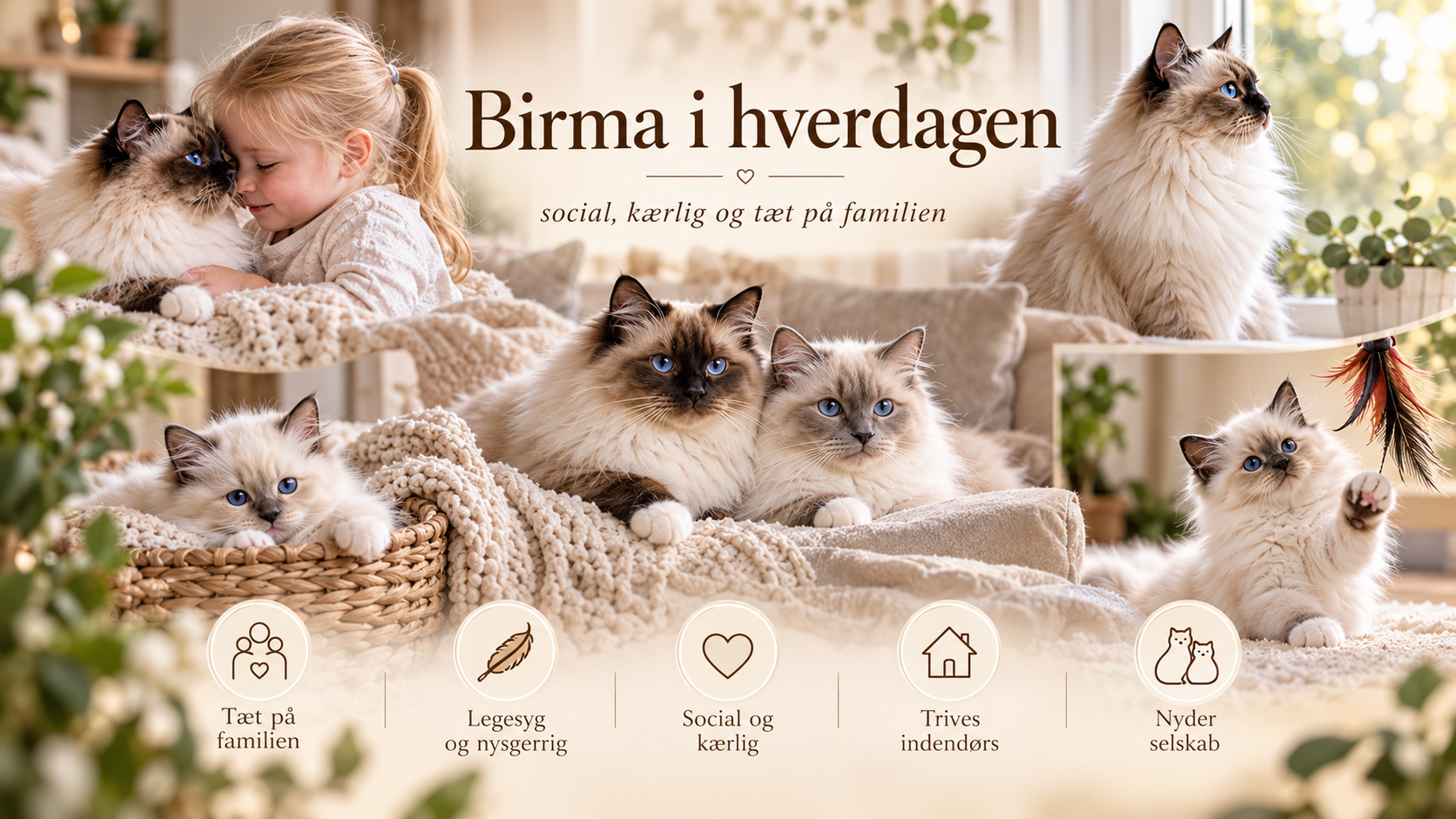
The old Birmakredsen site called it “the wonderful nature”. That still captures something central: many Birmans are sociable, curious and deeply interested in their people.
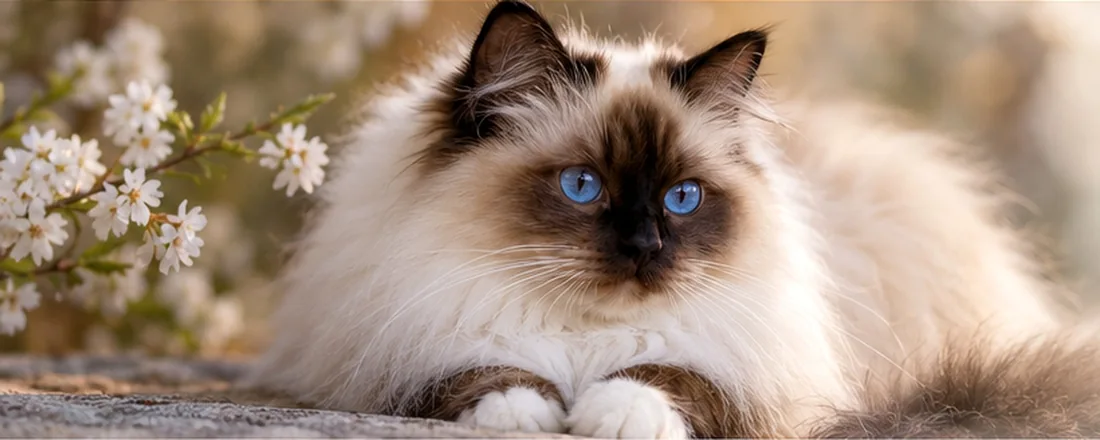
A cat that wants to take part
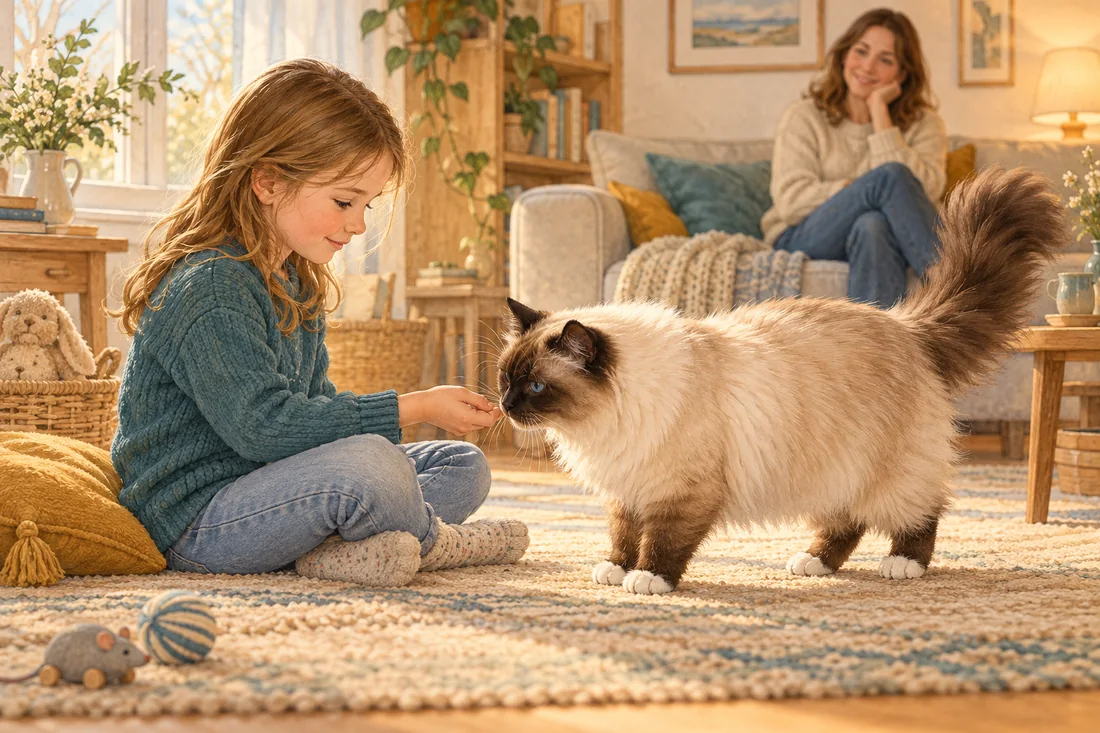
The Birman is often described as a cat that follows the activities of the home. It may remain playful well into adulthood, while also typically appreciating calm, physical closeness and familiar routines. Many seek eye contact and physical proximity and like to place themselves right in the middle of whatever the family is doing.
Companionship matters
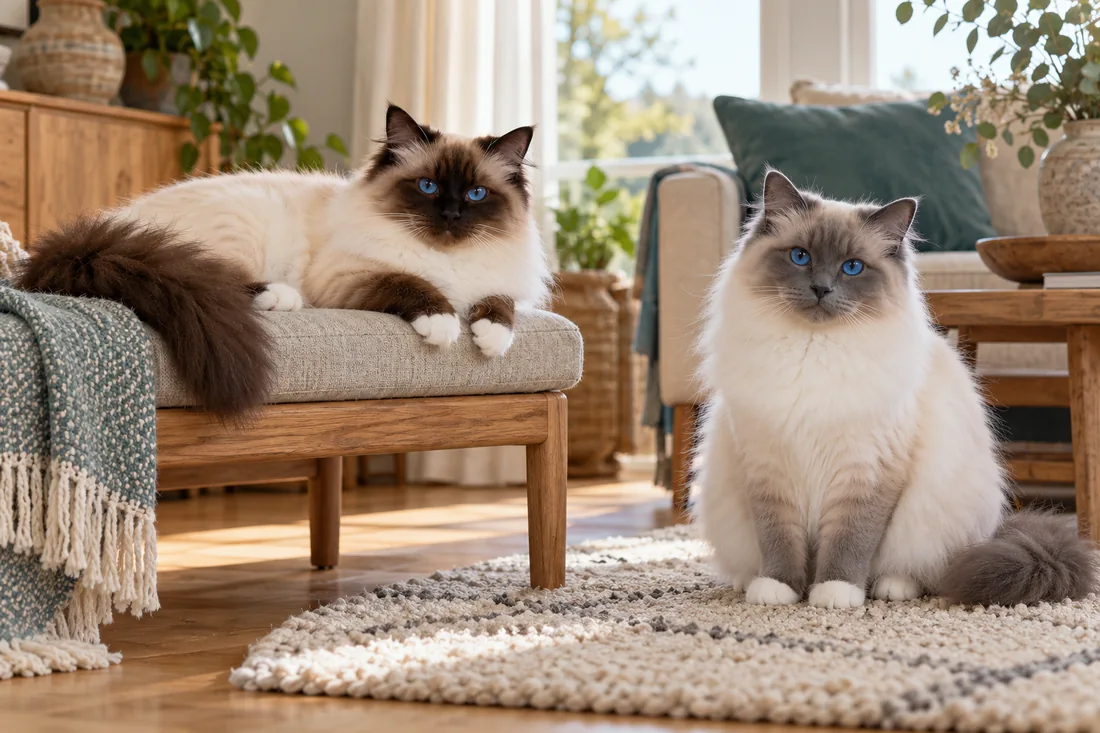
The breed often copes poorly with very long periods completely alone. In some homes, another cat or compatible animal can provide good company. What matters is not a particular number of cats, but that each cat receives suitable social contact, activity, rest and security.
Ofte tæt knyttet til mennesker og andre katte.
Vil gerne undersøge, følge med og “hjælpe”.
Aktiv på en blødere måde end de mest højenergiske racer.
Kan fungere i mange hjem, hvis behovene bliver mødt.
Children and other animals
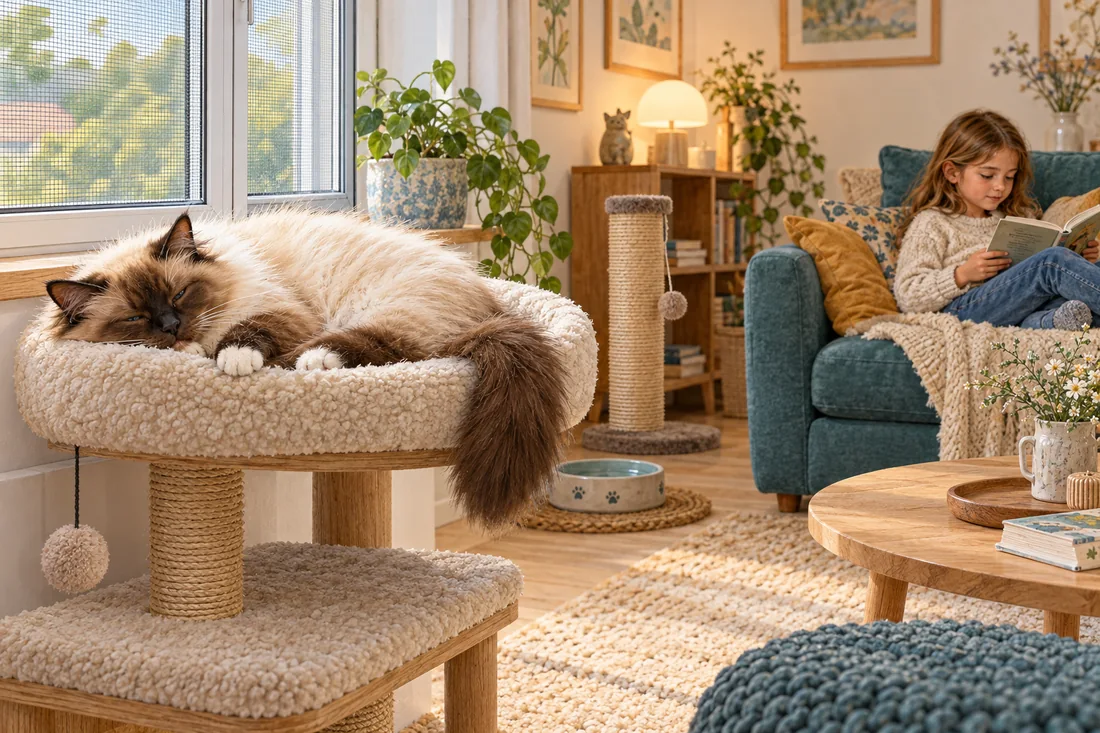
Many Birmans do well in families with children and other animals when introductions and interaction are respectful. The cat must always have the option to withdraw, and children should learn to read the cat’s signals.
The individual comes first
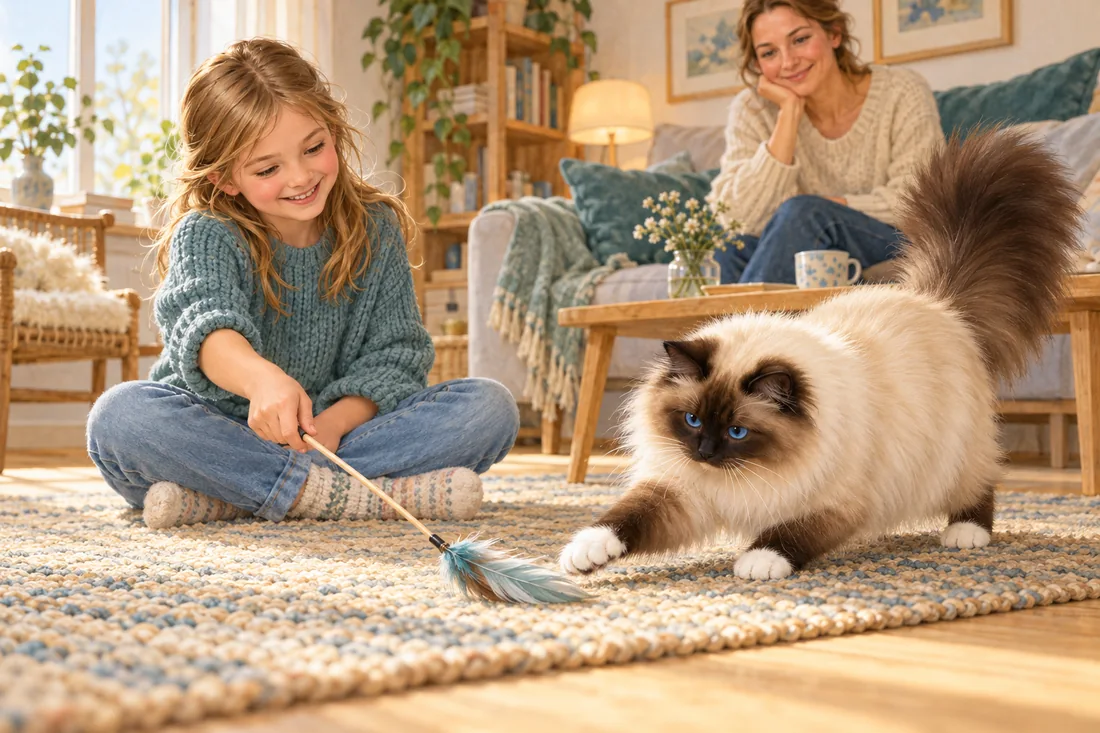
Temperament is not determined by breed alone. Genetics, early socialisation, environment, experience and health all influence behaviour. Use the breed description as a framework for expectations – not as a guarantee of exactly how a particular cat will turn out.