Pedigree cat
A cat with registered, documented ancestry and its own official pedigree.
Documented breed
A cat may look almost exactly like a Sacred Birman. But breed is not determined by eye colour, gloves or coat. What matters is documented ancestry.
All cats have the same value as living individuals. But not all cats have a documented breed. That distinction is what this page is about.
A cat with registered, documented ancestry and its own official pedigree.
Documented breedA cat that resembles a particular breed, but whose breed ancestry is not documented by an official pedigree.
Appearance ≠ documentationA cat with mixed and/or incompletely documented ancestry. It may show clear traits from one or more breeds.
Wonderful cat – different categoryThe images illustrate appearance. Breed status cannot be determined from a photograph alone.
The pedigree documents the cat’s registered ancestry generation by generation. It allows parents, lines, relationships and registration details to be followed and is a central tool in responsible breeding.
That may be what the seller says. But if the kitten does not receive its own official pedigree, the buyer cannot verify the registered ancestry through that documentation.
None of these replaces an official pedigree.
It certainly can. Blue eyes, colourpoint, white paws and semi-long hair are visible traits. They are not, by themselves, a registration of the cat’s ancestry.
You cannot visually reconstruct four generations of named, registered ancestors.
DNA tests can be valuable for disease variants, colour genetics and biological relationships. But a commercial “what breed is my cat?” test cannot create a missing pedigree. DNA can complement documentation — not replace it.
BYB stands for backyard breeder. It is an informal term without one single legal definition and is often used emotionally.
At Birmakredsen, we prefer to look at actions rather than labels. Are the cats registered? Is ancestry documented? Are health and welfare taken seriously? Are kittens registered? Does the buyer receive a contract and relevant documentation? And does the breeder take responsibility for the cats they bring into the world?
That does not change the pedigree. A companion cat from a registered pedigree litter also has its pedigree. Birmakredsen’s position is also clear: A pet kitten should be neutered before leaving the breeder.
The pedigree tells you where the cat comes from. Neutering means the cat is not intended for breeding. Those are two different things.
Hopefully you have a wonderful cat. It is no less loved or important because its breed ancestry cannot be documented.
You can say, for example: “She looks like a Sacred Birman”, “We were told the parents were Birmans”, or “He is a Birman mix”. That is more precise than stating a documented breed when the documentation does not exist.
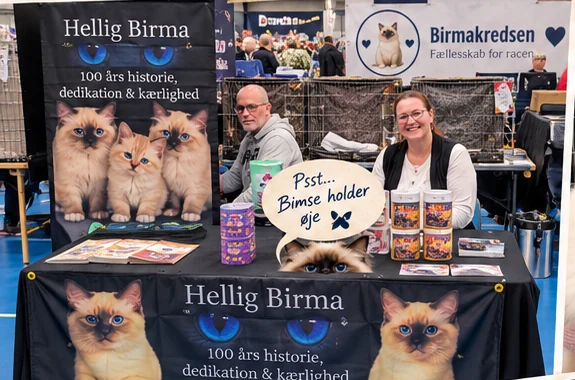
A cat can be wonderful even without proof of pedigree. But if someone sells a kitten as a Sacred Birman, the supporting pedigree documentation must come with it.
My best advice? Always ask whether that particular kitten will receive its own official pedigree.
Not whether the parents have pedigrees. Not whether papers can be bought later. Not whether the seller calls the kitten purebred. Ask whether the kitten you are buying receives its own official pedigree.
Felis Danica states directly that pedigree cats have pedigrees and that a kitten bought from a Felis Danica-registered breeder must be entered in the studbook and accompanied by a pedigree. Current FIFe rules govern registration and official pedigrees.
Last fact-checked 4 October 2026.