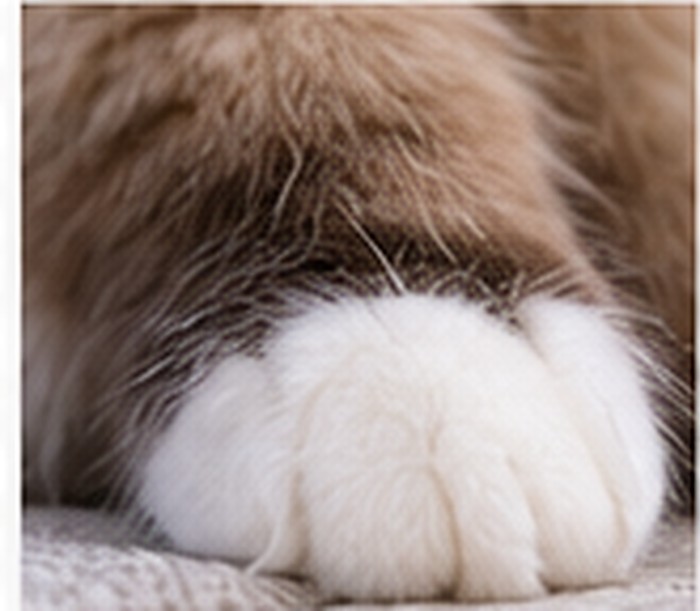
All four feet must be white. On the front paws the white is called gloves; on the hind paws the white continues up the back into a point, commonly called a gauntlet.
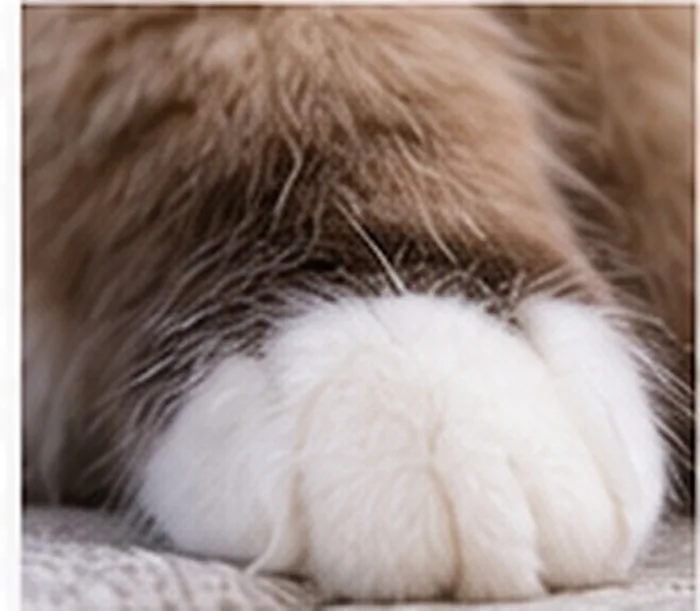
Front paws
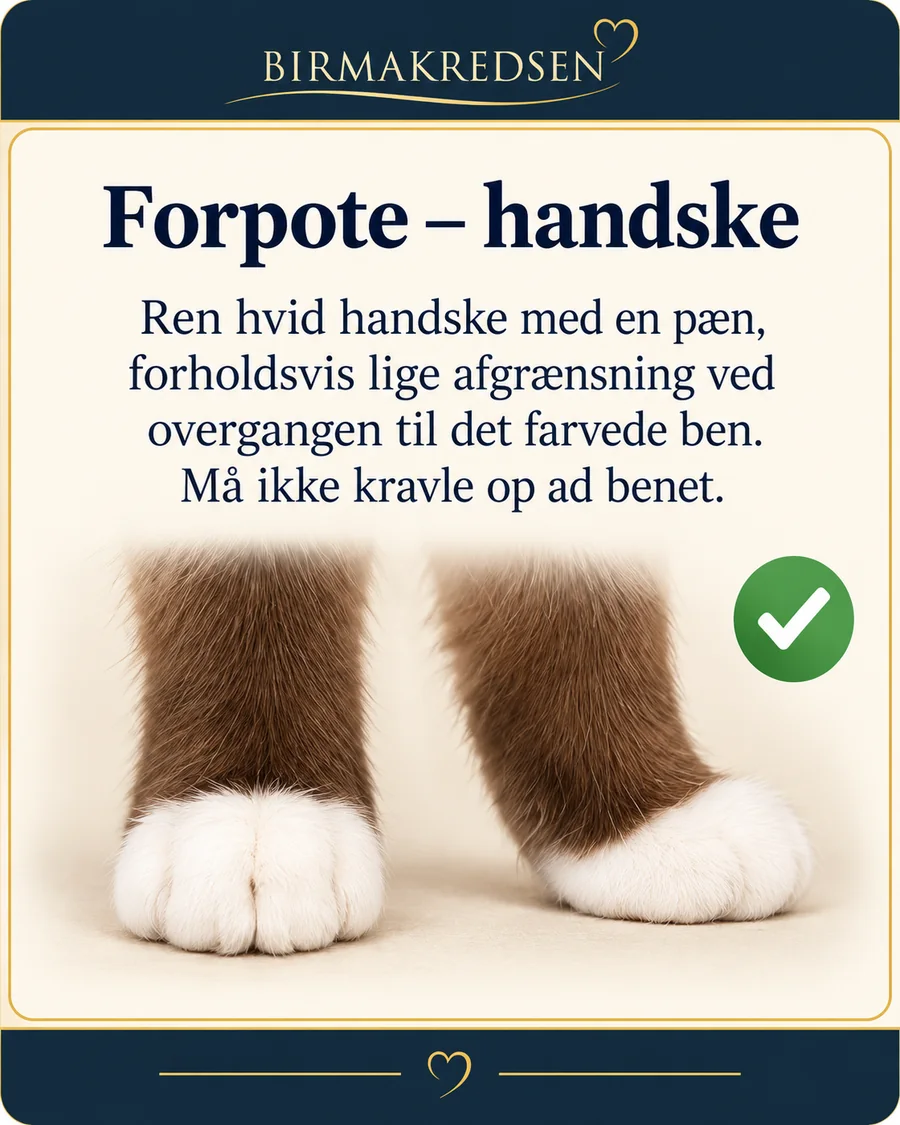
The gloves should be pure white and ideally stop around the transition between toes and metacarpus. They should neither climb high up the leg nor be so low that toes lose their white.
Hind paws
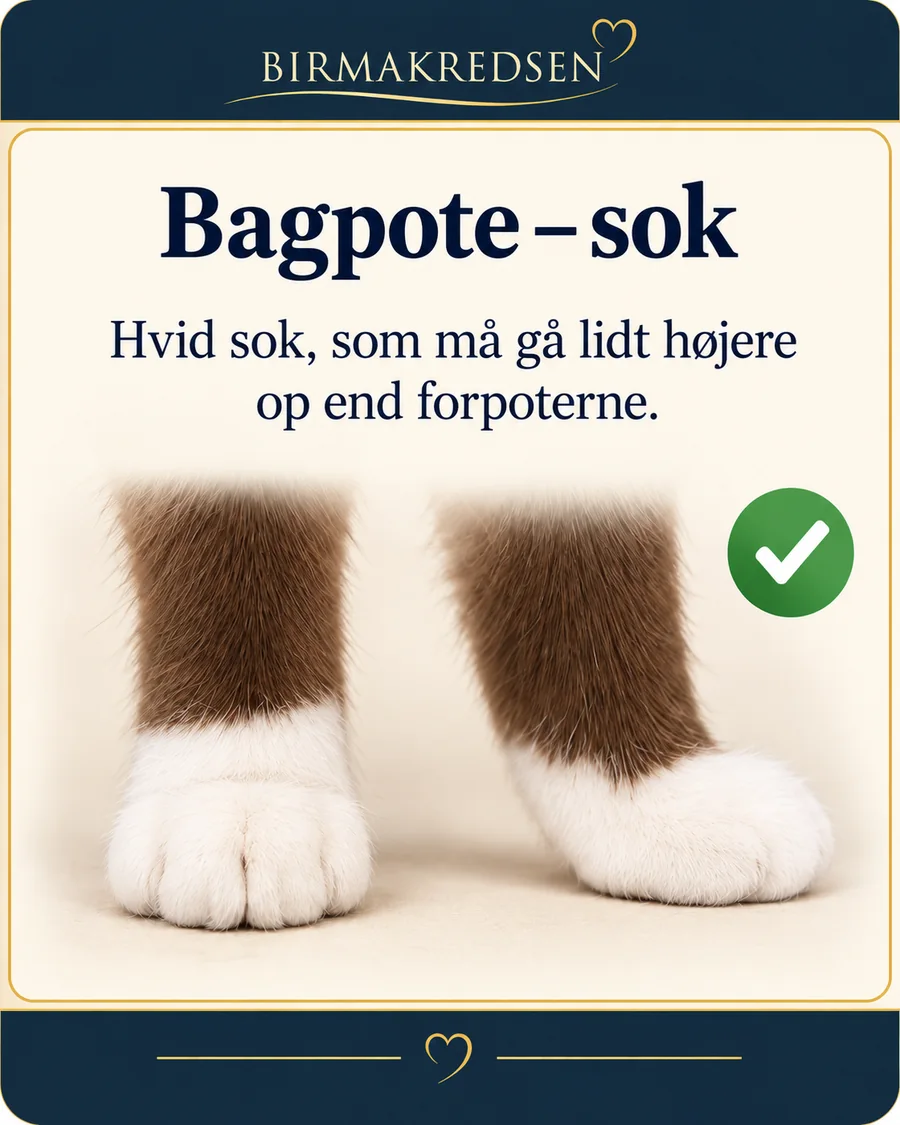
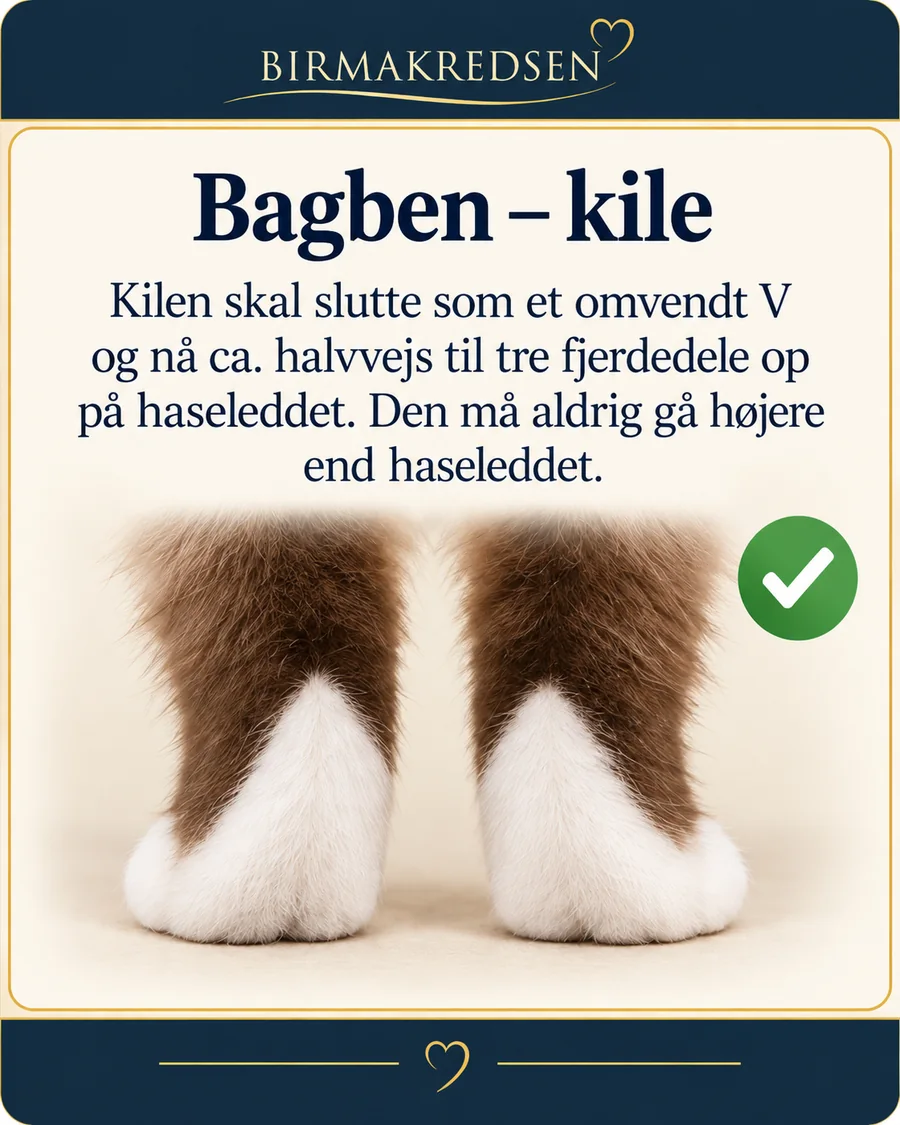
Slightly longer gloves are accepted on the hind paws. At the back, the white should form a point. FIFe describes the ideal gauntlet as an inverted V extending roughly halfway to three quarters of the way towards the hock. It must not extend beyond the hock.
Symmetry
The standard places emphasis on the two front gloves matching each other, the two hind gloves matching each other, and ideally on the overall appearance of all four paws being harmonious. Perfect symmetry is difficult and rare – that is part of the breed’s distinctive character.
Se forskellen på aftegnene
Hver type aftegn har nu sin egen grafik, så du kan se detaljerne tydeligt – også på mobil. Tryk på et billede for at åbne det i fuld størrelse.
Korrekte aftegn
Eksempler på det udtryk, standarden tilstræber.
Sådan kan aftegnene afvige
Her er de fejl og afvigelser, man typisk taler om ved bedømmelse af handsker, sokker og kiler.
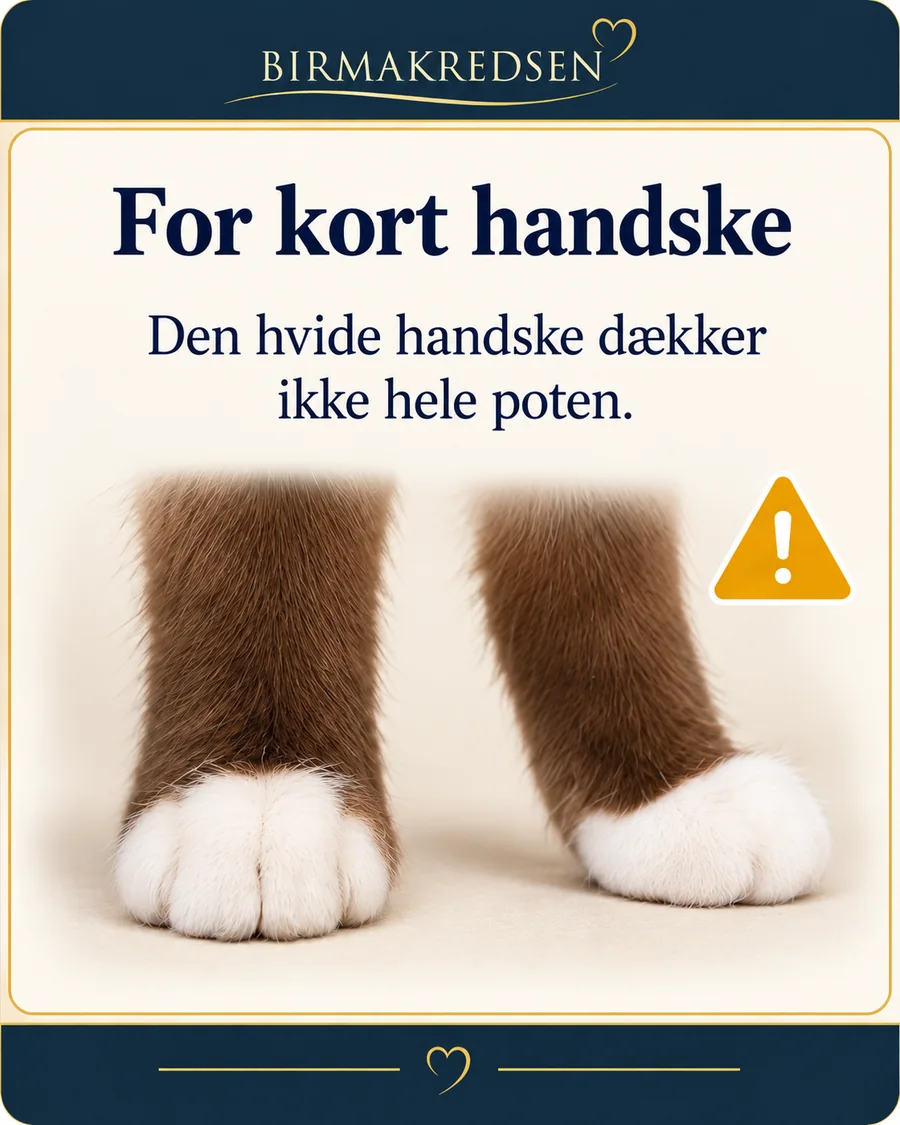
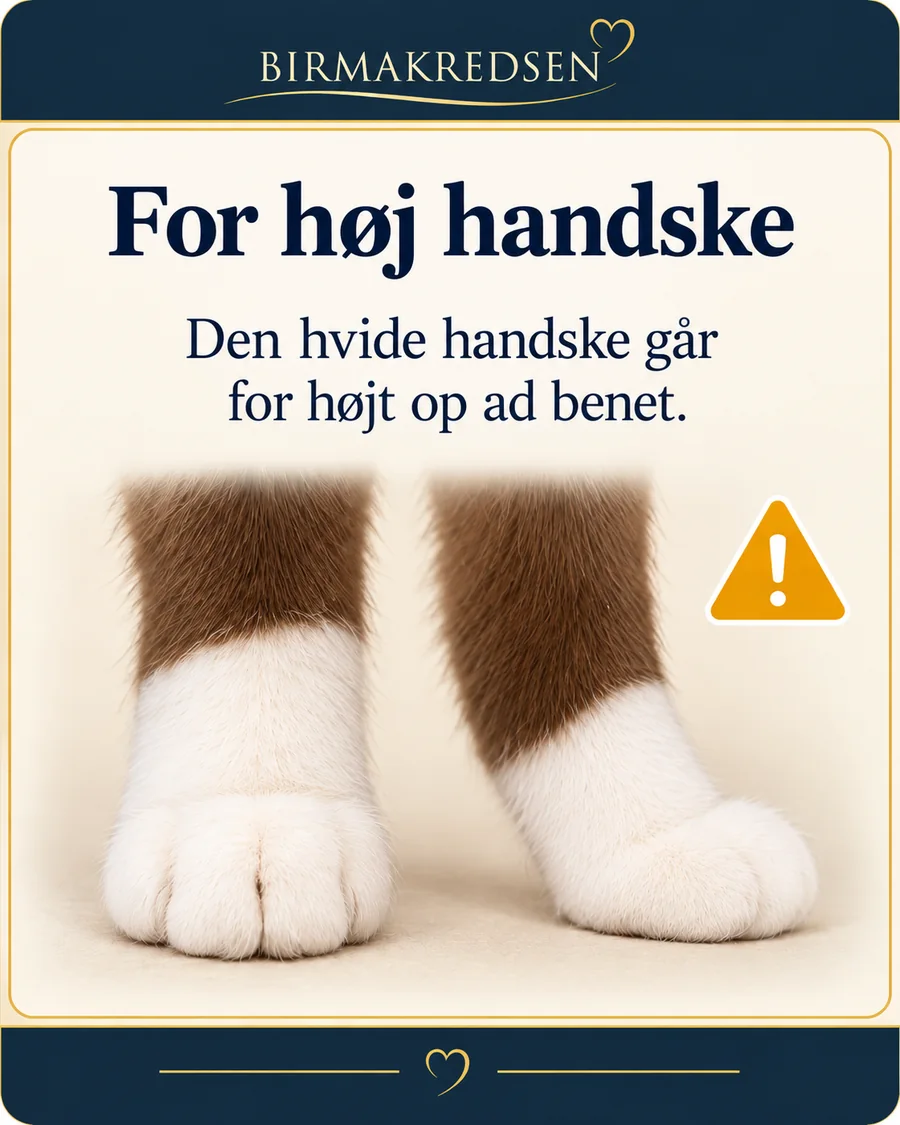
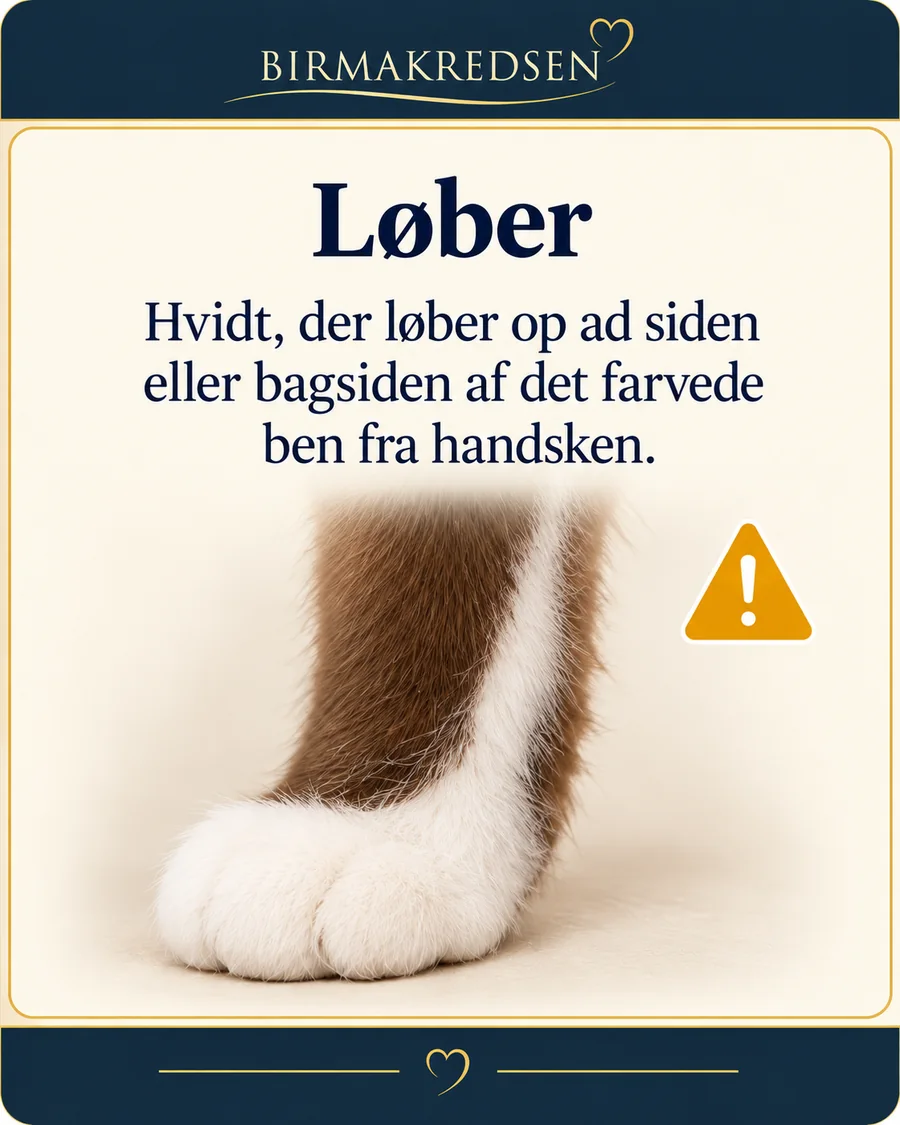
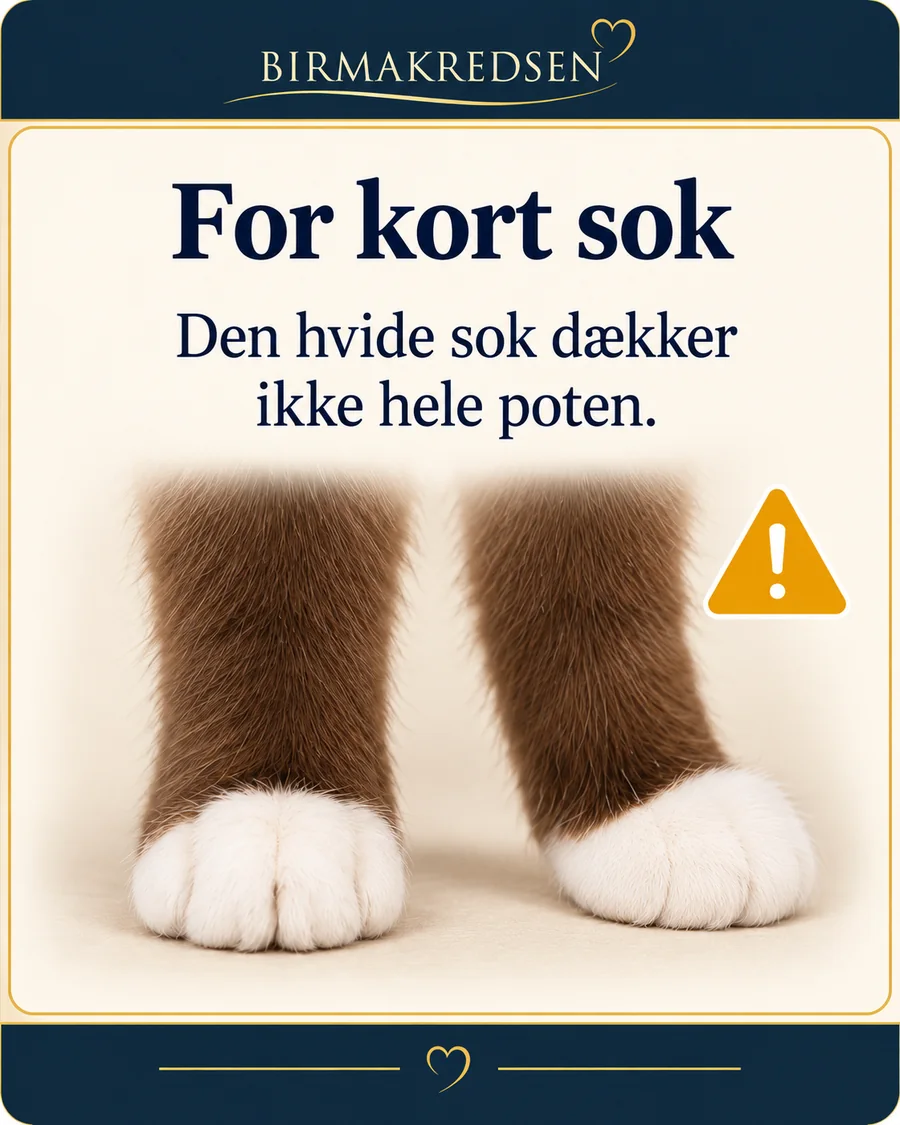
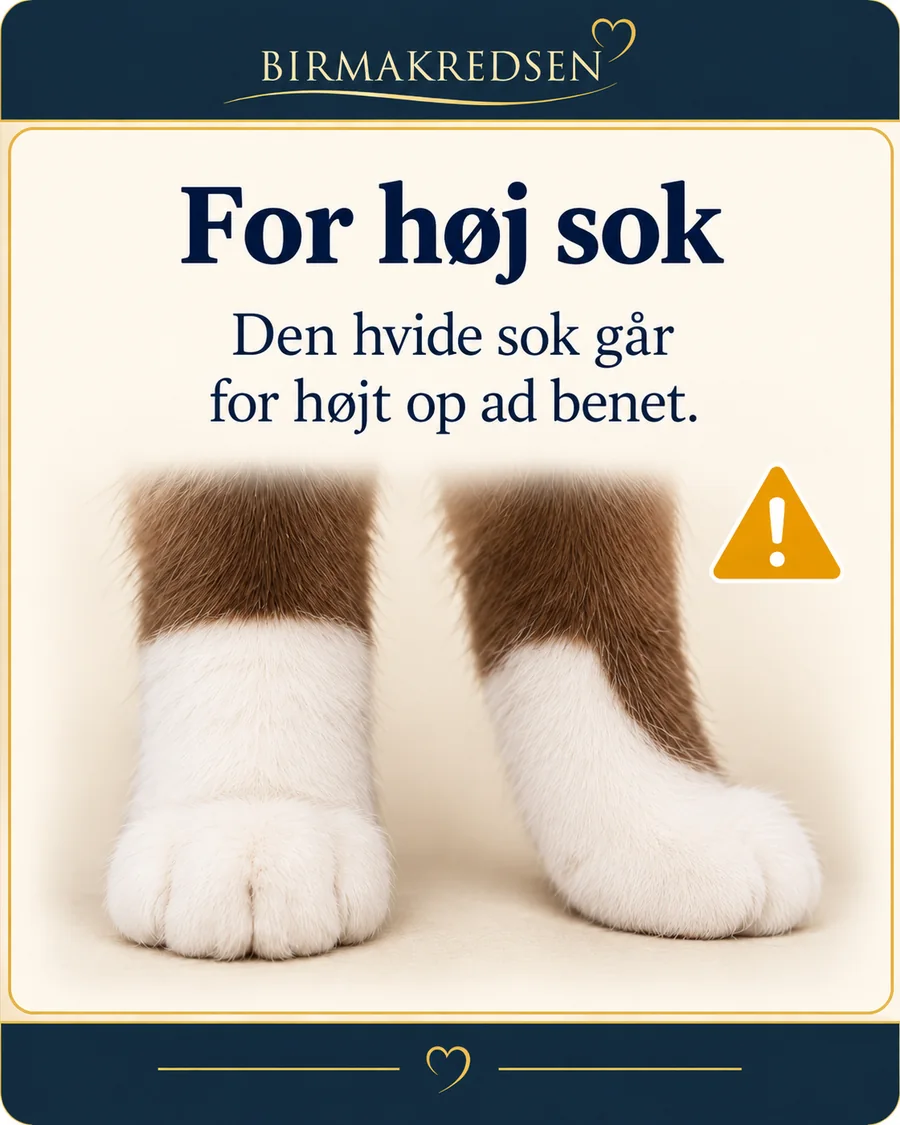
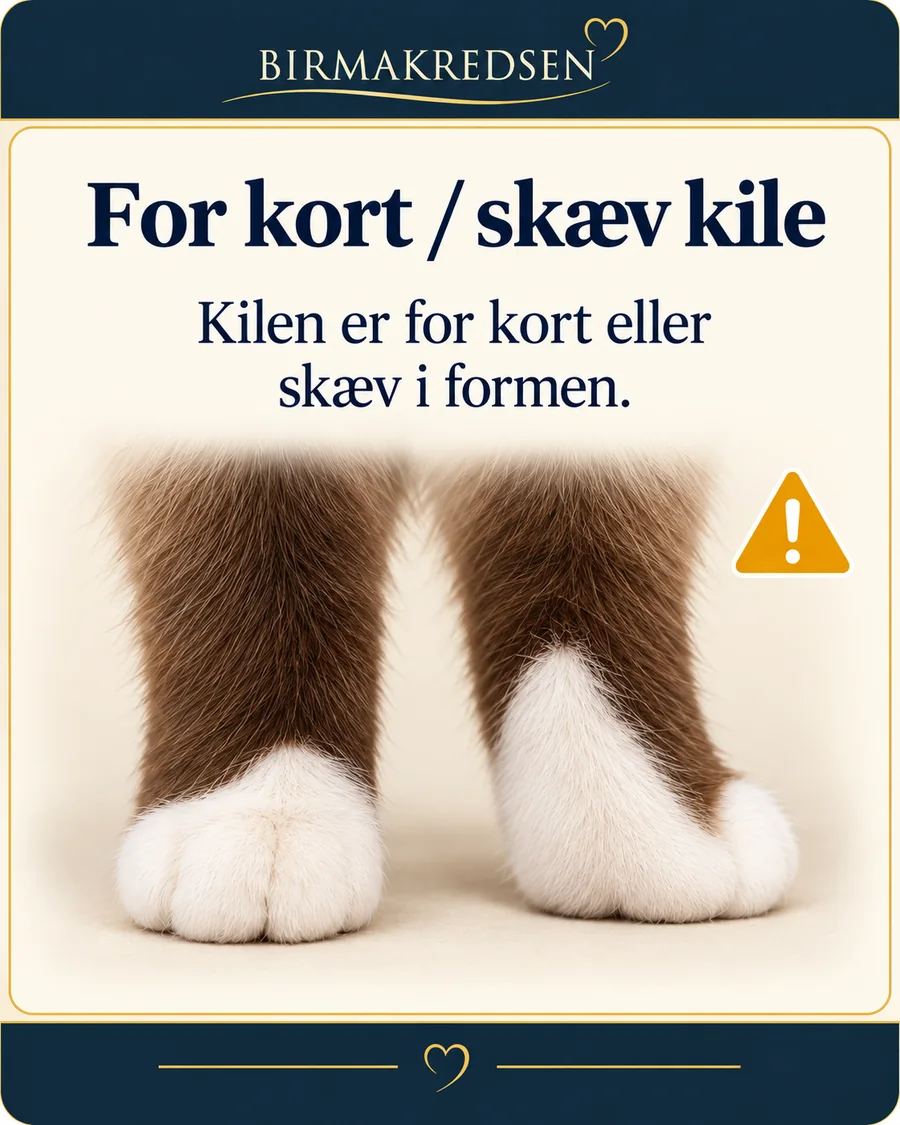
Illustrationerne viser standardens ideal og typiske afvigelser. Den enkelte kat skal altid vurderes som en helhed.
Can perfect gloves be bred for?

The white markings in the Birman are complex. In practice, breeders can work with lines and overall appearance, but markings may vary considerably even within the same litter. Health, temperament and genetic diversity should therefore never be subordinated to the pursuit of perfect paws.