“We have no members – we are a community.”
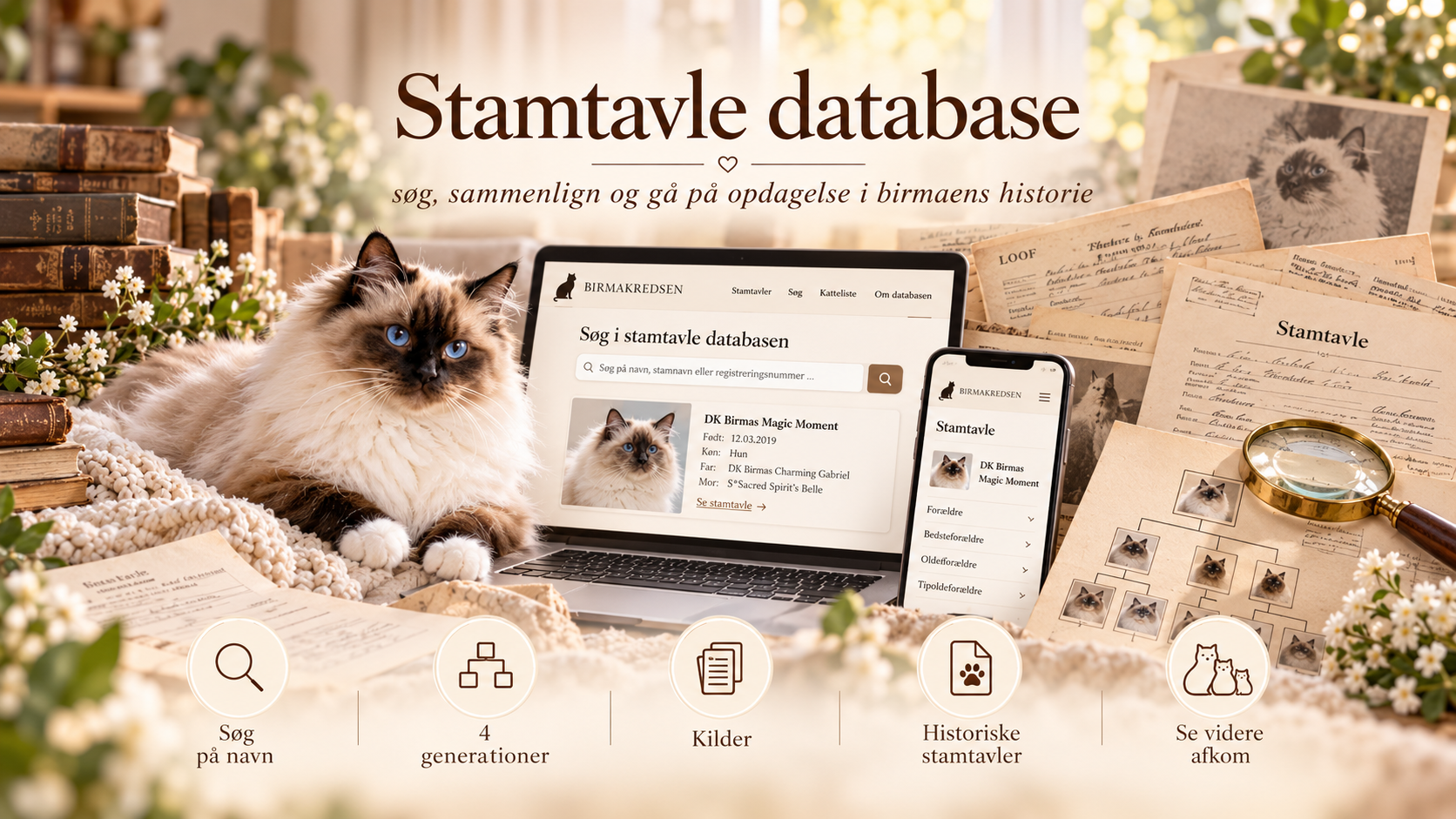
Birmakredsens stamtavledatabase med historiske kilder, søgning og stamtavler
Behind the database

From old paper to searchable pedigree

The database is more than a name list. Each record should connect to sources, relationships and history.

The aim is to make Birman genealogy easier to research without hiding uncertainty.

Illustreret arbejdsproces fra originalkilde til afskrift og kildekontrol
Illustreret arbejdsproces
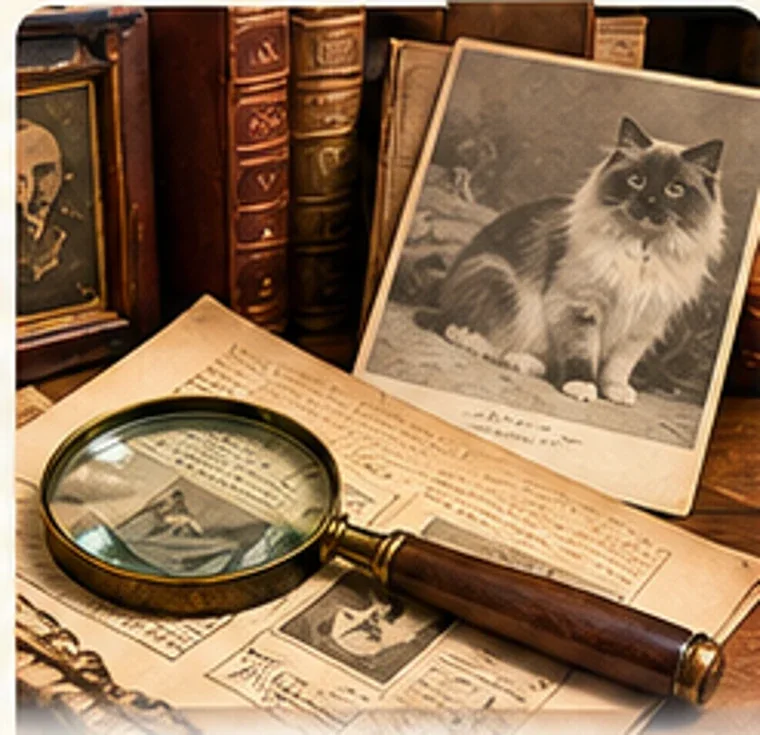
1Illustration af arkivarbejde med bøger, et kattebillede og en lup

The source

Pedigrees, catalogues, registries and other records are photographed, imported or entered.

2
Timournavn · dato · race · registrering

The record

Information is normalised while original spelling and provenance can be preserved.

3
DK-stamtavleLOSGCCFKatalog

Provenance

One cat may have several sources, showing where each piece of information came from.

4
SusieSueSu→ én kat?

Duplicate control

Name variants, registration numbers, dates and relationships are compared before records are merged.

5
resultater

Search

Visitors search first; only relevant cats are then loaded instead of the whole database.

6
KatFarMor4 generationer

The family

Parents are shown graphically, unknown ancestors stay unknown, and descendants can be followed further.

Most important: a source is not the same as truth

Principskitse af en kats stamtavle med far, mor og fire bedsteforældre
An original document is strong evidence – but contemporary records can still contain errors.
Illustration af arkivarbejde med bøger, et kattebillede og en lup
When several independent sources point the same way, an identification becomes stronger.
Unknown is a valid answer

A gap is not filled with a guess. Unknown fields remain unknown until documentation appears.

Uncertain records can be held back

OCR errors and doubtful links should be checked before they are presented as certain.

Sources follow the cat

Provenance lets us filter material without deleting the historical core.

Open the pedigree database →Learn to read a pedigree →