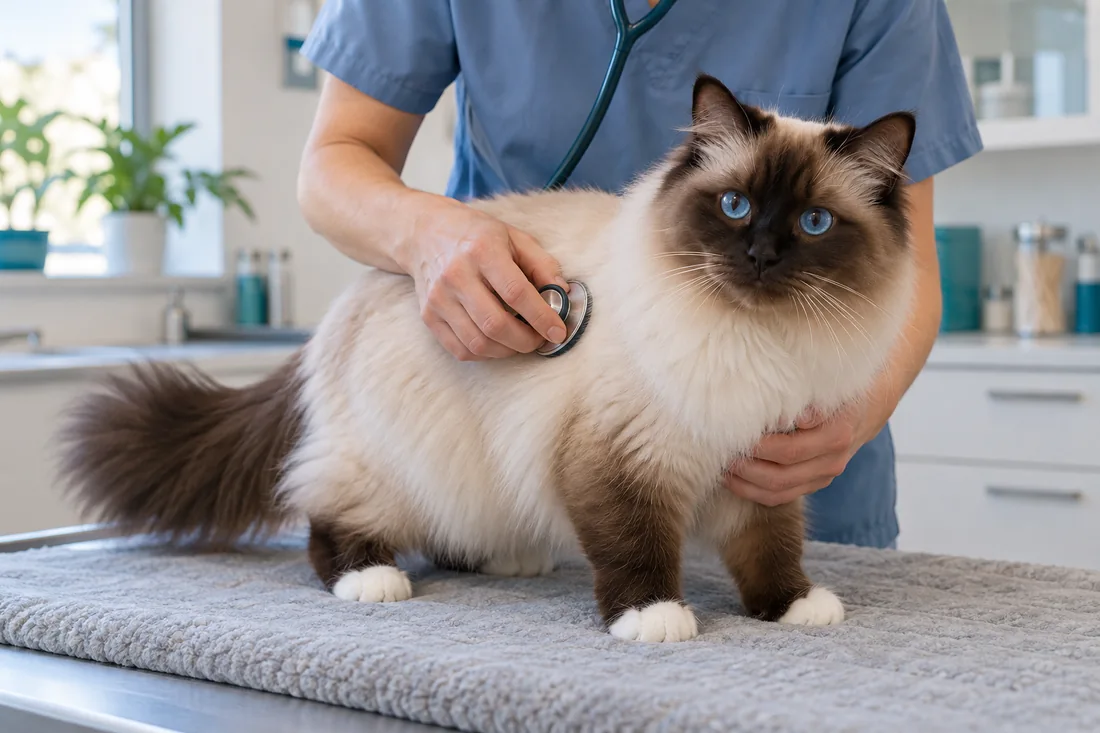
Cats mainly have blood types A, B and AB. Distribution varies between breeds and populations. For transfusion and breeding it is important to know the individual cat’s blood type rather than guessing from the breed.
Neonatal isoerythrolysis
The problem can arise when a queen with blood type B has kittens with blood type A or AB. The kittens may absorb antibodies through colostrum that attack their own red blood cells. This can cause severe anaemia and, in the worst cases, death.
Prevention

Blood typing of breeding cats makes it possible to identify risky combinations in advance. If a risk mating is carried out, there should be a specific veterinary plan for managing the kittens immediately after birth.
Transfusion

For blood transfusion, correct blood typing and crossmatching are essential. A severe transfusion reaction can occur if donor and recipient are incompatible.
Populations change. Historical studies of blood-type distribution in Birmans can be interesting, but they cannot replace testing of the individual cat.