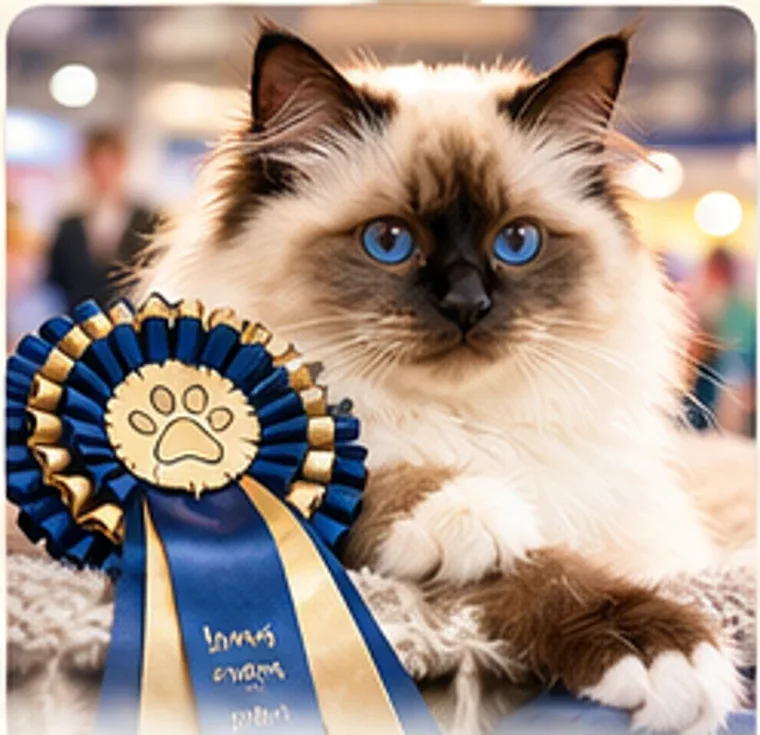
Illustration for the topic – not a photograph or a historical source.
Knowledge archive · FIFe and exhibition
FIFe show from A to Z
Sacred Birman · FIFe show from A to Z
15 sections on participation, judging and the cat's well-being
About the texts: The show series is based on our previous questions and posts about FIFe shows. Rules, class structure and certificates are subject to change, so the official FIFe rules should always be checked before registering. The formulations are editorially revised from previous topics and conversations; they are not presented as verbatim, documented published Facebook posts.
Episode 01 of 15
Why exhibit a Sacred Birman?
Featured image · Birmakredsen
A show can provide an opportunity to meet other cat people, learn more about the breed standard and get a professional assessment of your cat. It can be both educational and enjoyable when the cat thrives in the setting.
Showing is not a prerequisite for being a good cat owner. For some cats, transportation and many foreign impressions are too stressful, and the most caring decision may be to let them stay at home.
The cat's well-being always comes first – even when the rosette is tempting.
Read the invitation and the organizer's practical information: location, date, price, deadlines, admission, vaccinations and any local requirements. Also check that the cat is in the correct class according to the applicable FIFe rules.
If in doubt, contact the organizer or your club before pressing send. A correction is easier to handle before the deadline than after the catalog and judging plan have been submitted.
Keep the registration and receipt together with the cat's documents.
FIFe divides cats into classes according to age, titles and status, among other things. Kittens, juniors, adults and neutered cats do not necessarily participate according to the same rules. Class rules and any age limits are subject to change.
Therefore, a checklist does not provide a sufficient basis for a secure registration several months later. Always use the current set of rules rather than old images of class overviews.
Check the latest Show Rules version for your specific cat.
Bring relevant paperwork, a carrier, a familiar blanket, water, food, bowls, tray equipment, cleaning supplies and possibly cage furnishings that meet the organizer's requirements. A simple, well-thought-out packing list will reduce stress on the day.
Your cat may feel more secure with recognizable smells and routines. Avoid strongly scented equipment and anything that might tip over or bother them in the cage. Also have a plan for the return trip.
Pack the day before so that the morning doesn't start with panic.
Fur preparation should be done well in advance and adapted to the individual cat's fur and experience with handling. A great result cannot justify rough washing, uncontrolled drying or products that irritate the skin and eyes.
Start with calm, positive routines well before the first show. If the cat has had very bad experiences, it may be better to change the plan than to rush the implementation.
Good grooming starts with cooperation, not with struggle.
Safe transportation in a stable crate is important, whether the trip lasts half an hour or several hours. Protect the cat from overheating, drafts, loud noises and unnecessary handling along the way.
Upon arrival, follow the organizer's instructions. Give the cat time to get its bearings before allowing unnecessary contact. Never leave the cat unattended in the car or in the heat.
Safety on the journey is the first part of a good exhibition day.
Many shows have checks on documents and the cat's condition at the entrance. The rules on health and entry depend on the FIFe and the organizer's requirements. Check what vaccination information and identification data you need to show.
If your cat shows signs of illness leading up to the event, you should contact your vet and consider cancelling. Consideration for both your own cat and the other participants outweighs a registration fee.
A sick cat should not be exhibited to save a registration.
The judge compares the cat's qualities with the applicable breed standard and the rules for its class. There may be differences in how the practical assessment is carried out at different shows, but the basis must be professional and respectful.
Be ready when the cat is called and let the judge and steward work calmly. Ask politely at the appropriate time if there is anything about the judging that you would like to understand.
The most important benefit is often the knowledge you take home.
The judge's score sheet collects the judge's assessment of the cat on the day of the show. Comments about the head, eyes, body, coat and gloves can tell you something about how the cat's breed characteristics were assessed on the day.
A judge's report is not a complete health certificate nor is it a permanent checklist. It is part of the show history, and assessments may vary with age, development and the specific judging situation.
Save the notes, but don't let them define the cat's value.
EX1 is a quality/placement designation in a judging context; it is not in itself a general guarantee of a certificate or future title. Which certificates can be awarded depends on the specific class and the rules.
Titles are achieved after certain FIFe requirements, which may include multiple judging and shows. To avoid outdated listings, we refer to the current Show Rules when determining numbers and conditions.
Keep track of class, certificate type and date separately.
BIV, NOM and BIS are different terms in the exhibition process. BIV is about best in color variety, NOM about nomination and BIS about Best in Show according to the applicable conditions. Not all cats or classes can necessarily participate in all stages.
It's easy to get confused by abbreviations when you're new. Ask the organizer or an experienced exhibitor to explain the day's schedule, and remember that schedules are subject to change.
A calm explanation is better than promising a result in advance.
Show rules have provisions for judging and decisions. An exhibitor should not attempt to infer a winner based on a rumor or a picture of the tickets. The judges' and the show's official decisions apply.
You can disagree with a judgment and still behave respectfully. Good manners towards judges and fellow exhibitors are also part of the community we want to create.
The steward helps with the practical aspects of the judging and contributes to a calm and safe process. Tasks may depend on the organization of the event, and exhibitors should follow the specific instructions.
A steward is not a private trainer for your cat and should not be left alone in charge of a stressful situation. Point out problems in good time and help keep the area calm.
Polite cooperation makes the day better for both cats and humans.
Show respect for the queue, space, judges, volunteers and the other cats. Ask permission before touching or photographing other people's cats, and keep equipment and traffic routes safe.
Also be careful about noise levels, strong smells and unnecessary close contact between cats from different homes. A show is only a good experience when the community takes into account the most vulnerable participants.
Good style at exhibitions is part of animal welfare.
At the end of the day, your cat may need sleep, peace and familiar routines. Keep an eye on their appetite, drinking and behaviour over the next few days. Make a note of what worked and what you would like to change for the next visit.
A good result doesn't change whether the experience was good for the cat. Also evaluate travel time, social pressure and recovery – not just points, placement or pictures.
The best show ends with a cat that is still at ease.
Here you will find the official or professional sources relevant to the topics of the series. They are not a source of private historical research findings. Updated rules always precede an older web text.