
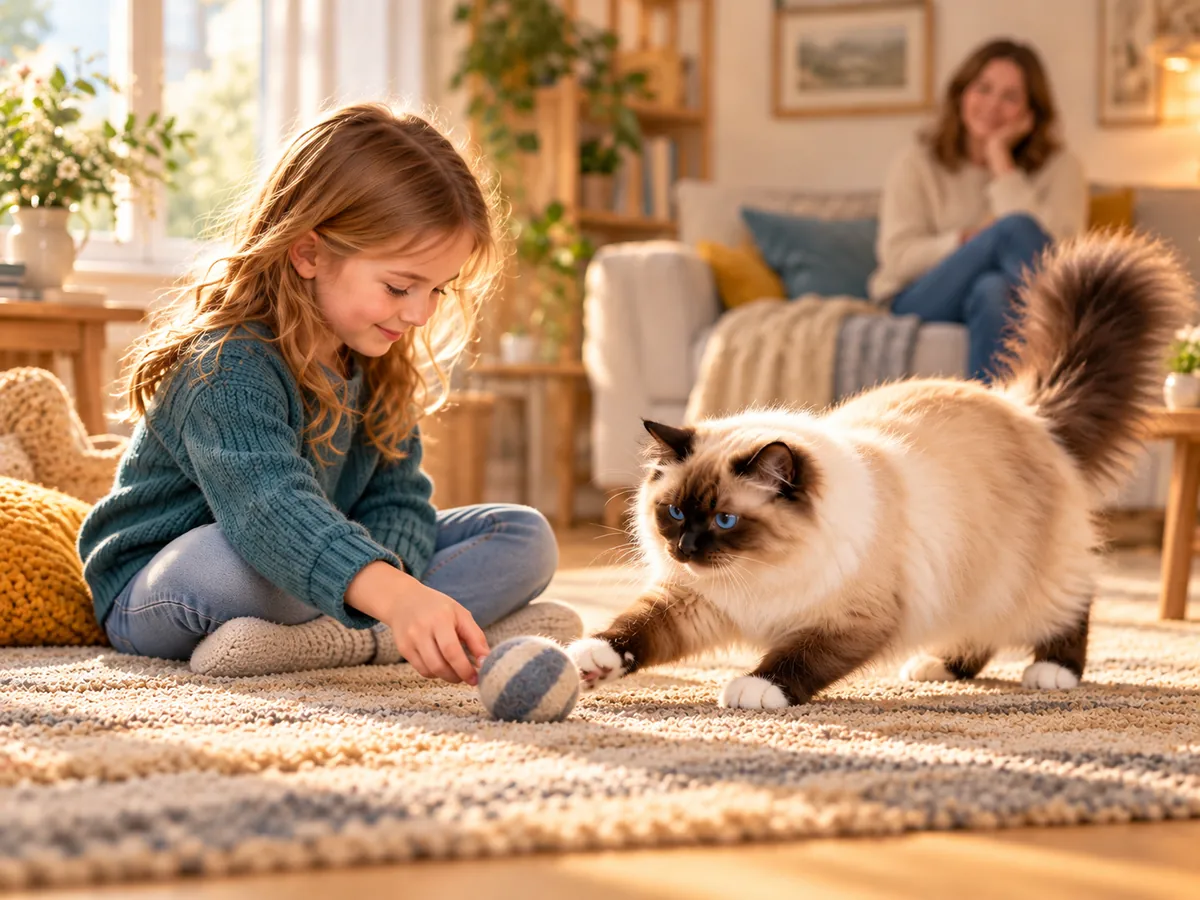
Can you work out what your cat is trying to tell you? You do not need to speak cat language. You can learn by watching and listening.
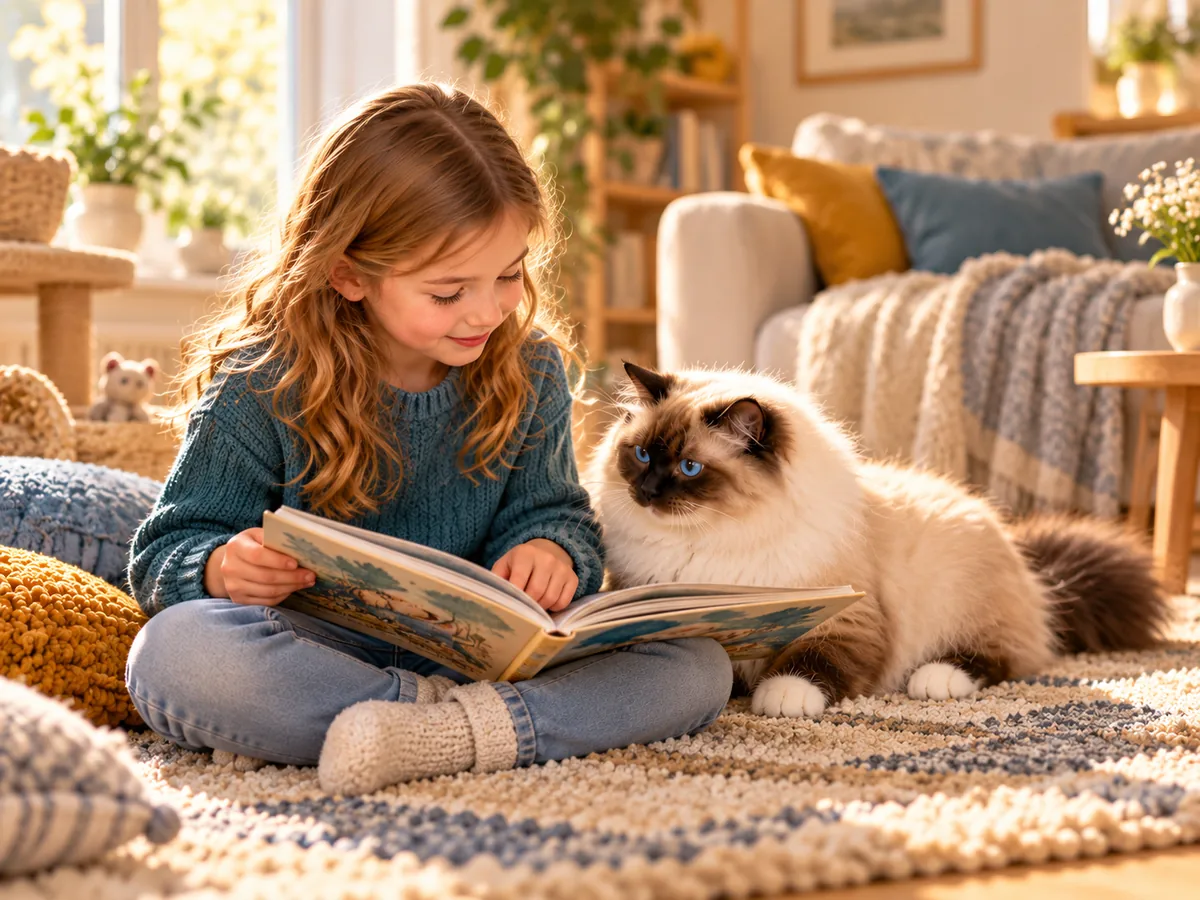
Look at the whole cat
A relaxed cat with a soft body and its tail up may want to say hello. If its ears flatten, its body stiffens or its tail lashes, give it space. Every cat is different, so look at several signals together.

The cat’s most important words: No, thank you
When a cat walks away, hides or does not want to be stroked, it is saying no. Respect that, even if you would really like a cuddle.
Try the cat-friend challenge
- Can you sit quietly and let the cat come to you?
- Can you play with a wand toy instead of your fingers?
- Can you let the cat finish its nap?
- Can you tell an adult if the cat seems ill or frightened?
Practise all four and you are well on your way to being a true cat friend!
Remember to ask an adult
An adult is responsible for food, water, the litter tray, veterinary care and safety. You can help, but you should not do it alone. Put string toys away after play.
Read also
Hooray, we are getting a kitten! – a guide to your first days together.
Not sure what the cat means? Ask an adult and give the cat a break.