Birmakredsen / Health · Blood pressure
BK-2026-014
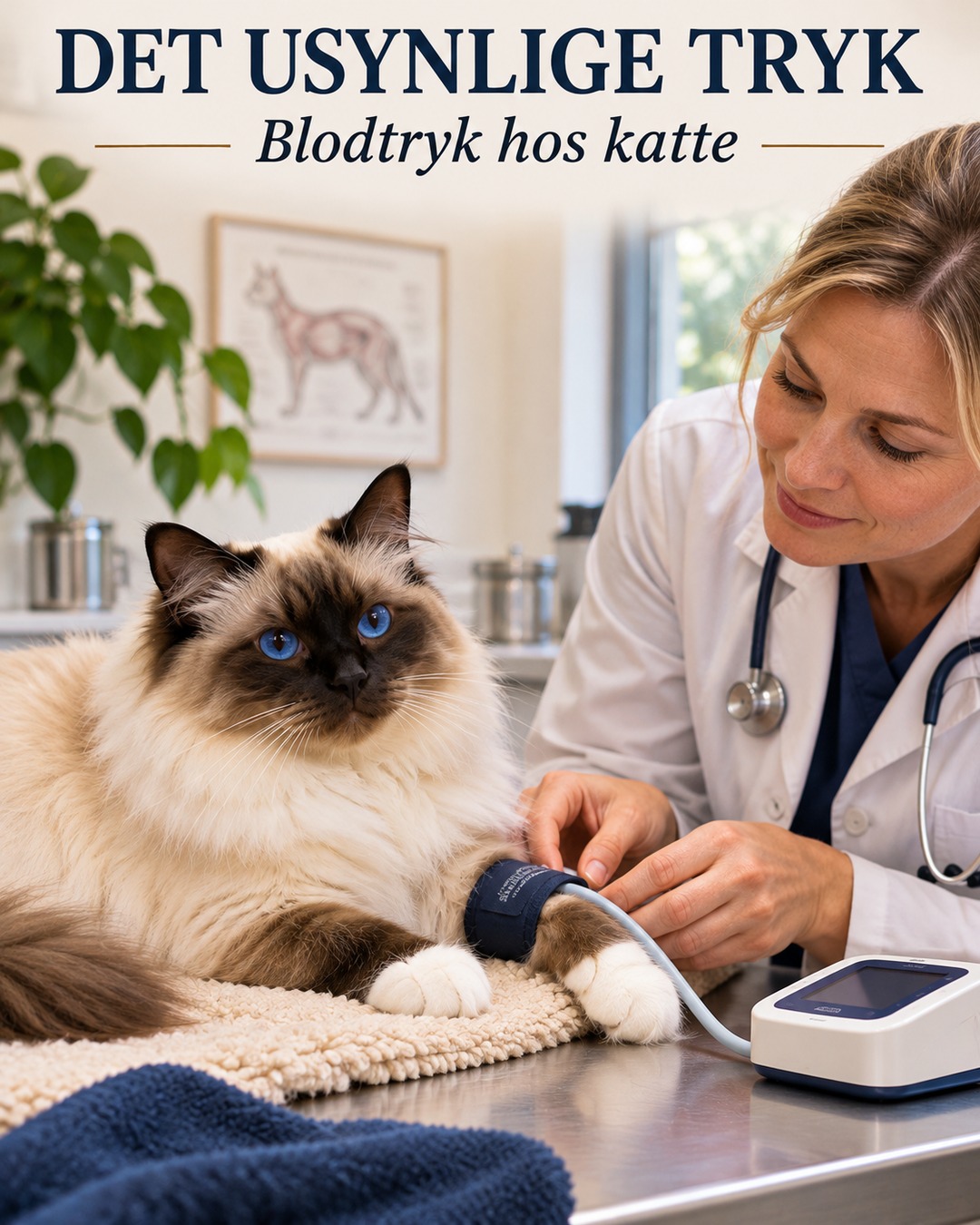
The silent risk: high blood pressure in cats
A cat may have high blood pressure without showing obvious symptoms. That makes blood-pressure measurement an important part of veterinary assessment, particularly for older cats and cats with conditions associated with hypertension. It is not something an owner can reliably diagnose just by watching the cat at home.
What is hypertension?
Blood pressure is the force exerted by circulating blood on the walls of blood vessels. Persistently elevated pressure can damage sensitive organs. In cats, the eyes, kidneys, brain and heart are particularly important to assess. However, one high reading alone does not prove that a cat has sustained hypertension.
Why is it often detected late?
Some cats appear perfectly normal until complications develop. Sudden changes in vision, difficulty finding their way around or neurological signs require prompt veterinary assessment. Waiting for visible symptoms is not a good screening strategy: preventive measurements may be appropriate as part of routine health checks for older cats.
Blood pressure and other diseases
Hypertension may occur alongside chronic kidney disease and hyperthyroidism, among other conditions. The veterinarian may therefore combine blood-pressure measurement with a clinical examination and, when indicated, blood and urine tests. High blood pressure should not simply be dismissed as an inevitable consequence of ageing.
A calm measurement matters
Cats can react to transport, unfamiliar surroundings and handling. Stress can affect blood pressure, so the measurement method matters: the cat should be given time to settle, handled gently and measured repeatedly using a consistent procedure. The veterinarian interprets the results alongside the cat's circumstances, any evidence of organ damage and previous readings.
What can the owner do?
Ask your veterinarian whether blood-pressure checks would be useful at the next health examination, especially if your cat is older or has kidney or thyroid disease. Keep a note of changes in vision, behaviour, appetite and orientation. Do not attempt to diagnose hypertension from one observation, and never give blood-pressure medication without veterinary prescription.
Treatment and follow-up
If hypertension is diagnosed, treatment depends on the cat's overall health and possible underlying diseases. Follow-up measurements are essential to assess effectiveness and avoid excessive lowering of blood pressure. The aim is not merely an attractive number on a monitor, but protection of the cat's organs and quality of life.
Sources
Taylor SS et al. (2017). ISFM Consensus Guidelines on the Diagnosis and Management of Hypertension in Cats. *Journal of Feline Medicine and Surgery*. https://doi.org/10.1177/1098612X17693500
Acierno MJ et al. (2018). ACVIM consensus statement: Guidelines for the identification, evaluation, and management of systemic hypertension in dogs and cats. *Journal of Veterinary Internal Medicine*. https://doi.org/10.1111/jvim.15331
This article concerns feline medicine in general; it does not claim a documented breed-specific risk for the Sacred Birman.